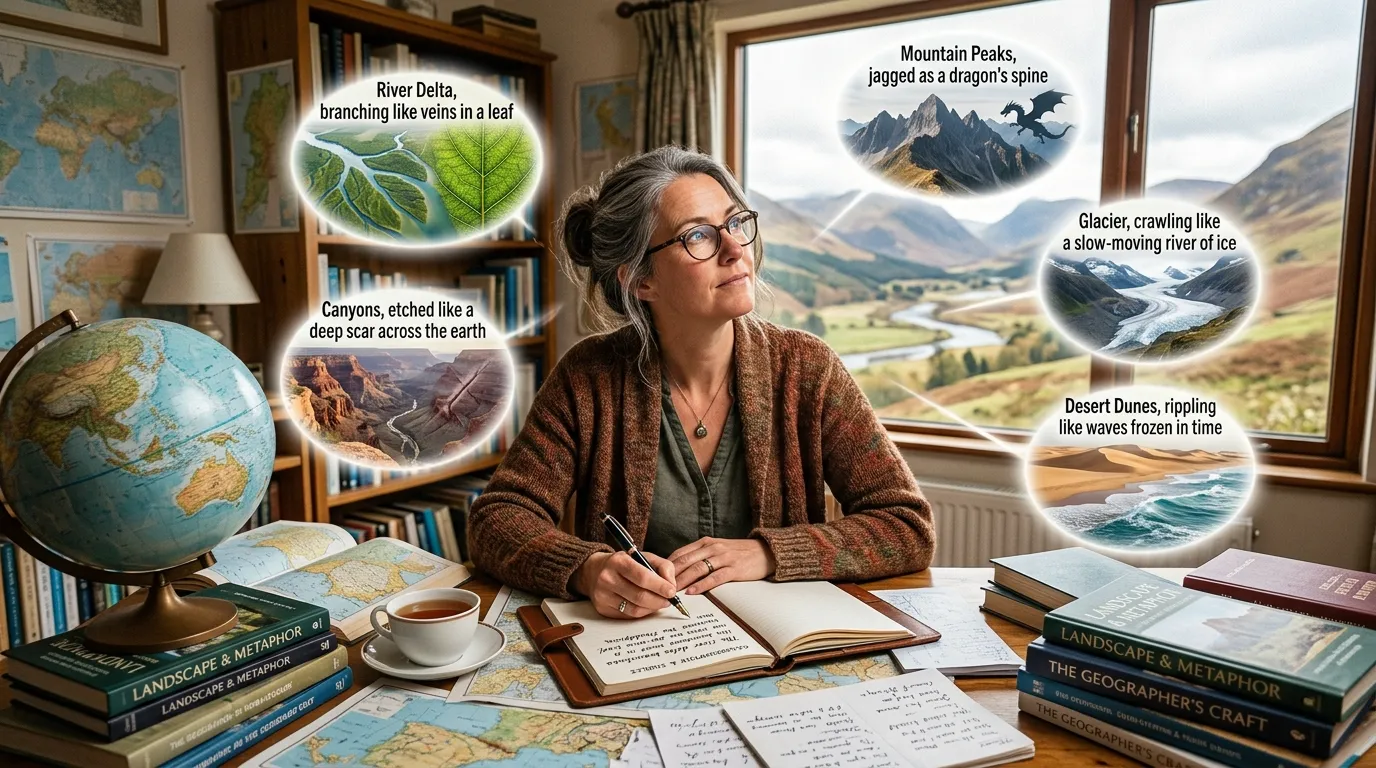
Geography is much more than maps, mountains, rivers, and countries—it’s the story of how our planet is shaped and how people interact with the world around them. Whether you’re writing about towering mountain ranges, winding rivers, vast deserts, bustling cities, or changing climates, clear and descriptive language helps readers visualize these places. One of the most effective ways to achieve this is through similes.
A well-crafted simile compares one thing to another using familiar imagery, making complex geographical features easier to understand and more memorable. Instead of simply saying a river is long, you might describe it as flowing like a silver ribbon. Rather than stating a mountain is tall, you can compare it to a giant standing guard. These comparisons make geography writing more engaging, expressive, and enjoyable to read.
Whether you’re a student preparing a geography assignment, a teacher creating educational materials, a travel blogger, a content writer, or a storyteller describing real-world locations, learning to use the best similes for geography writing can greatly improve your work.
In this guide, you’ll discover 25 best similes for geography writing, each with a simple meaning, a detailed explanation, practical usage insights, and two realistic example sentences. You’ll also learn how to use these similes effectively in essays, stories, reports, and educational content.
What Is a Simile?
A simile is a figure of speech that compares two different things using the words “like” or “as.” These comparisons make descriptions more vivid and easier for readers to imagine.
Similes help transform ordinary explanations into memorable descriptions by creating strong mental images.
Simple Examples
- The river flowed like a silver ribbon.
- The mountain stood as tall as a giant.
These comparisons help readers picture geographical features more clearly.
25 Best Similes for Geography Writing
1. Like a silver ribbon
Meaning: Long, narrow, and shining.
Definition: Describes rivers, streams, or roads stretching across the landscape.
Usage Insight: Perfect for geography essays, travel blogs, descriptive reports, and nature writing. Suitable for formal, casual, and creative writing.
Examples:
- The river wound like a silver ribbon through the valley.
- From above, the highway looked like a silver ribbon across the plains.
2. As tall as a giant
Meaning: Extremely high.
Definition: Describes mountains, cliffs, or towering rock formations.
Usage Insight: Ideal for mountain descriptions and educational writing.
Examples:
- The mountain stood as tall as a giant against the sky.
- Ancient cliffs rose as tall as a giant above the coastline.
3. Like a blanket covering the land
Meaning: Spreading across a wide area.
Definition: Describes snow, fog, forests, or grasslands covering the landscape.
Usage Insight: Great for climate and seasonal geography writing.
Examples:
- Snow spread like a blanket covering the land.
- The morning fog settled like a blanket covering the land.
4. As endless as the horizon
Meaning: Vast and limitless.
Definition: Describes deserts, oceans, grasslands, or plains.
Usage Insight: Perfect for descriptive geography essays.
Examples:
- The desert stretched as endless as the horizon.
- The ocean appeared as endless as the horizon.
5. Like an artist’s masterpiece
Meaning: Beautifully arranged.
Definition: Describes breathtaking landscapes and scenic views.
Usage Insight: Excellent for travel and physical geography writing.
Examples:
- The valley looked like an artist’s masterpiece.
- The coastline appeared like an artist’s masterpiece from above.
6. As calm as a still lake
Meaning: Completely peaceful.
Definition: Describes quiet lakes, ponds, or sheltered bays.
Usage Insight: Ideal for descriptive essays and travel writing.
Examples:
- The lake remained as calm as a still lake at sunrise.
- The bay was as calm as a still lake during the morning.
7. Like veins across the Earth
Meaning: Connected and life-giving.
Definition: Describes river systems that carry water across landscapes.
Usage Insight: Great for educational and environmental writing.
Examples:
- Rivers spread like veins across the Earth.
- Streams branched like veins across the Earth.
8. As rugged as ancient stone
Meaning: Rough and uneven.
Definition: Describes rocky mountains, cliffs, or harsh terrain.
Usage Insight: Perfect for physical geography.
Examples:
- The landscape was as rugged as ancient stone.
- The canyon walls remained as rugged as ancient stone.
9. Like waves frozen in time
Meaning: Rolling and uneven.
Definition: Describes sand dunes or gently rolling hills.
Usage Insight: Excellent for desert and coastal writing.
Examples:
- The dunes looked like waves frozen in time.
- The hills stretched like waves frozen in time.
10. As deep as the ocean
Meaning: Extremely deep.
Definition: Describes valleys, lakes, or geological formations.
Usage Insight: Suitable for educational reports and descriptive essays.
Examples:
- The canyon appeared as deep as the ocean.
- The lake was as deep as the ocean.
11. Like a staircase reaching the sky
Meaning: Rising in levels.
Definition: Describes terraced hills, cliffs, or mountain ranges.
Usage Insight: Great for agricultural and mountain geography.
Examples:
- The rice terraces climbed like a staircase reaching the sky.
- The cliffs rose like a staircase reaching the sky.
12. As green as an emerald
Meaning: Richly green.
Definition: Describes forests, valleys, and fertile fields.
Usage Insight: Excellent for environmental and agricultural writing.
Examples:
- The valley was as green as an emerald.
- The rainforest remained as green as an emerald.
13. Like a giant sleeping peacefully
Meaning: Massive yet still.
Definition: Describes mountain ranges or dormant volcanoes.
Usage Insight: Ideal for geography and travel descriptions.
Examples:
- The volcano rested like a giant sleeping peacefully.
- The mountain lay like a giant sleeping peacefully beneath the clouds.
14. As clear as crystal
Meaning: Perfectly transparent.
Definition: Describes lakes, rivers, or coastal waters.
Usage Insight: Perfect for water-related geography topics.
Examples:
- The lake remained as clear as crystal.
- The river flowed as clear as crystal through the forest.
15. Like a bridge joining worlds
Meaning: Connecting different places.
Definition: Describes land bridges, isthmuses, or important transport routes.
Usage Insight: Excellent for human geography.
Examples:
- The isthmus served like a bridge joining worlds.
- The valley became like a bridge joining worlds.
16. As wide as the open sea
Meaning: Extremely broad.
Definition: Describes plains, lakes, or open landscapes.
Usage Insight: Great for descriptive geography writing.
Examples:
- The grassland was as wide as the open sea.
- The salt flat stretched as wide as the open sea.
17. Like a mirror reflecting the sky
Meaning: Smooth and reflective.
Definition: Describes calm lakes and wetlands.
Usage Insight: Perfect for travel blogs and descriptive essays.
Examples:
- The lake looked like a mirror reflecting the sky.
- The wetland shimmered like a mirror reflecting the sky.
18. As ancient as time
Meaning: Extremely old.
Definition: Describes geological formations and natural landmarks formed over millions of years.
Usage Insight: Suitable for geology and history-related writing.
Examples:
- The canyon was as ancient as time.
- The rock formations appeared as ancient as time.
19. Like roots holding the land together
Meaning: Providing stability.
Definition: Describes vegetation preventing erosion.
Usage Insight: Excellent for environmental geography.
Examples:
- Forests act like roots holding the land together.
- Mangroves grow like roots holding the land together along the coast.
20. As bright as the morning sun
Meaning: Brilliant and radiant.
Definition: Describes beaches, deserts, and snowy landscapes under sunlight.
Usage Insight: Great for scenic descriptions.
Examples:
- The sand was as bright as the morning sun.
- The snowy peaks looked as bright as the morning sun.
21. Like a puzzle made by nature
Meaning: Complex and interconnected.
Definition: Describes landscapes with many geographical features working together.
Usage Insight: Ideal for educational writing.
Examples:
- The landscape fit together like a puzzle made by nature.
- The delta appeared like a puzzle made by nature.
22. As powerful as a waterfall
Meaning: Extremely strong.
Definition: Describes rivers, storms, or natural forces.
Usage Insight: Excellent for physical geography and climate topics.
Examples:
- The river became as powerful as a waterfall after the rain.
- The current remained as powerful as a waterfall.
23. Like a crown upon the Earth
Meaning: Beautiful and impressive.
Definition: Describes mountain peaks or elevated landscapes.
Usage Insight: Great for descriptive and travel writing.
Examples:
- Snow-covered mountains stood like a crown upon the Earth.
- The peak looked like a crown upon the Earth.
24. As lively as a flowing river
Meaning: Full of movement and energy.
Definition: Describes busy cities, ecosystems, or waterways.
Usage Insight: Suitable for both physical and human geography.
Examples:
- The river remained as lively as a flowing river after the rains.
- The harbor became as lively as a flowing river during the summer.
25. Like the heartbeat of the planet
Meaning: Essential for life.
Definition: Describes forests, rivers, oceans, or ecosystems that sustain Earth’s natural balance.
Usage Insight: Perfect for environmental geography, conservation writing, and essay conclusions.
Examples:
- The Amazon rainforest beats like the heartbeat of the planet.
- Healthy wetlands function like the heartbeat of the planet for wildlife.
How to Use These Similes Effectively in Different Types of Writing
Using similes for geography writing makes descriptions more vivid, educational, and memorable while helping readers better understand the world’s landscapes and environments.
In Essays
Use similes to explain landforms, weather, ecosystems, and geographical processes in a way that is both informative and engaging.
In Stories
Incorporate similes when introducing settings or describing journeys to help readers imagine the landscape and atmosphere.
In Poems
Geography-themed similes add imagery, rhythm, and emotional depth, allowing natural features to become powerful symbols.
In Content Writing
Travel bloggers, geography educators, environmental organizations, and tourism writers can use similes to make articles more engaging and accessible.
Best Practices
- Match the simile to the geographical feature you’re describing.
- Keep comparisons accurate and easy to understand.
- Avoid overusing similes in a single paragraph.
- Combine similes with sensory details like color, texture, and movement.
- Create original comparisons whenever possible to make your writing unique.
Frequently Asked Questions
What are similes for geography writing?
They are comparisons using “like” or “as” that make geographical features, landscapes, and natural processes easier to visualize and understand.
Why are similes useful in geography essays?
Similes make descriptions more vivid, improve reader engagement, and help explain geographical concepts through familiar comparisons.
Can students use these similes in school assignments?
Yes. They are suitable for geography essays, reports, descriptive writing, presentations, and creative assignments.
Are these similes appropriate for travel blogs?
Absolutely. Travel writers often use geography similes to describe landscapes, mountains, rivers, coastlines, and scenic destinations.
How can I create original geography similes?
Observe the shape, color, size, movement, or texture of geographical features and compare them to familiar objects or experiences. Unique and meaningful comparisons make your writing stand out.
Conclusion
Using the best similes for geography writing is an excellent way to transform ordinary descriptions into vivid and engaging narratives. Whether you’re explaining mountain ranges, rivers, forests, deserts, coastlines, or human settlements, well-chosen similes help readers visualize places, understand geographical concepts, and connect more deeply with the natural world.
The 25 similes in this guide provide practical inspiration for students, teachers, travel writers, bloggers, and geography enthusiasts who want to enrich their writing. Use these comparisons naturally, adapt them to your own style, and continue developing original similes inspired by Earth’s incredible landscapes. Thoughtful similes not only improve your writing but also make geography more meaningful, memorable, and enjoyable for every reader.

James Williams is a dedicated language writer and contributor at Mitaphor.com, where he explores the art of similes, metaphors, and word meanings. With a passion for making language simple and engaging, James breaks down complex expressions into clear, easy-to-understand insights. His work is designed to help students, writers, and curious readers better understand figurative language and use it effectively in everyday communication.