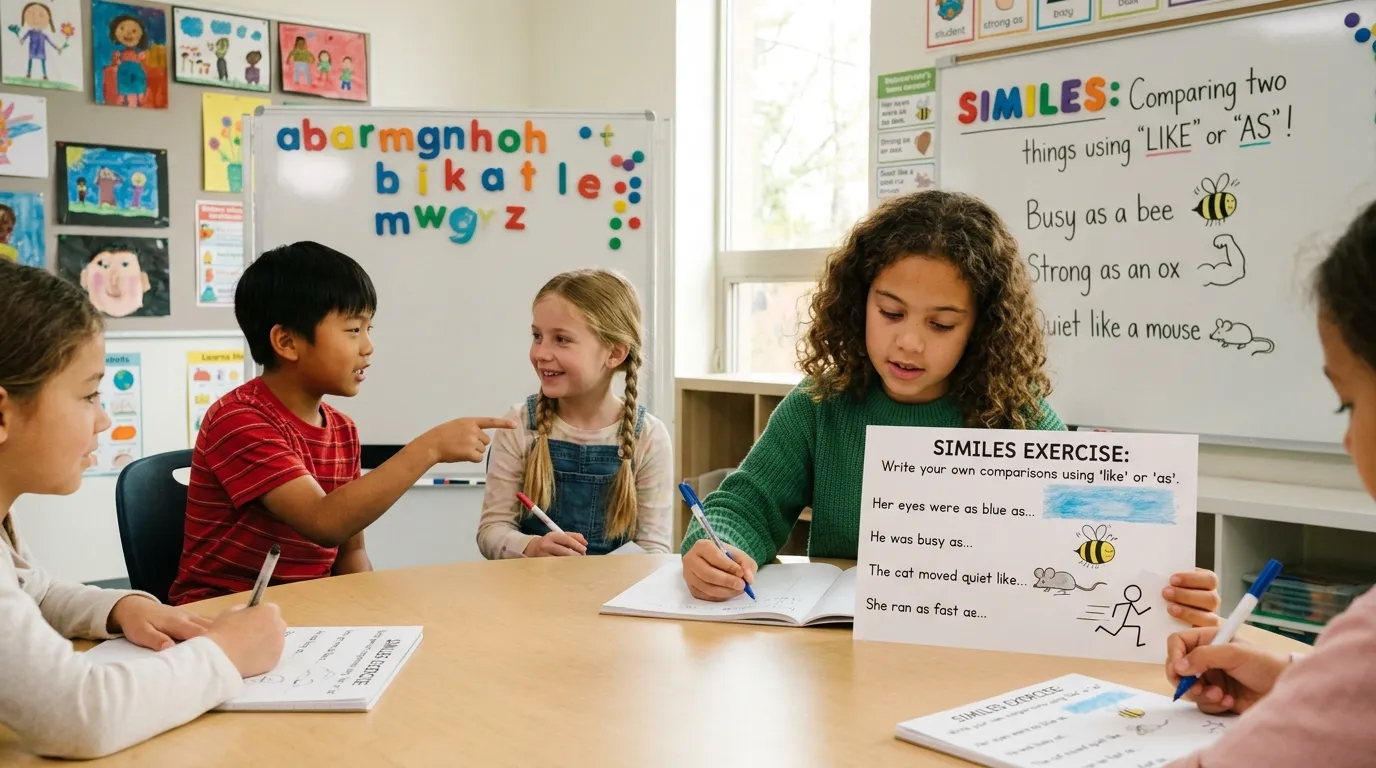
Similes are one of the easiest and most effective ways to make writing more colorful, engaging, and memorable. By comparing two different things using the words “like” or “as,” similes help readers visualize ideas, emotions, and experiences more clearly. While learning the definition of a simile is important, the best way to truly master this literary device is through regular practice. That’s where similes exercises become valuable. They help students, teachers, writers, and English learners strengthen their understanding by applying similes in realistic writing situations.
Whether you’re a student preparing for an English exam, a teacher designing classroom activities, a parent helping with homework, or a blogger creating educational content, practicing similes exercises can significantly improve writing skills. These activities enhance vocabulary, creativity, reading comprehension, and descriptive writing while making language learning enjoyable and interactive.
In this comprehensive guide, you’ll discover some of the best similes exercises, learn what similes are, explore practical examples, complete engaging practice activities, and find tips for using similes effectively in essays, stories, poems, and content writing.
What Is a Simile?
A simile is a figure of speech that compares two different things using the words “like” or “as.” These comparisons help readers better understand ideas by relating them to something familiar.
Similes make writing more vivid because they create clear mental images and add emotion to descriptions.
Simple Examples
- She was as brave as a lion.
- His smile was like sunshine after the rain.
These comparisons make writing more expressive and memorable.
72 Powerful Similes Exercises
1. Complete the Simile
Meaning: Finish an incomplete simile correctly.
Definition: This exercise helps learners recognize common simile patterns while improving vocabulary and figurative language skills. It is one of the most popular similes exercises for beginners.
Usage Insight: Perfect for elementary classrooms, ESL lessons, homework, and English practice. Suitable for formal and informal learning environments.
Examples:
- Complete: As busy as a ________. (Answer: bee)
- Complete: As light as a ________. (Answer: feather)
2. Match the Similes
Meaning: Match similes with their correct meanings.
Definition: Students connect a simile to the idea it represents, improving comprehension and critical thinking.
Usage Insight: Great for worksheets, classroom games, and revision sessions.
Examples:
- As quiet as a mouse → Very silent.
- As brave as a lion → Very courageous.
3. Identify the Simile
Meaning: Find the simile in a sentence.
Definition: Learners practice recognizing figurative language in context.
Usage Insight: Excellent for reading comprehension and English assessments.
Examples:
- The baby slept like a log.
- Her eyes sparkled like stars.
4. Write Your Own Simile
Meaning: Create an original simile.
Definition: Students compare two things creatively using “like” or “as.”
Usage Insight: Perfect for creative writing and classroom discussions.
Examples:
- The classroom was as lively as a carnival.
- His ideas spread like wildfire.
5. Choose the Correct Simile
Meaning: Select the best simile for a sentence.
Definition: Learners improve figurative language by choosing appropriate comparisons.
Usage Insight: Great for quizzes and exams.
Examples:
- She carried the heavy bag…
- a) as light as a feather
- b) as strong as an ox ✅
6. Replace the Plain Sentence
Meaning: Rewrite a sentence using a simile.
Definition: This activity teaches students how to make ordinary writing more descriptive.
Usage Insight: Ideal for essays and creative writing lessons.
Examples:
- Plain: The child was happy.
- Better: The child was as happy as a bird in spring.
7. Fill in the Blank
Meaning: Complete sentences with suitable similes.
Definition: Students strengthen vocabulary and sentence-building skills.
Usage Insight: Excellent for worksheets and homework.
Examples:
- Her hands were as cold as ________. (ice)
- He was as quick as ________. (lightning)
8. Spot the Incorrect Simile
Meaning: Find the simile that doesn’t make sense.
Definition: Learners develop critical thinking by identifying awkward comparisons.
Usage Insight: Great for advanced English learners.
Examples:
- As cold as fire ❌
- As cold as ice ✅
9. Simile Story Challenge
Meaning: Write a short paragraph using several similes.
Definition: Students practice using figurative language naturally in longer pieces of writing.
Usage Insight: Perfect for creative writing and storytelling.
Examples:
- Write a story using as brave as a lion, like a shooting star, and as quiet as a mouse.
- Keep the paragraph between 100 and 150 words.
10. Simile Drawing Activity
Meaning: Draw a picture that represents a simile.
Definition: Visual learning helps younger students understand figurative language more easily.
Usage Insight: Ideal for elementary classrooms and homeschooling.
Examples:
- Draw as busy as a bee.
- Draw like a rainbow after the rain.
How to Use These Similes Exercises Effectively
Practicing similes exercises regularly helps learners become more confident when using figurative language in different forms of writing.
Essays
Use similes to create stronger descriptions and make your ideas more memorable without overusing comparisons.
Stories
Characters, settings, and emotions become more vivid when natural similes are included throughout the narrative.
Poems
Poetry depends on imagery, and similes help readers visualize emotions and scenes more clearly.
Content Writing
Whether you’re creating educational blogs, language-learning resources, or classroom materials, examples of similes exercises improve engagement while naturally boosting SEO performance.
Classroom Activities
Teachers can use these exercises for warm-up activities, homework assignments, quizzes, group work, literacy centers, or revision before English exams.
Frequently Asked Questions
What are similes exercises?
Similes exercises are practice activities that help learners identify, understand, and create similes through engaging questions and writing tasks.
Why are similes exercises important?
They improve descriptive writing, vocabulary, reading comprehension, creativity, and understanding of figurative language.
Who can use similes exercises?
Students, teachers, homeschool families, tutors, ESL learners, and anyone interested in improving English writing skills.
What’s the difference between a simile and a metaphor?
A simile compares two things using “like” or “as,” while a metaphor makes a direct comparison without those words.
Are similes exercises useful for classroom learning?
Yes. They encourage active participation, improve writing skills, reinforce literary concepts, and make learning English more enjoyable.
Conclusion
Practicing similes exercises is one of the most effective ways to master figurative language and become a stronger writer. By identifying similes, completing creative activities, rewriting sentences, and creating original comparisons, learners gain the confidence to use descriptive language naturally in everyday writing. Regular practice not only improves vocabulary and reading comprehension but also encourages imagination and critical thinking, making writing more expressive and enjoyable.
Whether you’re a student preparing for exams, a teacher planning engaging classroom lessons, a parent supporting your child’s education, or a content creator developing language-learning resources, the best similes exercises provide valuable opportunities to strengthen English skills. Continue practicing with different activities, challenge yourself to invent original similes, and use them thoughtfully in essays, stories, poems, speeches, and conversations. Over time, these exercises will help you develop a richer, more creative writing style that captures readers’ attention and communicates ideas with greater impact.

Chris Woak is a passionate language enthusiast and the creative voice behind Mitaphor.com. With a deep interest in similes, metaphors, and word meanings, Chris simplifies complex expressions into clear, engaging explanations that readers of all levels can understand. His work focuses on helping students, writers, and language lovers explore the power of figurative language and improve their communication skills.