Essays are one of the most common forms of writing used in schools, colleges, universities, and professional settings. Whether you’re writing a persuasive essay, argumentative paper, descriptive composition, narrative essay, or personal reflection, the goal is to communicate ideas clearly while keeping readers engaged. Strong essays are not only well-organized but also rich in descriptive language that helps readers understand complex ideas and connect with your message. One of the easiest ways to make an essay more vivid and memorable is by using similes. These creative comparisons allow writers to explain ideas through familiar images, making arguments stronger and descriptions more engaging.
Whether you’re a student preparing for an English assignment, a teacher teaching figurative language, a blogger sharing writing tips, or a content creator producing educational resources, learning similes for essays can improve the quality of your writing. Thoughtfully used similes add clarity, creativity, and emotional depth without making academic writing sound informal or exaggerated.
In this comprehensive guide, you’ll discover some of the best similes for essays, complete with simple meanings, detailed definitions, practical usage insights, and realistic examples. You’ll also learn how to use these similes effectively in academic essays, personal narratives, descriptive writing, speeches, stories, and content writing.
What Is a Simile?
A simile is a figure of speech that compares two different things using the words “like” or “as.” Instead of describing something in plain language, a simile creates a vivid comparison that helps readers better understand ideas, emotions, and experiences.
Similes make essays more interesting by turning ordinary descriptions into memorable and relatable imagery.
Simple Examples
- She was as brave as a lion.
- His ideas flowed like a river.
These comparisons make writing easier to imagine and more enjoyable to read.
68 Powerful Similes for Essays
1. Like building a strong foundation
Meaning: Creating a solid beginning for success.
Definition: Just as every building depends on a strong foundation, every effective essay depends on a clear thesis and logical structure. This is one of the most useful similes for essays.
Usage Insight: Perfect for academic essays, argumentative writing, educational blogs, and writing workshops. Suitable for formal and semi-formal writing.
Examples:
- Writing a strong introduction is like building a solid foundation.
- His essay succeeded because every argument rested on clear evidence.
2. As clear as crystal
Meaning: Extremely easy to understand.
Definition: Crystal is transparent, symbolizing writing that communicates ideas with precision.
Usage Insight: Great for persuasive and explanatory essays.
Examples:
- Her thesis statement was as clear as crystal.
- Every paragraph supported the main argument effectively.
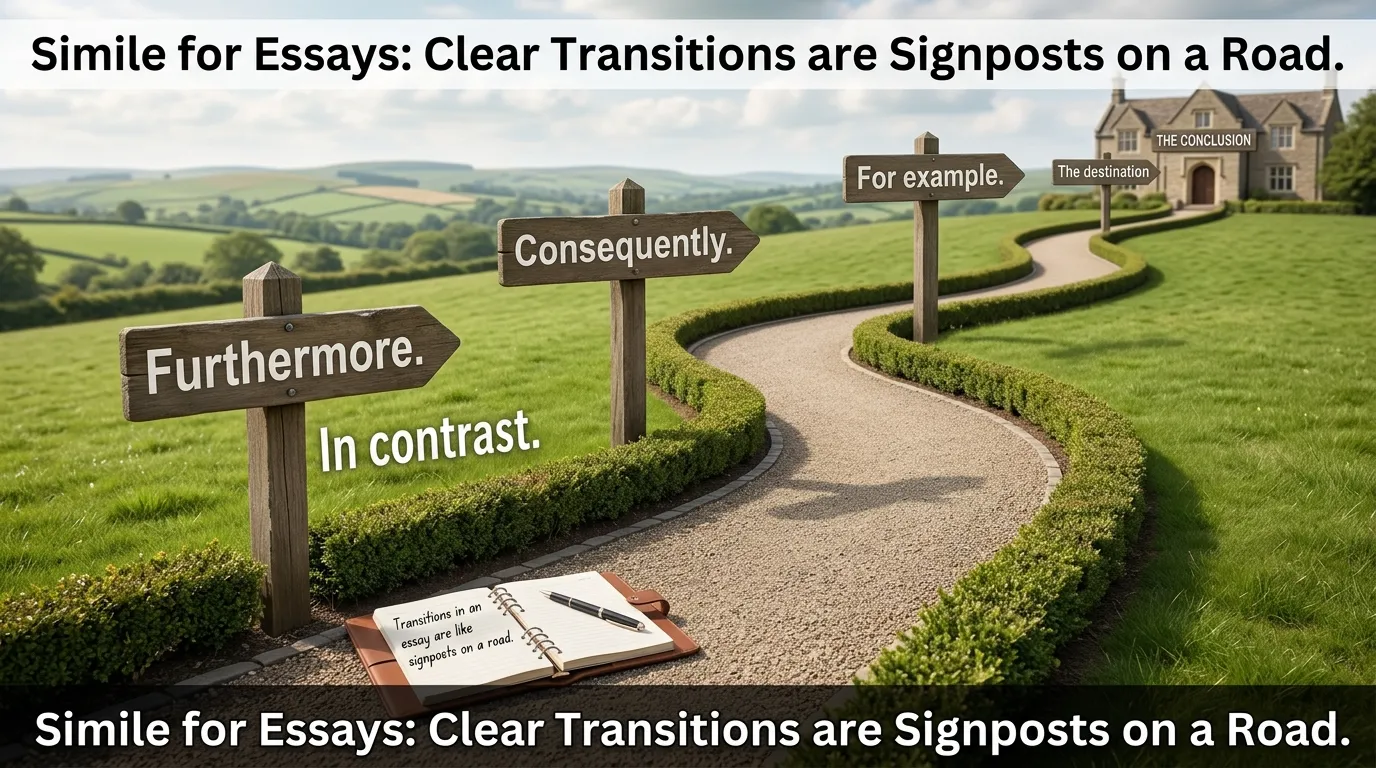
3. Like a bridge connecting ideas
Meaning: Linking thoughts smoothly.
Definition: A bridge joins two places, just as transitions connect different parts of an essay.
Usage Insight: Excellent for formal academic writing.
Examples:
- Strong transition sentences are like bridges connecting ideas.
- The essay flowed naturally from one point to another.
4. As smooth as flowing water
Meaning: Easy and pleasant to read.
Definition: Flowing water moves naturally without interruption, symbolizing well-organized writing.
Usage Insight: Perfect for descriptive and narrative essays.
Examples:
- The essay was as smooth as flowing water.
- Every paragraph blended naturally into the next.
5. Like painting a picture with words
Meaning: Creating vivid descriptions.
Definition: Writers use descriptive language the way artists use paint to create detailed images.
Usage Insight: Ideal for descriptive and personal essays.
Examples:
- Her essay was like painting a picture with words.
- Readers could easily imagine every scene she described.
6. As sharp as a freshly sharpened pencil
Meaning: Precise and focused.
Definition: A sharp pencil creates neat writing, representing accurate and effective communication.
Usage Insight: Great for analytical and argumentative essays.
Examples:
- His analysis was as sharp as a freshly sharpened pencil.
- Every sentence strengthened the central argument.
7. Like solving a puzzle
Meaning: Putting ideas together carefully.
Definition: Every paragraph contributes to the complete message just as puzzle pieces create a finished picture.
Usage Insight: Excellent for research papers and critical thinking essays.
Examples:
- Organizing the essay was like solving a puzzle.
- Every supporting point completed the argument.
8. As steady as a lighthouse
Meaning: Consistent and reliable.
Definition: A lighthouse stands firm through storms, symbolizing a focused and organized essay.
Usage Insight: Perfect for academic and research writing.
Examples:
- Her argument remained as steady as a lighthouse.
- The essay maintained a clear direction throughout.
9. Like climbing a mountain
Meaning: Achieving success through persistence.
Definition: Writing an excellent essay takes patience, effort, and continuous improvement.
Usage Insight: Great for motivational essays and personal reflections.
Examples:
- Completing the final draft felt like climbing a mountain.
- Every revision improved the quality of the essay.
10. As bright as the morning sun
Meaning: Full of fresh and original ideas.
Definition: The morning sun symbolizes optimism, creativity, and new beginnings.
Usage Insight: Excellent for scholarship essays and personal statements.
Examples:
- Her introduction was as bright as the morning sun.
- The essay immediately captured the reader’s attention.
How to Use These Similes Effectively
Learning similes for essays is only the first step. Using them naturally can improve clarity, strengthen descriptions, and make your writing more engaging.
Academic Essays
Use similes to explain difficult concepts, support arguments, or make abstract ideas easier to understand. Avoid overusing them to maintain a professional tone.
Personal Narratives
Similes help describe experiences, emotions, and personal growth in a way that readers can easily relate to and visualize.
Descriptive Essays
Creative comparisons make people, places, and events more vivid by appealing to the reader’s imagination.
Content Writing
Whether you’re writing educational blogs, study guides, writing tutorials, or academic resources, examples of similes for essays improve readability while naturally strengthening SEO.
Speeches and Presentations
Classroom presentations, academic seminars, workshops, and graduation speeches become more engaging when meaningful similes simplify complex ideas and create memorable imagery.
Frequently Asked Questions
What are similes for essays?
Similes for essays compare ideas, people, or experiences to familiar things using “like” or “as.” They make writing clearer, more descriptive, and more engaging.
Should I use similes in academic essays?
Yes. When used carefully and naturally, similes improve clarity and help readers better understand your ideas without making the essay sound too informal.
Can students use similes in school assignments?
Absolutely. These common similes for essays are suitable for descriptive, narrative, persuasive, and reflective essays at different education levels.
What’s the difference between a simile and a metaphor?
A simile compares two things using “like” or “as,” while a metaphor makes a direct comparison without using those words.
Are similes useful for educational bloggers?
Yes. Bloggers often use creative similes for essays in writing guides, grammar tutorials, study resources, and educational articles to make content easier to understand and more engaging.
Conclusion
Writing an effective essay requires more than strong grammar and correct structure—it also requires the ability to communicate ideas in a clear, engaging, and memorable way. Carefully chosen similes for essays can transform ordinary descriptions into vivid comparisons that capture readers’ attention, simplify complex concepts, and make arguments more persuasive. When used thoughtfully, similes strengthen both academic and creative writing while maintaining clarity and professionalism.
Whether you’re writing a persuasive essay, a descriptive composition, a narrative assignment, a scholarship application, or an educational article, the best similes for essays can help you express your ideas with greater confidence and creativity. Choose comparisons that naturally fit your topic, avoid overusing figurative language, and focus on enhancing your message rather than distracting from it. With regular practice, you’ll develop a stronger writing style that combines imagination with academic excellence, leaving a lasting impression on every reader.

James Williams is a dedicated language writer and contributor at Mitaphor.com, where he explores the art of similes, metaphors, and word meanings. With a passion for making language simple and engaging, James breaks down complex expressions into clear, easy-to-understand insights. His work is designed to help students, writers, and curious readers better understand figurative language and use it effectively in everyday communication.