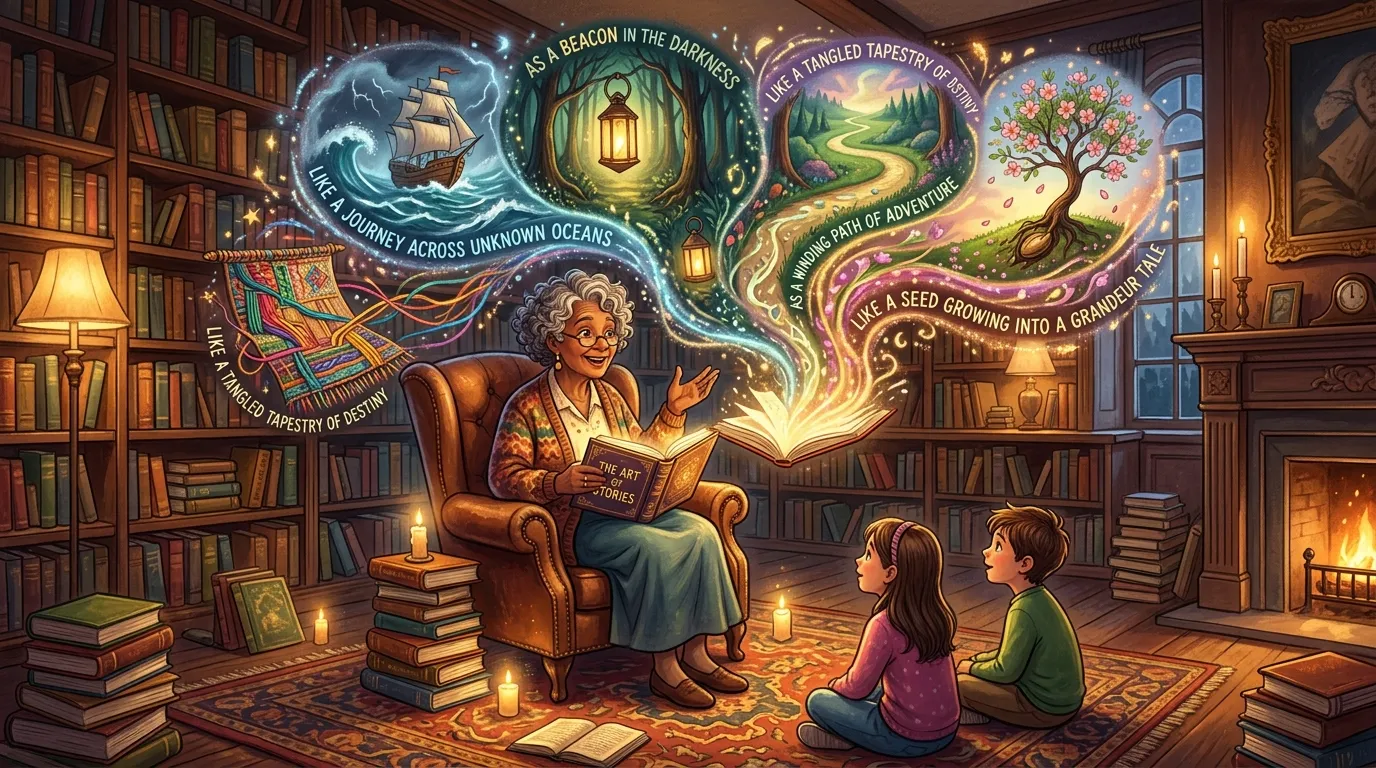
Stories have the power to entertain, inspire, teach valuable lessons, and transport readers into entirely new worlds. Whether you’re writing a short story, a novel, a children’s tale, a fantasy adventure, or a personal narrative, strong storytelling depends on creating vivid characters, believable settings, and memorable emotions. Readers connect with stories when they can clearly picture what is happening and feel emotionally involved in the journey. One of the most effective ways to achieve this is by using similes. By comparing one thing to another with the words “like” or “as,” similes help writers paint colorful mental images that make stories more engaging, expressive, and unforgettable.
Whether you’re a student writing a creative assignment, an aspiring author working on your next novel, a teacher introducing figurative language, or a blogger sharing writing tips, learning similes for stories can transform your storytelling. These creative comparisons add emotion, depth, and realism while helping readers visualize scenes, characters, actions, and feelings more clearly.
In this comprehensive guide, you’ll discover some of the best similes for stories, complete with simple meanings, detailed definitions, practical usage insights, and realistic examples. You’ll also learn how to use these similes effectively in short stories, novels, essays, poems, speeches, and content writing.
What Is a Simile?
A simile is a figure of speech that compares two different things using the words “like” or “as.” Rather than describing something directly, a simile creates a vivid comparison that helps readers better imagine people, places, emotions, and events.
Similes make stories more engaging because they transform simple descriptions into memorable images that capture readers’ attention.
Simple Examples
- She was as brave as a lion.
- His voice was like gentle rain.
These comparisons make writing more descriptive and emotionally engaging.
82 Powerful Similes for Stories
1. Like turning the pages of an adventure
Meaning: Full of excitement and discovery.
Definition: Every page of a good story reveals something new, making this one of the most popular similes for stories because it captures the excitement of storytelling.
Usage Insight: Perfect for creative writing, novels, children’s stories, essays, and storytelling blogs. Suitable for formal, casual, and imaginative writing.
Examples:
- Reading the novel was like turning the pages of an adventure.
- Every chapter introduced an unexpected surprise.
2. As colorful as a rainbow
Meaning: Rich with imagination and variety.
Definition: A rainbow represents beauty and diversity, symbolizing stories filled with vivid characters and exciting events.
Usage Insight: Excellent for children’s stories and fantasy writing.
Examples:
- Her story was as colorful as a rainbow.
- Every scene introduced something magical.
3. Like a journey through unknown lands
Meaning: Full of exploration and discovery.
Definition: Stories often take readers to unfamiliar places, just like travelers exploring new destinations.
Usage Insight: Great for adventure stories and novels.
Examples:
- Reading the book felt like a journey through unknown lands.
- Every chapter uncovered a new mystery.
4. As deep as the ocean
Meaning: Rich with emotion and meaning.
Definition: The ocean symbolizes depth, making it an excellent comparison for emotionally powerful stories.
Usage Insight: Perfect for literary fiction and reflective narratives.
Examples:
- The novel was as deep as the ocean.
- Every chapter revealed powerful emotions.
5. Like a puzzle coming together
Meaning: Every detail contributes to the whole story.
Definition: Just as puzzle pieces create a complete picture, story elements gradually build a satisfying narrative.
Usage Insight: Ideal for mystery and detective stories.
Examples:
- The mystery unfolded like a puzzle coming together.
- Every clue brought the detective closer to the truth.
6. As bright as the morning sun
Meaning: Hopeful and inspiring.
Definition: The morning sun symbolizes optimism and fresh beginnings.
Usage Insight: Great for inspirational and children’s stories.
Examples:
- The ending was as bright as the morning sun.
- Readers finished the story with hope.
7. Like a river flowing endlessly
Meaning: Smooth and continuous storytelling.
Definition: A flowing river moves naturally, representing a story with excellent pacing.
Usage Insight: Excellent for novels and long-form fiction.
Examples:
- The narrative flowed like a river.
- Every chapter connected naturally to the next.
8. As mysterious as a foggy forest
Meaning: Filled with suspense.
Definition: Fog hides what lies ahead, symbolizing mystery and uncertainty.
Usage Insight: Perfect for thrillers and suspense stories.
Examples:
- The abandoned house was as mysterious as a foggy forest.
- Every shadow hinted at another secret.
9. Like stars lighting the night sky
Meaning: Full of memorable moments.
Definition: Stars brighten darkness just as unforgettable scenes brighten a story.
Usage Insight: Excellent for emotional and inspirational stories.
Examples:
- The happy moments sparkled like stars lighting the night sky.
- Readers remembered those scenes long after finishing the book.
10. As strong as an oak tree
Meaning: Showing resilience and determination.
Definition: Oak trees symbolize strength and endurance, making this simile ideal for courageous characters.
Usage Insight: Great for adventure stories and character development.
Examples:
- The hero stood as strong as an oak tree.
- She never gave up despite the challenges.
How to Use These Similes Effectively
Learning similes for stories is only the beginning. Using them naturally can make your storytelling more vivid, engaging, and memorable.
Short Stories
Use similes to describe characters, settings, emotions, and actions without overwhelming readers. Well-placed comparisons create vivid imagery and strengthen the narrative.
Novels
In longer stories, use similes to reveal personality, build atmosphere, and enrich emotional moments. Avoid repeating the same comparisons to keep your writing fresh.
Poems
Many poetic stories rely on figurative language. Similes help create emotional depth and memorable visual images.
Content Writing
Whether you’re writing creative writing blogs, storytelling guides, author resources, or educational articles, examples of similes for stories improve readability while naturally strengthening SEO.
Speeches and Presentations
Creative writing workshops, literature classes, storytelling competitions, and author talks become more engaging when carefully selected similes demonstrate how descriptive language enhances storytelling.
Frequently Asked Questions
What are similes for stories?
Similes for stories compare characters, settings, emotions, or events to familiar things using “like” or “as.” They make storytelling more vivid and engaging.
Why are similes important in storytelling?
Similes create memorable imagery, strengthen emotional connections, and help readers visualize scenes more clearly.
Can students use these similes in creative writing assignments?
Yes. These common similes for stories are excellent for school assignments, short stories, novels, essays, and storytelling competitions.
What’s the difference between a simile and a metaphor?
A simile compares two things using “like” or “as,” while a metaphor makes a direct comparison without using those words.
Are similes useful for fiction writers?
Absolutely. Authors frequently use creative similes for stories to develop characters, create atmosphere, describe emotions, and make narratives more engaging and memorable.
Conclusion
Every great story leaves readers with unforgettable characters, meaningful emotions, and vivid mental images. Whether you’re writing a children’s tale, a mystery novel, a fantasy adventure, a personal narrative, or a short story, carefully chosen similes for stories can bring your writing to life through creative and relatable comparisons. They help readers visualize scenes, understand emotions, and become fully immersed in the world you’ve created, making your storytelling more powerful and memorable.
Whether you’re an aspiring author, a student, a teacher, or a content creator, the best similes for stories can elevate your writing by adding clarity, creativity, and emotional depth. Use similes naturally, choose comparisons that fit the tone of your story, and experiment with fresh imagery instead of relying on overused expressions. With consistent practice, you’ll develop a storytelling style that captivates readers, enriches every scene, and keeps your audience turning pages until the very end.

Chris Woak is a passionate language enthusiast and the creative voice behind Mitaphor.com. With a deep interest in similes, metaphors, and word meanings, Chris simplifies complex expressions into clear, engaging explanations that readers of all levels can understand. His work focuses on helping students, writers, and language lovers explore the power of figurative language and improve their communication skills.