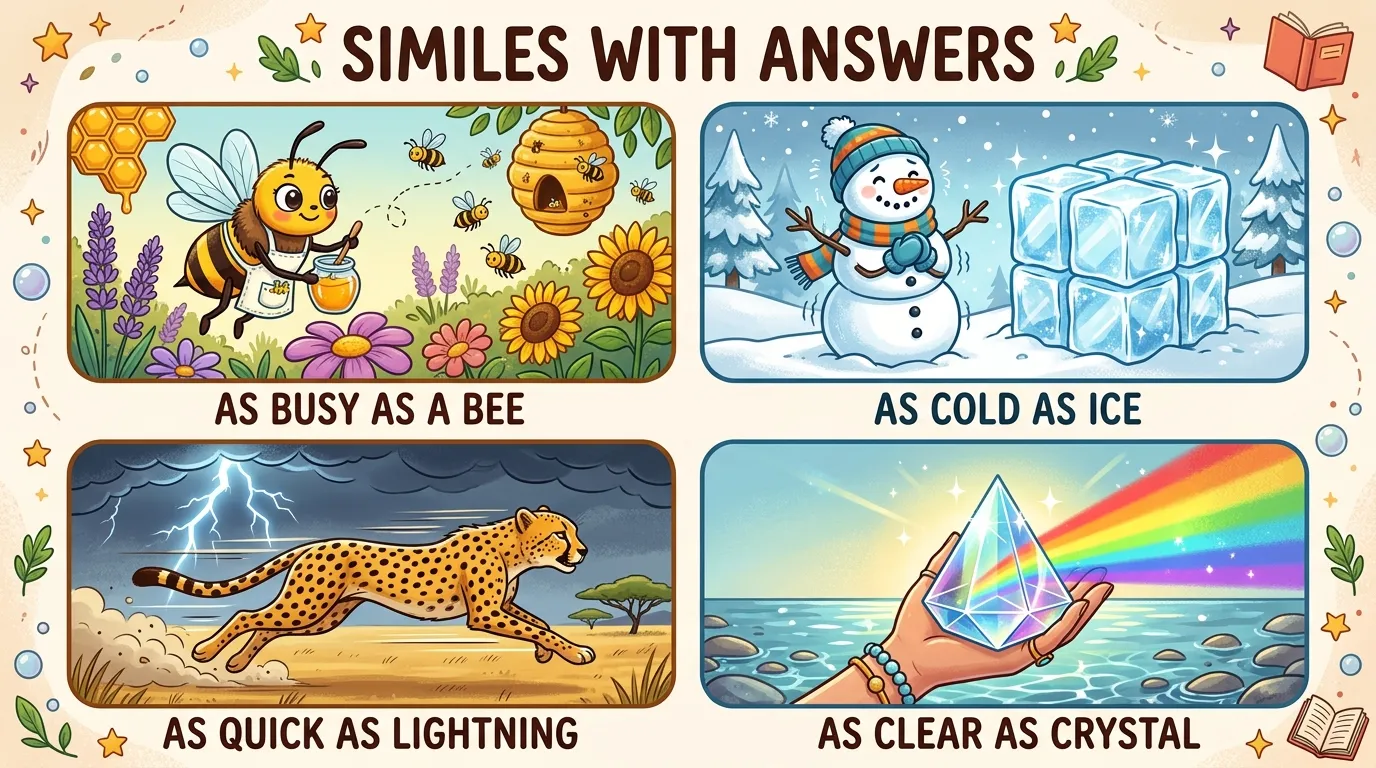
Similes are one of the easiest and most enjoyable figures of speech to learn. They help writers compare two different things using the words “like” or “as,” making descriptions more colorful, expressive, and memorable. From classroom assignments and English exams to creative writing and everyday conversations, similes are widely used to explain ideas, describe emotions, and paint vivid pictures with words. However, many students and beginner writers often look for similes with answers to better understand how these comparisons work and how to use them correctly in real-life writing.
Whether you’re a student preparing for an English test, a teacher creating worksheets, a parent helping with homework, or a blogger writing educational content, learning similes with answers can strengthen your understanding of figurative language. Studying examples with explanations makes it easier to recognize similes, understand their meanings, and confidently use them in essays, stories, speeches, poems, and everyday communication.
In this comprehensive guide, you’ll discover some of the best similes with answers, complete with simple meanings, detailed definitions, practical usage insights, and realistic examples. You’ll also learn how to use similes effectively in different forms of writing while improving your vocabulary and communication skills.
What Is a Simile?
A simile is a figure of speech that compares two different things using the words “like” or “as.” Instead of describing something directly, a simile creates a vivid comparison that helps readers and listeners better understand people, objects, emotions, or situations.
Similes make writing more descriptive because they connect unfamiliar ideas with familiar experiences.
Simple Examples
- She was as brave as a lion.
- His smile was like sunshine after the rain.
These comparisons create strong mental images and make writing more interesting.
84 Powerful Similes with Answers
1. As brave as a lion
Answer (Meaning): Very brave and courageous.
Definition: Lions symbolize courage and fearlessness, making this one of the most common similes with answers for describing confident people.
Usage Insight: Perfect for essays, speeches, stories, classroom activities, and everyday conversations. Suitable for formal, casual, and creative writing.
Examples:
- The firefighter was as brave as a lion during the rescue.
- She stood confidently before the audience despite feeling nervous.
2. As busy as a bee
Answer (Meaning): Extremely hardworking and active.
Definition: Bees constantly work to collect nectar and care for their hive.
Usage Insight: Great for school assignments and descriptive writing.
Examples:
- My mother was as busy as a bee preparing for the celebration.
- The students worked all afternoon on their science projects.
3. As light as a feather
Answer (Meaning): Very light in weight.
Definition: Feathers weigh almost nothing, making them an excellent comparison.
Usage Insight: Useful in stories and descriptive essays.
Examples:
- The balloon felt as light as a feather.
- Her scarf floated gently in the breeze.
4. As quiet as a mouse
Answer (Meaning): Extremely silent.
Definition: Mice move quietly to avoid danger.
Usage Insight: Excellent for storytelling and classroom writing.
Examples:
- The classroom became as quiet as a mouse during the exam.
- He entered the room without making a sound.
5. As cool as a cucumber
Answer (Meaning): Calm and relaxed.
Definition: This simile describes someone who remains calm under pressure.
Usage Insight: Perfect for speeches and personal narratives.
Examples:
- She stayed as cool as a cucumber during the interview.
- Everyone admired his calm attitude.
6. As bright as the sun
Answer (Meaning): Very cheerful or intelligent.
Definition: The sun represents brightness, hope, and positivity.
Usage Insight: Great for poems and inspirational writing.
Examples:
- Her smile was as bright as the sun.
- The young student was eager to learn.
7. As strong as an ox
Answer (Meaning): Very powerful.
Definition: Oxen are known for their physical strength.
Usage Insight: Suitable for stories and descriptive essays.
Examples:
- The worker was as strong as an ox.
- He lifted the heavy furniture without difficulty.
8. As gentle as a lamb
Answer (Meaning): Kind and peaceful.
Definition: Lambs symbolize gentleness and innocence.
Usage Insight: Ideal for children’s stories and poems.
Examples:
- The little girl was as gentle as a lamb.
- He always treated others with kindness.
9. As fast as lightning
Answer (Meaning): Extremely fast.
Definition: Lightning travels incredibly quickly, making it a popular comparison.
Usage Insight: Great for sports writing and adventure stories.
Examples:
- The runner was as fast as lightning.
- She finished the race in record time.
10. As happy as a child in a candy store
Answer (Meaning): Extremely happy and excited.
Definition: Children often become excited in places filled with treats and surprises.
Usage Insight: Excellent for personal stories and descriptive writing.
Examples:
- He looked as happy as a child in a candy store after receiving the award.
- Everyone celebrated the good news with excitement.
How to Use These Similes Effectively
Learning similes with answers helps you understand both the comparison and its meaning, making it easier to use similes naturally in your writing and speech.
Essays
Use similes to explain ideas, describe people, and make your writing more engaging. Choose comparisons that support your main point without overusing figurative language.
Stories
Similes help readers visualize characters, settings, and actions. Creative comparisons make stories more enjoyable and memorable.
Poems
Poetry relies heavily on imagery. Well-chosen similes create emotional depth and help readers connect with your message.
Content Writing
Whether you’re writing educational blogs, grammar guides, study materials, or English-learning resources, examples of similes with answers improve readability while naturally strengthening SEO.
Classroom Activities
Teachers can use similes with answers in worksheets, quizzes, discussions, and language exercises to help students understand figurative language more effectively.
Frequently Asked Questions
What are similes with answers?
Similes with answers include both the comparison and its meaning, helping learners understand exactly what each simile expresses.
Why are similes with answers useful?
They make it easier to learn figurative language, improve vocabulary, and use similes correctly in writing and speaking.
Can students use these similes in exams?
Yes. These common similes with answers are useful for English exams, assignments, speeches, essays, and creative writing.
What’s the difference between a simile and a metaphor?
A simile compares two things using “like” or “as,” while a metaphor compares them directly without those words.
Are similes with answers helpful for teachers?
Absolutely. Teachers frequently use similes with answers in lesson plans, worksheets, quizzes, classroom activities, and homework exercises to teach figurative language.
Conclusion
Learning similes with answers is one of the best ways to understand figurative language and become a more confident writer and speaker. Instead of simply memorizing comparisons, understanding their meanings, definitions, and proper usage helps you apply them naturally in real-life situations. Whether you’re describing a person, explaining an idea, writing a story, or preparing for an English exam, similes make your communication more vivid, engaging, and memorable.
Whether you’re a student, teacher, parent, blogger, or language learner, the best similes with answers can strengthen your vocabulary, improve your writing, and make your ideas easier to understand. Practice using different similes in essays, poems, speeches, conversations, and creative writing, and don’t be afraid to create your own original comparisons. The more you practice, the more naturally similes will become part of your everyday communication, helping you write with greater confidence and creativity.

Chris Woak is a passionate language enthusiast and the creative voice behind Mitaphor.com. With a deep interest in similes, metaphors, and word meanings, Chris simplifies complex expressions into clear, engaging explanations that readers of all levels can understand. His work focuses on helping students, writers, and language lovers explore the power of figurative language and improve their communication skills.