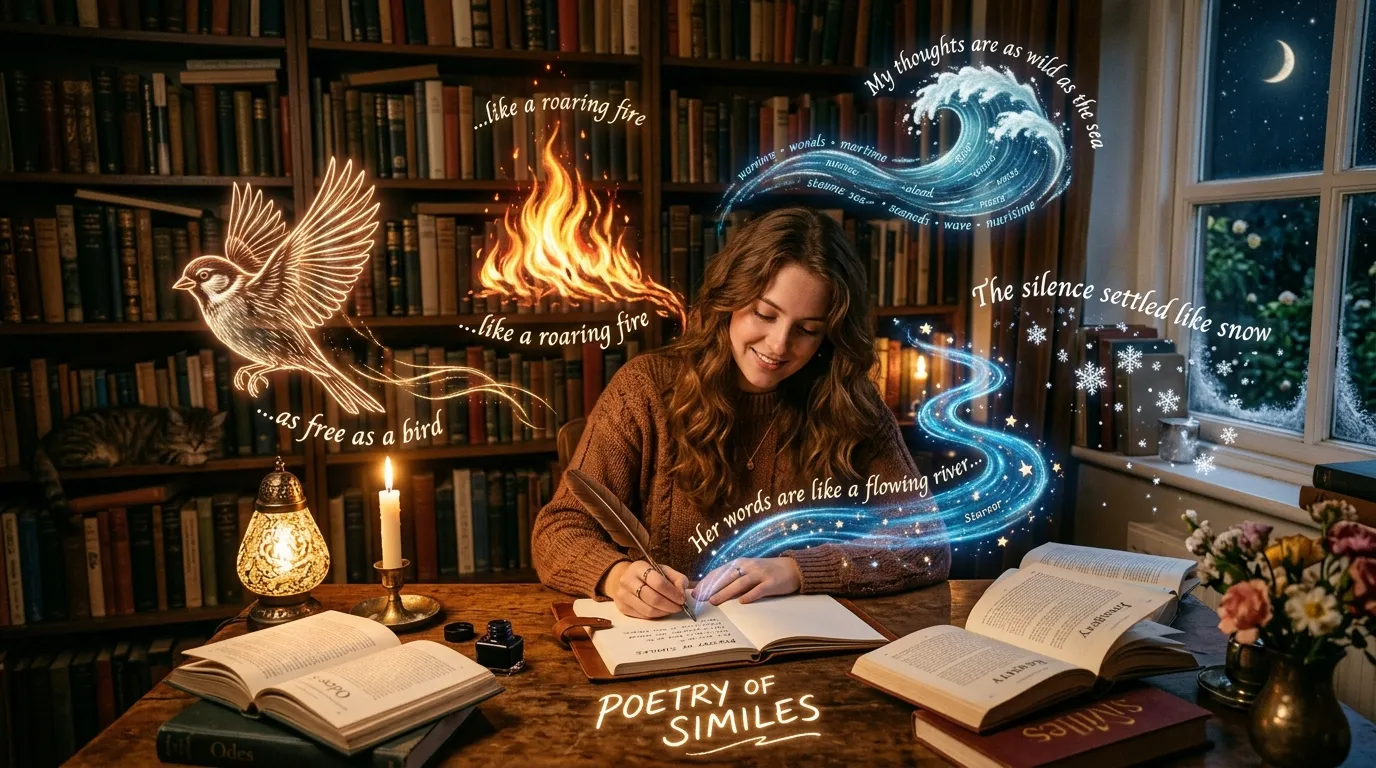
Poetry is one of the oldest and most expressive forms of writing. It allows writers to capture emotions, paint vivid images, and communicate thoughts in a way that ordinary language often cannot. Whether you’re writing about love, nature, friendship, hope, loss, or dreams, poetry relies on creativity and imagination to connect with readers on a deeper level. One of the most effective literary devices used in poetry is the simile. By comparing one thing to another using “like” or “as,” similes create powerful imagery that makes poems more emotional, memorable, and meaningful.
Whether you’re a student writing an English assignment, a poet searching for fresh inspiration, a teacher introducing figurative language, or a blogger creating educational content, learning similes for poems can greatly improve your writing. These creative comparisons help readers visualize emotions, settings, and experiences while adding beauty, rhythm, and depth to every poem.
In this comprehensive guide, you’ll discover some of the best similes for poems, complete with simple meanings, detailed definitions, practical usage insights, and realistic examples. You’ll also learn how to use these similes effectively in poetry, essays, stories, speeches, and creative content writing.
What Is a Simile?
A simile is a figure of speech that compares two different things using the words “like” or “as.” Instead of describing something directly, a simile creates a vivid comparison that helps readers imagine emotions, people, places, and experiences more clearly.
Similes are especially valuable in poetry because they create strong imagery, evoke emotions, and make verses more memorable.
Simple Examples
- Her smile was like sunshine after the rain.
- He was as brave as a lion.
These comparisons make writing more expressive and visually engaging.
79 Powerful Similes for Poems
1. Like stars scattered across the night sky
Meaning: Beautiful and full of wonder.
Definition: Stars symbolize beauty, dreams, and endless possibilities, making this one of the most popular similes for poems.
Usage Insight: Perfect for romantic poems, nature poetry, inspirational verses, and creative writing. Suitable for formal, casual, and artistic styles.
Examples:
- Her dreams sparkled like stars scattered across the night sky.
- The city lights shimmered like distant stars.
2. As gentle as a summer breeze
Meaning: Calm and soothing.
Definition: A gentle breeze represents peace, comfort, and softness.
Usage Insight: Excellent for love poems and peaceful nature poems.
Examples:
- Her voice was as gentle as a summer breeze.
- The evening wrapped around us with quiet comfort.
3. Like petals floating on the wind
Meaning: Delicate and graceful.
Definition: Flower petals drifting in the wind symbolize beauty and fragility.
Usage Insight: Great for romantic and emotional poetry.
Examples:
- Her laughter floated like petals on the wind.
- Their memories drifted gently through time.
4. As bright as the morning sun
Meaning: Full of hope and happiness.
Definition: The morning sun symbolizes fresh beginnings and optimism.
Usage Insight: Perfect for inspirational and uplifting poems.
Examples:
- Her smile was as bright as the morning sun.
- Every new day arrived with endless promise.
5. Like waves kissing the shore
Meaning: Gentle, constant, and peaceful.
Definition: Ocean waves repeatedly touch the shore, symbolizing love, comfort, and persistence.
Usage Insight: Excellent for romantic and reflective poetry.
Examples:
- His words returned like waves kissing the shore.
- Their friendship remained calm through every season.
6. As soft as falling snow
Meaning: Gentle and peaceful.
Definition: Snow falls quietly, representing calmness and tenderness.
Usage Insight: Great for winter poems and emotional writing.
Examples:
- Her touch was as soft as falling snow.
- Silence settled over the valley.
7. Like a bird soaring through the sky
Meaning: Free and limitless.
Definition: Birds flying high symbolize freedom, dreams, and ambition.
Usage Insight: Ideal for motivational and inspirational poems.
Examples:
- My spirit rose like a bird soaring through the sky.
- Hope carried me beyond my fears.
8. As deep as the ocean
Meaning: Full of profound emotion.
Definition: The ocean represents mystery, depth, and powerful feelings.
Usage Insight: Perfect for love poems and reflective poetry.
Examples:
- Her love was as deep as the ocean.
- His sorrow stretched beyond words.
9. Like a rainbow after the storm
Meaning: Hope after hardship.
Definition: Rainbows symbolize beauty, healing, and brighter days following difficult times.
Usage Insight: Excellent for inspirational and emotional poems.
Examples:
- Her courage appeared like a rainbow after the storm.
- Happiness slowly returned after the difficult year.
10. As timeless as the moon
Meaning: Enduring and everlasting.
Definition: The moon has inspired poets for centuries, symbolizing eternity and beauty.
Usage Insight: Great for romantic, reflective, and philosophical poetry.
Examples:
- Their love was as timeless as the moon.
- The old oak tree stood through every season.
How to Use These Similes Effectively
Learning similes for poems is only the beginning. Using them naturally can make your poetry more expressive, emotional, and memorable.
Poetry
Choose similes that match the theme and emotion of your poem. Avoid forcing comparisons, and let each simile enhance the imagery rather than overwhelm it.
Essays
When writing about literature or poetry, similes help explain emotions, themes, and literary techniques more vividly.
Stories
Descriptive similes make characters, settings, and emotions easier for readers to imagine, especially during important scenes.
Content Writing
Whether you’re writing poetry guides, literary blogs, educational articles, or creative writing resources, examples of similes for poems improve reader engagement while naturally strengthening SEO.
Speeches and Creative Presentations
Poetry readings, literature classes, creative workshops, and motivational speeches become more memorable when carefully chosen similes create vivid mental images.
Frequently Asked Questions
What are similes for poems?
Similes for poems compare people, emotions, places, or ideas to familiar things using “like” or “as.” They make poetry more vivid, emotional, and imaginative.
Why are similes important in poetry?
Similes create strong imagery, help readers visualize emotions, and make poems more memorable and expressive.
Can students use these similes in school poems?
Yes. These common similes for poems are excellent for English assignments, creative writing, classroom activities, and poetry competitions.
What’s the difference between a simile and a metaphor?
A simile compares two things using “like” or “as,” while a metaphor makes a direct comparison without using those words.
Are similes useful for poetry bloggers?
Absolutely. Bloggers often use creative similes for poems in literary guides, writing tutorials, educational resources, and creative writing blogs to make content more engaging and valuable.
Conclusion
Poetry has the unique ability to transform ordinary words into unforgettable emotions and images. Whether you’re expressing love, joy, sadness, hope, nature, or personal experiences, the right comparisons can make your verses more meaningful and memorable. Carefully selected similes for poems help writers paint vivid pictures in readers’ minds, allowing emotions and ideas to come alive through creative language. Rather than relying on simple descriptions, similes add beauty, rhythm, and depth that enrich every line of poetry.
Whether you’re writing your first poem, preparing an English assignment, performing spoken word, or building a collection of original verses, the best similes for poems can inspire stronger imagery and deeper emotional connections. Choose comparisons that naturally fit your theme, experiment with fresh ideas instead of overused clichés, and let your creativity guide your writing. With practice, you’ll develop a poetic style that captivates readers and leaves them with images and emotions they’ll remember long after the final line.

James Williams is a dedicated language writer and contributor at Mitaphor.com, where he explores the art of similes, metaphors, and word meanings. With a passion for making language simple and engaging, James breaks down complex expressions into clear, easy-to-understand insights. His work is designed to help students, writers, and curious readers better understand figurative language and use it effectively in everyday communication.