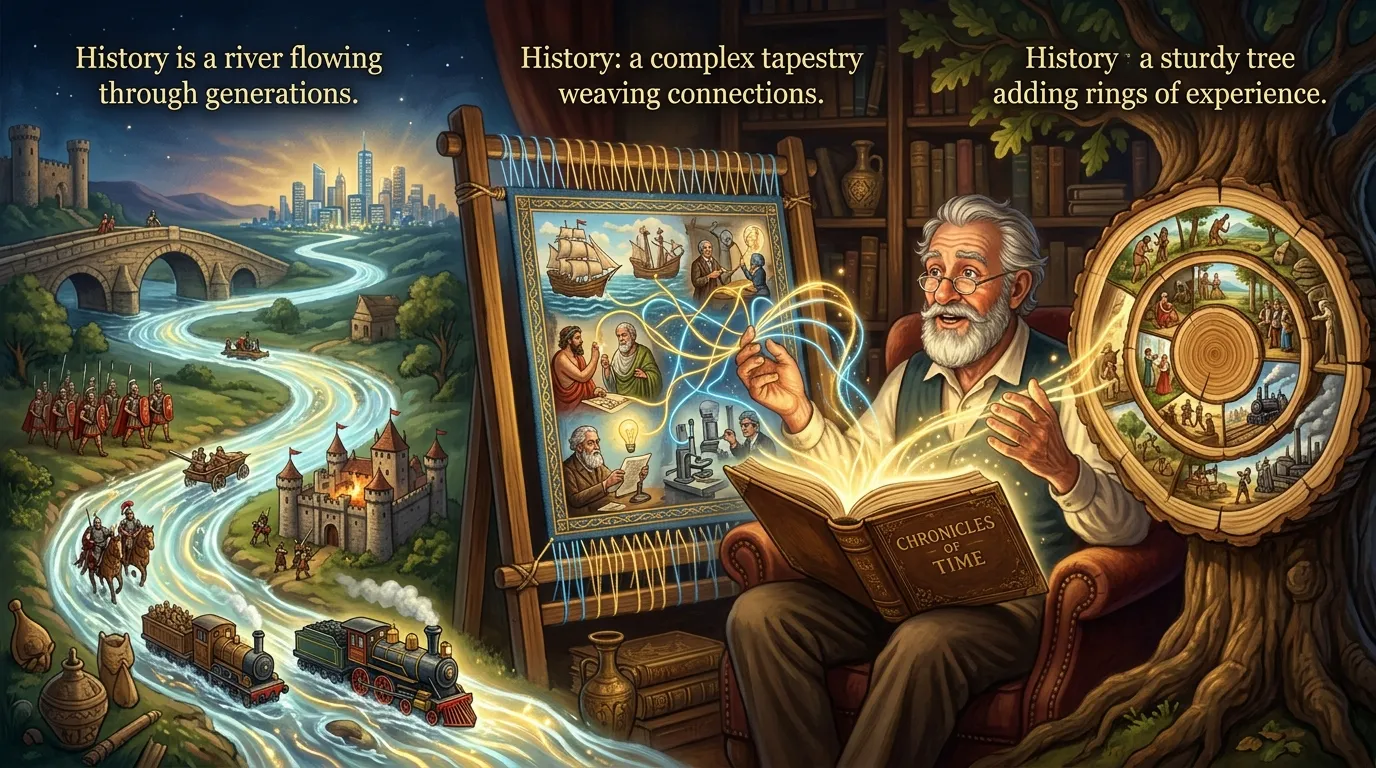
History is more than a collection of dates and events—it is the story of people, civilizations, triumphs, struggles, discoveries, and transformations that shaped the world we live in today. Whether you’re writing a historical essay, historical fiction, biography, research paper, classroom assignment, travel article, museum guide, or educational blog, your goal is to make the past feel vivid and meaningful. One of the most effective ways to accomplish this is by using similes.
Similes compare two unlike things using the words “like” or “as.” They transform ordinary historical descriptions into vivid mental images that help readers visualize ancient cities, legendary leaders, great battles, peaceful civilizations, and life-changing events. Instead of writing “the empire was powerful,” you could write “the empire stood like an ancient oak whose branches stretched across the horizon.” This comparison paints a stronger picture and makes history more engaging and memorable.
For writers, students, teachers, bloggers, historians, researchers, and storytellers, mastering the best similes for history storytelling can improve descriptive writing, strengthen historical narratives, and help readers connect emotionally with the past. This guide includes carefully selected similes with easy meanings, deeper explanations, practical usage insights, and natural examples that work across educational and creative writing.
What Is a Simile?
A simile is a figure of speech that compares two different things using “like” or “as.” It helps readers understand ideas more clearly by relating unfamiliar concepts to familiar images.
Simple Examples of Similes
- The ancient walls stood like silent guardians of history.
- The king was as brave as a lion defending his kingdom.
Similes are widely used in history storytelling because they make historical events, people, and places more vivid, memorable, and emotionally engaging.
99 Best Similes for History Storytelling
1. Like pages turning in an ancient book
Meaning: Revealing history one event at a time.
Deeper Definition: Represents the gradual unfolding of historical events, discoveries, and forgotten stories from the past.
Usage Insight: Perfect for historical essays, documentaries, biographies, museum articles, and historical fiction. Suitable for formal, academic, and creative writing.
Examples:
- Every excavation felt like pages turning in an ancient book.
- The historian uncovered another forgotten chapter.
2. As timeless as the oldest mountains
Meaning: Enduring through centuries.
Deeper Definition: Represents traditions, monuments, civilizations, or values that have survived countless generations.
Usage Insight: Excellent for describing historical landmarks and ancient cultures.
Examples:
- Their traditions remained as timeless as the oldest mountains.
- The monument continued to inspire visitors.
3. Like roots buried deep beneath the earth
Meaning: Strong historical foundations.
Deeper Definition: Represents cultural heritage and traditions that support future generations.
Usage Insight: Great for essays about civilization, heritage, and identity.
Examples:
- Their history stretched like roots buried deep beneath the earth.
- Every generation built upon that foundation.
4. As strong as a stone fortress
Meaning: Powerful and resilient.
Deeper Definition: Represents kingdoms, empires, or leaders who endured difficult times.
Usage Insight: Perfect for describing historical leaders and nations.
Examples:
- The empire stood as strong as a stone fortress.
- Its influence spread across distant lands.
5. Like a river shaping the landscape
Meaning: Gradually creating change.
Deeper Definition: Represents history slowly influencing societies, cultures, and civilizations over time.
Usage Insight: Ideal for educational writing and historical analysis.
Examples:
- History flowed like a river shaping the landscape.
- Every generation left its mark.
6. As bright as a torch in the darkness
Meaning: Bringing knowledge and hope.
Deeper Definition: Represents discoveries, inventions, or leaders who changed history for the better.
Usage Insight: Excellent for biographies and educational articles.
Examples:
- Her ideas shone as bright as a torch in the darkness.
- Future generations benefited from her vision.
7. Like echoes traveling through centuries
Meaning: Continuing to influence the present.
Deeper Definition: Represents historical events whose effects are still felt today.
Usage Insight: Great for historical essays and documentaries.
Examples:
- The revolution echoed like voices traveling through centuries.
- Its legacy continues today.
8. As silent as abandoned ruins
Meaning: Quiet but filled with stories.
Deeper Definition: Represents historical sites that preserve memories of forgotten civilizations.
Usage Insight: Perfect for archaeology and travel writing.
Examples:
- The ancient temple stood as silent as abandoned ruins.
- Every stone hinted at another story.
9. Like stars guiding travelers across history
Meaning: Inspiring future generations.
Deeper Definition: Represents great leaders, thinkers, and innovators whose achievements continue to guide people.
Usage Insight: Ideal for biographies and leadership stories.
Examples:
- Their wisdom guided generations like stars guiding travelers across history.
- Their influence never faded.
10. As enduring as carved stone monuments
Meaning: Lasting for generations.
Deeper Definition: Represents achievements, values, or historical landmarks that withstand the test of time.
Usage Insight: Excellent for describing architecture and cultural heritage.
Examples:
- Their legacy remained as enduring as carved stone monuments.
- Visitors still admired their accomplishments.
11. Like a bridge connecting centuries
Meaning: Linking the past and present.
Deeper Definition: Represents historical knowledge helping people understand modern life.
Usage Insight: Great for educational and museum writing.
Examples:
- Museums serve like bridges connecting centuries.
- Every exhibit tells a meaningful story.
12. As precious as an ancient manuscript
Meaning: Extremely valuable.
Deeper Definition: Represents historical documents, artifacts, and traditions that preserve knowledge.
Usage Insight: Perfect for research papers and cultural history.
Examples:
- The diary was as precious as an ancient manuscript.
- It revealed forgotten events.
13. Like a crown passed through generations
Meaning: Carrying tradition and responsibility.
Deeper Definition: Represents leadership, heritage, and historical continuity.
Usage Insight: Excellent for royal history and biographies.
Examples:
- Their traditions survived like a crown passed through generations.
- Every ruler honored the past.
14. As steady as the sunrise through history
Meaning: Reliable and constant.
Deeper Definition: Represents values and truths that remain important despite changing times.
Usage Insight: Great for reflective essays and educational content.
Examples:
- Justice remained as steady as the sunrise through history.
- People continued striving for fairness.
15. Like footprints preserved in ancient stone
Meaning: Leaving a lasting legacy.
Deeper Definition: Represents achievements that future generations remember.
Usage Insight: Perfect for biographies and historical narratives.
Examples:
- Their achievements remained like footprints preserved in ancient stone.
- Future historians continued studying them.
16–99 Additional Best Similes for History Storytelling
- As old as forgotten kingdoms
- Like castles watching over centuries
- As powerful as an ancient empire
- Like maps revealing hidden civilizations
- As wise as respected elders
- Like rivers flowing through history
- As unforgettable as legendary battles
- Like banners waving through time
- As meaningful as a nation’s anthem
- Like ancient roads leading to great cities
- As resilient as city walls
- Like monuments honoring brave heroes
- As inspiring as great discoveries
- Like libraries preserving knowledge
- As enduring as timeless traditions
- Like statues remembering forgotten leaders
- As majestic as royal palaces
- Like bells echoing through old towns
- As rich as centuries of heritage
- Like candles lighting historic halls
- As memorable as a turning point in history
- Like ancient scrolls revealing forgotten truths
- As peaceful as an old monastery
- Like the first sunrise of a new era
- As remarkable as humanity’s greatest achievements
- Like bridges crossing generations
- As bold as explorers sailing unknown seas
- Like farmers planting seeds for the future
- As enduring as mountain fortresses
- Like stories passed around the fire
- As inspiring as freedom won through sacrifice
- Like ancient trees witnessing history
- As colorful as traditional festivals
- Like songs preserving old memories
- As timeless as family heritage
- Like warriors defending their homeland
- As patient as stone carved by time
- Like ships carrying dreams across oceans
- As resilient as civilizations rebuilt after hardship
- Like sunlight revealing forgotten ruins
- As hopeful as dawn after conflict
- Like voices remembered through generations
- As lasting as engraved monuments
- Like woven threads of human history
- As deep as centuries of wisdom
- Like an open museum filled with stories
- As treasured as family heirlooms
- Like traditions blooming every generation
- As unforgettable as a hero’s legacy
- Like maps charting remarkable journeys
- As meaningful as ancient ceremonies
- Like rivers connecting civilizations
- As brilliant as history’s greatest minds
- Like lanterns illuminating forgotten paths
- As extraordinary as discovering a lost city
- Like history written in stone
- As grand as the rise of an empire
- Like every artifact telling a story
- As valuable as preserved heritage
- Like every generation adding another chapter
- As inspiring as humanity’s resilience
- Like the past reaching into the present
- As enduring as the spirit of civilization
- Like every monument honoring forgotten dreams
- As fascinating as history itself
How to Use These Similes Effectively in Different Forms of Writing
In Essays
Use similes to explain historical events, civilizations, and important figures more vividly.
Example: The empire expanded like a river shaping the landscape, gradually influencing every neighboring region.
In Stories
Use similes to create authentic historical settings and memorable characters.
Example: The castle stood as silent as abandoned ruins, guarding centuries of forgotten secrets.
In Poems
Historical similes add symbolism, emotion, and timeless imagery.
Example: Memories echoed like voices traveling through centuries.
In Content Writing
Use similes in history blogs, museum articles, educational content, and travel writing to make historical descriptions more engaging.
Example: Walking through the ancient city feels like turning the pages of an old book filled with remarkable stories.
Frequently Asked Questions
What are similes for history storytelling?
They are comparisons using “like” or “as” that make historical events, people, places, and civilizations more vivid and engaging.
Why should I use similes in historical writing?
Similes help readers visualize the past, understand historical events more clearly, and connect emotionally with history.
Can similes improve historical fiction?
Yes. They enrich descriptions, strengthen atmosphere, and make historical settings feel more authentic.
Are similes suitable for educational essays?
Absolutely. When used thoughtfully, similes make complex historical ideas easier to understand while keeping readers interested.
How can I create original history similes?
Draw inspiration from monuments, ancient civilizations, historical documents, nature, architecture, traditions, and famous events, then compare your subject using “like” or “as.”
Do similes make history more interesting?
Yes. They transform historical facts into vivid stories, helping readers remember important events and appreciate the people who shaped the past.
Conclusion
Using these best similes for history storytelling can transform historical writing into compelling narratives that educate and inspire. Whether you’re writing essays, biographies, historical fiction, museum articles, travel blogs, or educational content, similes help readers visualize the past and connect with history on a deeper level.
These similes for history storytelling enrich descriptions, strengthen narratives, and make historical events more memorable. Practice using them naturally, create your own original comparisons, and let your writing bring the past vividly to life for every reader.

James Williams is a dedicated language writer and contributor at Mitaphor.com, where he explores the art of similes, metaphors, and word meanings. With a passion for making language simple and engaging, James breaks down complex expressions into clear, easy-to-understand insights. His work is designed to help students, writers, and curious readers better understand figurative language and use it effectively in everyday communication.