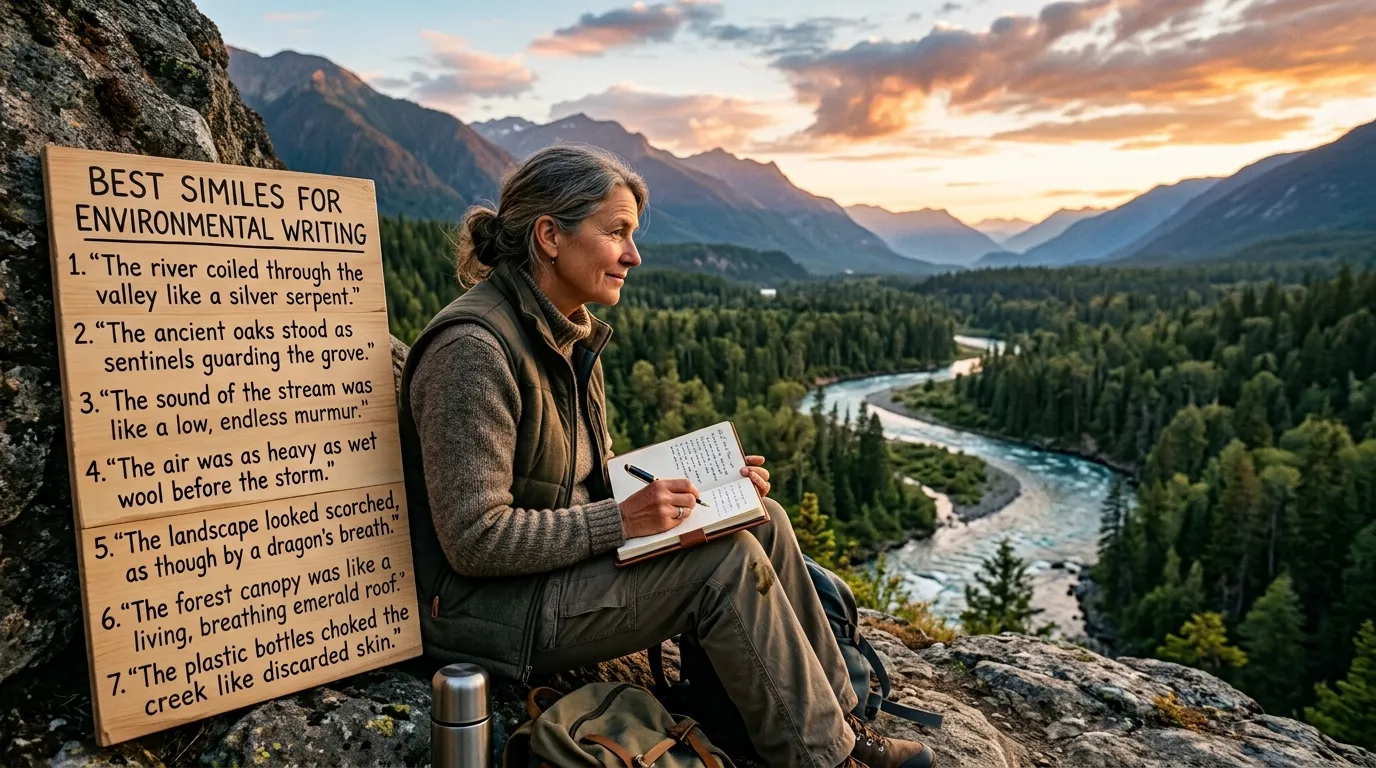
Environmental writing plays a vital role in raising awareness about the natural world, climate change, conservation, biodiversity, sustainability, and our responsibility to protect the Earth. Whether you’re writing a school essay, research paper, speech, blog post, poem, or nature article, using vivid language can make your message more engaging and memorable.
One of the most effective literary devices for describing nature and environmental issues is the simile. A simile compares two different things using the words “like” or “as.” These comparisons help readers visualize landscapes, weather, wildlife, forests, oceans, pollution, and environmental challenges with greater clarity and emotional impact.
Instead of simply saying a forest is peaceful or a river is clean, similes paint powerful mental pictures that bring the environment to life. They can inspire appreciation for nature, encourage conservation, and make complex environmental topics easier to understand.
In this comprehensive guide, you’ll discover 123 best similes for environmental writing, along with meanings, example sentences, writing tips, practical uses, and frequently asked questions. Whether you’re a student, teacher, blogger, environmental advocate, or creative writer, these similes will help you write with greater creativity and purpose.
What Is a Simile?
A simile is a figure of speech that compares two unlike things using the words “like” or “as.” Writers use similes to create vivid imagery and make descriptions more expressive.
Example
“The river flowed like a silver ribbon through the valley.”
This comparison helps readers picture the river’s beauty and graceful movement.
Why Use Similes in Environmental Writing?
Environmental similes can:
- Create vivid images of landscapes and wildlife.
- Explain complex environmental concepts more clearly.
- Add emotion to conservation messages.
- Strengthen descriptive essays and stories.
- Make speeches and presentations more memorable.
- Encourage readers to appreciate and protect nature.
- Improve creative, academic, and persuasive writing.
123 Best Similes for Environmental Writing
Similes About Forests and Trees
1. Like a green blanket covering the earth
Meaning: Dense and lush vegetation.
Example: The rainforest spread like a green blanket covering the earth.
2. As tall as ancient giants
Meaning: Extremely tall trees.
Example: The pine trees stood as tall as ancient giants.
3. Like nature’s cathedral
Meaning: Majestic and peaceful forest.
Example: The old forest felt like nature’s cathedral.
4. As strong as an oak tree
Meaning: Powerful and enduring.
Example: The ancient tree remained as strong as an oak tree despite the storms.
5. Like arms reaching toward the sky
Meaning: Tree branches stretching upward.
Example: The branches spread like arms reaching toward the sky.
6. As peaceful as a quiet woodland
7. Like a living tapestry of green
8. As timeless as the oldest forest
9. Like guardians protecting the earth
10. As graceful as willow branches in the breeze
Similes About Rivers, Lakes, and Oceans
11. Like a silver ribbon winding through the land
12. As clear as crystal
13. Like a mirror reflecting the sky
14. As endless as the ocean horizon
15. Like waves dancing under the sunlight
16. As calm as a sleeping lake
17. Like liquid glass
18. As refreshing as mountain springs
19. Like an endless blue canvas
20. As deep as ancient wisdom
21. Like a heartbeat flowing through nature
22. As gentle as a flowing stream
23. Like pearls scattered across the sea
24. As powerful as crashing waves
25. Like water painting the landscape
26. As pure as fresh rainwater
27. Like rivers embracing the sea
28. As sparkling as diamonds
29. Like music flowing through valleys
30. As free as the tides
Similes About Wildlife
31. Like birds singing nature’s symphony
32. As graceful as a deer
33. Like butterflies dancing among flowers
34. As swift as a falcon
35. Like bees weaving life through gardens
36. As gentle as a fawn
37. Like dolphins playing in the waves
38. As colorful as a tropical parrot
39. Like wolves moving through the forest
40. As majestic as an eagle soaring above mountains
Similes About Flowers and Plants
41. Like jewels decorating the earth
42. As colorful as a rainbow
43. Like smiles blooming in the sunlight
44. As delicate as morning dew
45. Like stars scattered across a meadow
46. As fragrant as a spring garden
47. Like nature’s artwork
48. As fresh as newly opened blossoms
49. Like brushes painting the landscape
50. As vibrant as spring itself
Similes About the Sky and Weather
51. Like cotton drifting across the sky
52. As blue as a sapphire
53. Like golden fire at sunrise
54. As brilliant as the midday sun
55. Like silver curtains of rain
56. As peaceful as a clear morning
57. Like thunder announcing the storm
58. As dramatic as lightning
59. Like stars scattered across velvet
60. As magical as the northern lights
Similes About Seasons
61. Like spring awakening from sleep
62. As colorful as autumn leaves
63. Like winter wrapping the earth in a blanket
64. As warm as summer sunshine
65. Like flowers welcoming spring
66. As refreshing as autumn rain
67. Like snow covering a quiet village
68. As lively as spring birds
69. Like golden leaves dancing in the wind
70. As peaceful as snowfall at midnight
Similes About Climate and Conservation
71. Like a candle protecting the darkness from growing
72. As valuable as clean water
73. Like planting hope one tree at a time
74. As essential as oxygen
75. Like healing wounds in the earth
76. As precious as every raindrop
77. Like building a greener tomorrow
78. As important as the air we breathe
79. Like restoring a masterpiece
80. As inspiring as the first tree planted
Similes About Pollution and Environmental Challenges
81. Like poison spreading through veins
82. As dark as smoke-filled skies
83. Like scars across the landscape
84. As heavy as polluted air
85. Like plastic choking the ocean
86. As heartbreaking as a silent forest
87. Like oil staining a white canvas
88. As destructive as an unchecked wildfire
89. Like a cry for help echoing across nature
90. As alarming as melting glaciers
More Beautiful Environmental Similes
91. Like mountains touching the clouds
92. As timeless as the stars
93. Like nature painting every sunrise
94. As bright as blooming sunflowers
95. Like leaves whispering in the wind
96. As refreshing as cool forest air
97. Like roots embracing the soil
98. As peaceful as birds returning home
99. Like rivers carrying life
100. As magnificent as a waterfall
101. Like clouds floating across endless skies
102. As gentle as falling snow
103. Like moonlight dancing on water
104. As inspiring as a blooming garden
105. Like sunlight warming the earth
106. As calm as dawn over the mountains
107. Like vines embracing ancient walls
108. As resilient as desert plants
109. Like seeds carried by the wind
110. As breathtaking as a rainbow after rain
111. Like forests breathing life into the planet
112. As enduring as mountain ranges
113. Like oceans embracing distant shores
114. As refreshing as cool morning mist
115. Like nature writing its own story
116. As pure as untouched wilderness
117. Like birds carrying songs through the air
118. As beautiful as Earth’s first sunrise
119. Like flowers smiling at the sun
120. As hopeful as new green shoots after a wildfire
121. Like the wind carrying whispers through the trees
122. As vibrant as a thriving coral reef
123. Like the Earth healing one season at a time
Best Similes for Environmental Essays
- Like a green blanket covering the earth
- Like a silver ribbon winding through the land
- Like planting hope one tree at a time
- Like forests breathing life into the planet
- Like the Earth healing one season at a time
- Like healing wounds in the earth
Best Similes for Climate Change Writing
- Like poison spreading through veins
- Like plastic choking the ocean
- As alarming as melting glaciers
- Like scars across the landscape
- As dark as smoke-filled skies
- Like restoring a masterpiece
Best Similes for Nature Descriptions
- Like stars scattered across a meadow
- Like moonlight dancing on water
- As breathtaking as a rainbow after rain
- Like mountains touching the clouds
- Like leaves whispering in the wind
- As vibrant as a thriving coral reef
Expert Tips for Using Environmental Similes
1. Use Nature-Based Comparisons
Draw inspiration from forests, rivers, wildlife, mountains, seasons, and the sky to create vivid imagery.
2. Match the Mood
Choose peaceful similes for descriptive writing and stronger, more urgent comparisons when discussing pollution or climate change.
3. Appeal to the Senses
Describe what readers might see, hear, smell, feel, or even imagine to make your writing more immersive.
4. Keep Similes Relevant
Ensure each comparison supports your message rather than distracting from it.
5. Balance Creativity with Accuracy
Creative language should enhance the description while remaining believable and clear.
Frequently Asked Questions
What is a good simile for nature?
“The river flowed like a silver ribbon through the valley” is a popular simile because it creates a vivid visual image.
Why use similes in environmental writing?
Similes make descriptions more engaging, help explain environmental ideas clearly, and encourage readers to appreciate and protect nature.
Can students use these similes in essays?
Yes. These similes are excellent for school essays, speeches, research papers, presentations, blogs, and creative writing.
Which similes work best for climate change topics?
Comparisons involving pollution, melting glaciers, smoke-filled skies, healing the Earth, and restoring ecosystems effectively highlight environmental challenges.
Conclusion
Environmental writing has the power to educate, inspire, and encourage positive action. While facts and scientific evidence are essential, vivid language helps readers connect emotionally with the natural world. Similes are especially valuable because they transform landscapes, wildlife, weather, and environmental issues into memorable images that readers can easily visualize and understand.
Whether you compare forests to green blankets, rivers to silver ribbons, or conservation to healing the Earth one season at a time, these comparisons can make your essays, speeches, stories, blogs, and research papers more engaging and persuasive. The 123 best similes for environmental writing in this guide provide a rich collection of creative comparisons for students, educators, environmental advocates, and writers of all levels.
As you continue writing about nature and the environment, remember that the right simile can do more than beautify your words—it can inspire appreciation for the planet and motivate others to protect it for future generations.

James Williams is a dedicated language writer and contributor at Mitaphor.com, where he explores the art of similes, metaphors, and word meanings. With a passion for making language simple and engaging, James breaks down complex expressions into clear, easy-to-understand insights. His work is designed to help students, writers, and curious readers better understand figurative language and use it effectively in everyday communication.