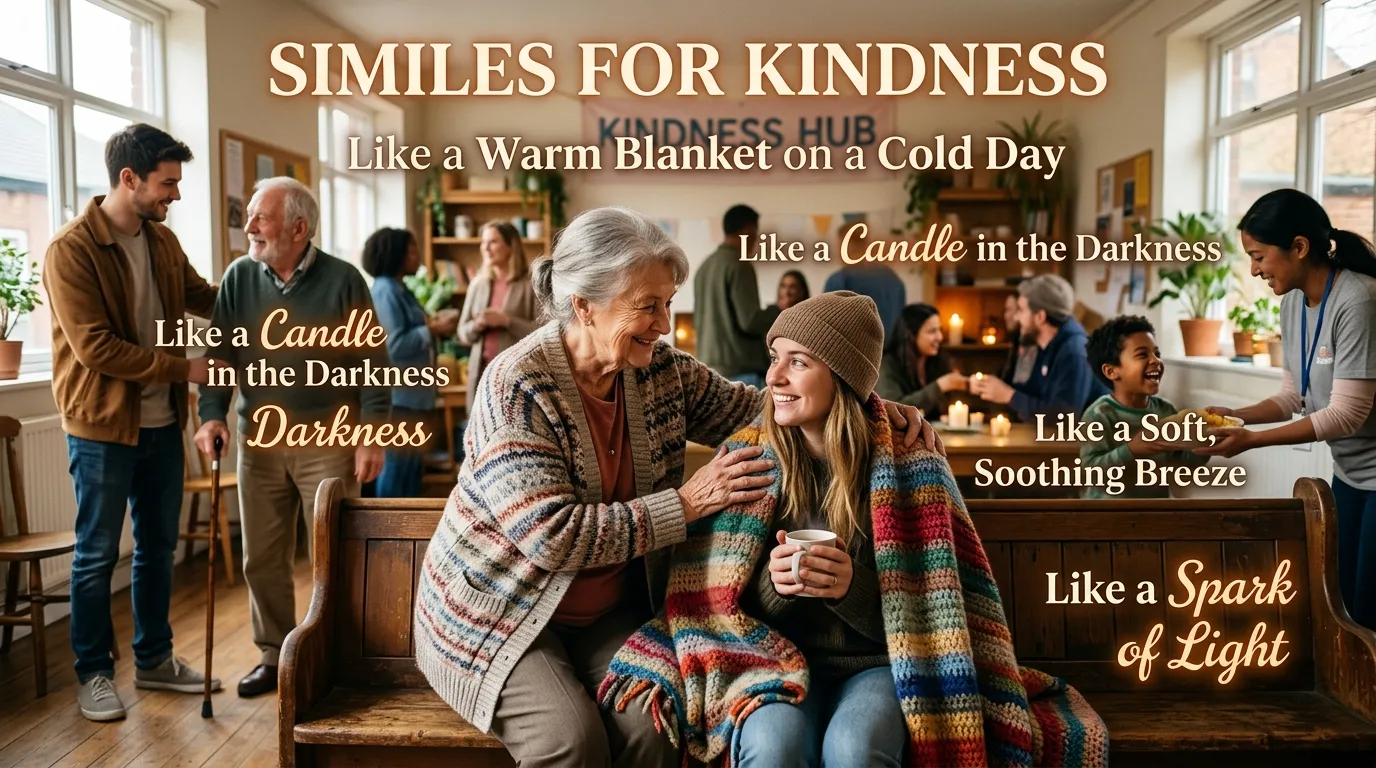
Kindness is one of the most admired human qualities. It can be seen in a helping hand, a comforting smile, a thoughtful gesture, or a few encouraging words. Although kindness is easy to recognize, it can sometimes be difficult to describe in a way that truly touches readers. That’s where similes become incredibly useful. By comparing kindness to familiar objects, experiences, and elements of nature, similes make your writing more vivid, emotional, and memorable.
Whether you’re a student writing an essay, a blogger creating inspirational content, a poet expressing compassion, or a storyteller developing lovable characters, learning similes for kindness can improve your writing dramatically. These creative comparisons help readers visualize kindness and connect with it on a deeper emotional level.
In this comprehensive guide, you’ll discover some of the best similes for kindness, along with their meanings, detailed definitions, practical usage insights, and realistic examples. You’ll also learn how to use these similes effectively in essays, stories, poems, speeches, and online content.
What Is a Simile?
A simile is a figure of speech that compares two different things using the words “like” or “as.” Instead of describing something directly, a simile creates a comparison that helps readers imagine it more clearly.
Similes make writing richer by turning ordinary descriptions into memorable images that readers can easily understand.
Simple Examples
- Her smile was like sunshine on a cold morning.
- He was as brave as a lion.
Both comparisons create stronger imagery and make the writing more engaging.
74 Powerful Similes for Kindness
1. As kind as an angel
Meaning: Exceptionally caring and compassionate.
Definition: Angels are often associated with goodness, mercy, and selfless love, making this one of the most common similes for kindness.
Usage Insight: Perfect for essays, speeches, inspirational blogs, and heartfelt stories. Suitable for formal, casual, and poetic writing.
Examples:
- My grandmother is as kind as an angel and always helps those in need.
- The nurse cared for every patient as kindly as an angel.
2. Like sunshine on a cold day
Meaning: Bringing warmth and comfort to others.
Definition: Sunshine brightens cold, gloomy days, just as kindness lifts people’s spirits.
Usage Insight: Ideal for poems, motivational articles, and descriptive writing.
Examples:
- Her encouraging words were like sunshine on a cold day.
- His kindness warmed everyone’s hearts like the morning sun.
3. As gentle as a lamb
Meaning: Soft, calm, and kind.
Definition: Lambs symbolize innocence and gentleness, making this simile perfect for describing compassionate people.
Usage Insight: Great for children’s stories, essays, and character descriptions.
Examples:
- She spoke as gently as a lamb to the frightened child.
- His caring nature was as gentle as a newborn lamb.
4. Like a warm blanket
Meaning: Comforting and reassuring.
Definition: A warm blanket provides safety and comfort, much like genuine kindness.
Usage Insight: Excellent for emotional storytelling and personal blogs.
Examples:
- Her hug felt like a warm blanket after a difficult day.
- His thoughtful words wrapped around me like a cozy blanket.
5. As sweet as honey
Meaning: Pleasant, thoughtful, and kind-hearted.
Definition: Honey represents sweetness, making it a natural comparison for kind behavior.
Usage Insight: Perfect for casual writing, speeches, and descriptive essays.
Examples:
- She was as sweet as honey to everyone she met.
- The teacher greeted every student with honey-like kindness.
6. Like a guiding light
Meaning: Helping others find hope.
Definition: A guiding light represents support, wisdom, and encouragement.
Usage Insight: Best for inspirational speeches and reflective writing.
Examples:
- His kindness was like a guiding light during difficult times.
- She became a source of hope for everyone around her.
7. As soft as a feather
Meaning: Gentle and caring.
Definition: Feathers symbolize tenderness and delicate compassion.
Usage Insight: Ideal for poetry and descriptive fiction.
Examples:
- Her voice was as soft as a feather.
- He handled every situation with feather-like gentleness.
8. Like fresh spring rain
Meaning: Refreshing and life-giving kindness.
Definition: Spring rain nourishes nature, just as kindness renews hope.
Usage Insight: Great for inspirational blogs and poems.
Examples:
- Her generosity refreshed everyone like spring rain.
- His thoughtful advice felt like rain after a long drought.
9. As calm as a quiet lake
Meaning: Peaceful and compassionate.
Definition: A calm lake represents emotional balance and kindness.
Usage Insight: Suitable for essays, novels, and speeches.
Examples:
- She remained as calm as a quiet lake during the disagreement.
- His peaceful attitude comforted everyone around him.
10. Like a blooming flower
Meaning: Beautiful kindness that spreads naturally.
Definition: Flowers brighten every place they grow, just as kindness improves every environment.
Usage Insight: Excellent for storytelling, blogs, and poems.
Examples:
- Her kindness bloomed like a beautiful flower.
- Every good deed made the community blossom.
How to Use These Similes Effectively
Learning similes for kindness is only the beginning. Using them naturally can make your writing more engaging, emotional, and memorable.
Essays
Use similes to describe compassionate people and meaningful actions instead of simply saying someone is kind. This creates stronger imagery and keeps readers interested.
Stories
Characters become more believable when their kindness is shown through vivid comparisons instead of simple descriptions.
Poems
Poetry depends on emotion and imagery. Similes help create beautiful comparisons that make poems more expressive and touching.
Content Writing
Lifestyle blogs, motivational articles, parenting content, educational posts, and self-improvement websites often use examples of similes for kindness to create stronger emotional connections with readers.
Speeches and Personal Messages
Whether you’re writing a graduation speech, appreciation message, thank-you note, or wedding toast, thoughtful similes can make your words more heartfelt and memorable.
Frequently Asked Questions
What are similes for kindness?
Similes for kindness compare caring behavior to familiar things using words like “like” or “as.” They help make descriptions more vivid and meaningful.
Why should writers use similes for kindness?
They improve emotional impact, create memorable imagery, and make writing more engaging for readers.
Can students use these similes in school assignments?
Yes. These common similes for kindness are suitable for essays, speeches, creative writing, and classroom activities.
What’s the difference between a simile and a metaphor?
A simile compares two things using “like” or “as,” while a metaphor makes a direct comparison without using those words.
Are similes for kindness useful for bloggers?
Absolutely. Bloggers use creative similes for kindness in personal development, parenting, education, lifestyle, and inspirational content to make articles more relatable and engaging.
Conclusion
Kindness has the power to brighten lives, strengthen relationships, and inspire positive change. Describing this beautiful quality with carefully chosen similes for kindness allows writers to create vivid images that readers can easily understand and emotionally connect with. Instead of simply saying someone is kind, thoughtful comparisons help readers see and feel that kindness through meaningful imagery.
Whether you’re writing an essay, a short story, a heartfelt poem, a motivational blog, or a personal speech, using the best similes for kindness can elevate your writing and leave a lasting impression. The most effective similes are those that fit naturally within your sentences and match the tone of your work. As you continue practicing these comparisons, you’ll develop a richer writing style that captures compassion, generosity, and warmth with greater creativity. Don’t hesitate to create your own original similes—your unique perspective can make your writing even more authentic and memorable.

James Williams is a dedicated language writer and contributor at Mitaphor.com, where he explores the art of similes, metaphors, and word meanings. With a passion for making language simple and engaging, James breaks down complex expressions into clear, easy-to-understand insights. His work is designed to help students, writers, and curious readers better understand figurative language and use it effectively in everyday communication.