Mystery storytelling is all about creating curiosity, suspense, and unexpected twists that keep readers turning pages. Whether you’re writing a detective novel, crime thriller, suspense story, psychological mystery, horror tale, or short story, your goal is to make readers question every clue and anticipate every revelation. One of the most effective ways to achieve this is by using similes.
Similes compare two unlike things using the words “like” or “as.” They transform ordinary descriptions into vivid mental images that strengthen atmosphere, deepen emotions, and make mysterious settings feel more realistic. Instead of writing “the hallway was quiet,” you could write “the hallway was as silent as a forgotten crypt beneath the earth.” This comparison instantly creates tension and encourages readers to wonder what might happen next.
For writers, students, bloggers, novelists, screenwriters, teachers, and storytellers, mastering the best similes for mystery storytelling can improve suspense, enrich descriptions, and make every clue, character, and setting more memorable. This guide features carefully selected similes with simple meanings, deeper explanations, practical usage insights, and natural examples suitable for every type of mystery writing.
What Is a Simile?
A simile is a figure of speech that compares two different things using the words “like” or “as.” Similes help readers visualize scenes and understand emotions by connecting unfamiliar ideas with familiar images.
Simple Examples of Similes
- The shadows stretched like silent hands.
- Her voice was as calm as still water.
In mystery storytelling, similes are especially useful for creating suspense, highlighting clues, building eerie settings, and increasing emotional tension.
97 Best Similes for Mystery Storytelling
1. Like shadows creeping across an empty hallway
Meaning: Quietly unsettling.
Deeper Definition: Represents slow-building suspense and the feeling that something unknown is approaching.
Usage Insight: Perfect for detective stories, thrillers, suspense novels, and horror fiction. Suitable for formal, literary, and creative writing.
Examples:
- Fear spread like shadows creeping across an empty hallway.
- Every passing minute made the silence more unsettling.
2. As silent as a forgotten crypt
Meaning: Completely silent.
Deeper Definition: Represents eerie stillness that makes readers expect something unexpected.
Usage Insight: Excellent for haunted houses, abandoned buildings, and suspenseful scenes.
Examples:
- The old mansion was as silent as a forgotten crypt.
- Even the floorboards refused to creak.
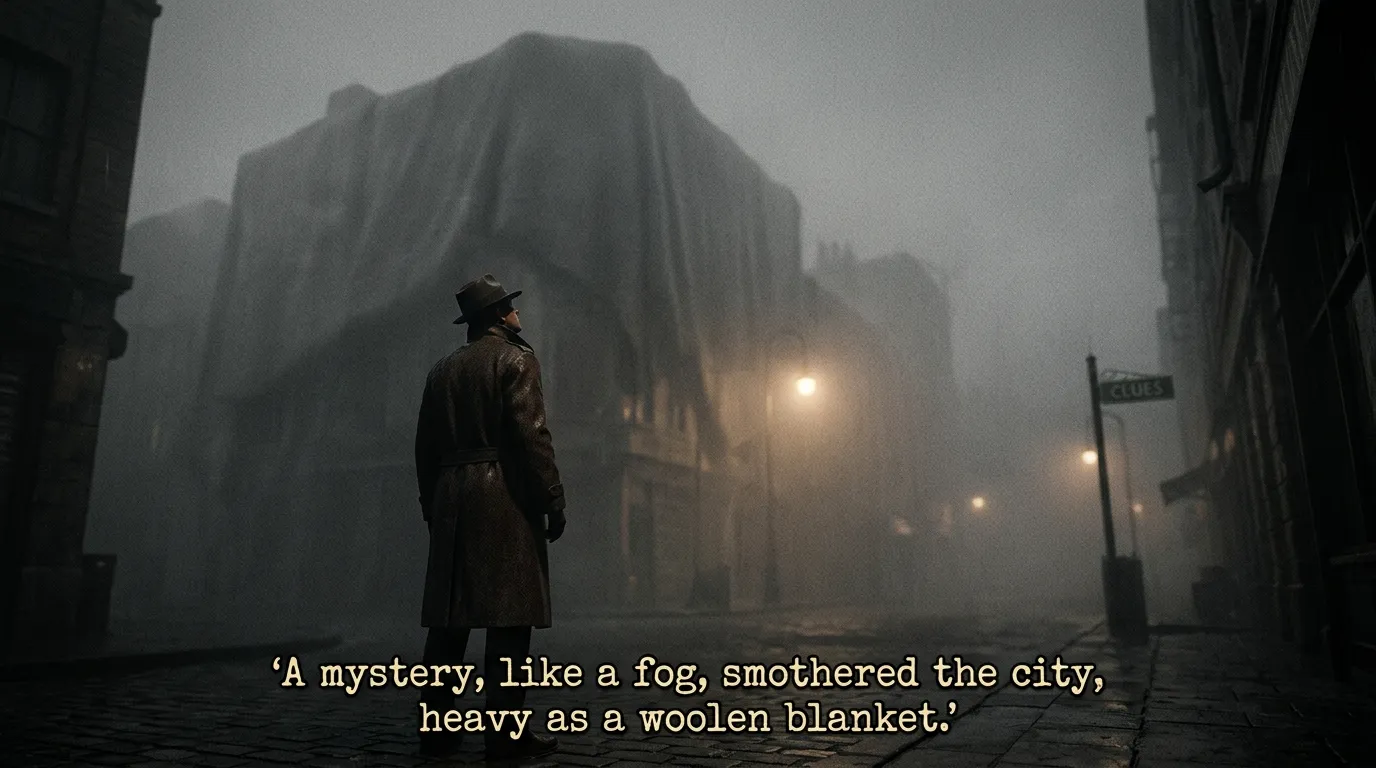
3. Like fog swallowing the road ahead
Meaning: Full of uncertainty.
Deeper Definition: Represents confusion, hidden truths, and unknown dangers.
Usage Insight: Great for detective stories and psychological thrillers.
Examples:
- The investigation unfolded like fog swallowing the road ahead.
- Every answer revealed another question.
4. As mysterious as an unopened diary
Meaning: Filled with hidden secrets.
Deeper Definition: Represents people, places, or objects that conceal important information.
Usage Insight: Perfect for mystery novels and crime fiction.
Examples:
- The old woman remained as mysterious as an unopened diary.
- Nobody knew what she was hiding.
5. Like a puzzle missing its final piece
Meaning: Almost complete but unresolved.
Deeper Definition: Represents investigations that have many clues but still lack one crucial answer.
Usage Insight: Excellent for detective fiction and investigative journalism.
Examples:
- The case felt like a puzzle missing its final piece.
- One clue still refused to fit.
6. As cold as abandoned stone walls
Meaning: Emotionally distant or unsettling.
Deeper Definition: Represents lifeless places, detached characters, or chilling situations.
Usage Insight: Great for Gothic fiction and suspense stories.
Examples:
- His expression was as cold as abandoned stone walls.
- No emotion crossed his face.
7. Like whispers drifting through the darkness
Meaning: Quiet and unsettling.
Deeper Definition: Represents rumors, secrets, or unseen dangers spreading unnoticed.
Usage Insight: Ideal for horror, supernatural mysteries, and thrillers.
Examples:
- The rumors spread like whispers drifting through the darkness.
- Everyone seemed afraid to speak openly.
8. As sharp as a detective’s instinct
Meaning: Extremely observant.
Deeper Definition: Represents keen intelligence and the ability to notice hidden details.
Usage Insight: Perfect for detective characters and investigative scenes.
Examples:
- Her mind was as sharp as a detective’s instinct.
- She noticed details everyone else ignored.
9. Like a candle flickering in an abandoned house
Meaning: Fragile hope amid uncertainty.
Deeper Definition: Represents the small chance of discovering truth despite overwhelming darkness.
Usage Insight: Excellent for emotional mysteries and suspense novels.
Examples:
- Hope remained like a candle flickering in an abandoned house.
- They refused to stop searching.
10. As unpredictable as lightning in the night
Meaning: Impossible to anticipate.
Deeper Definition: Represents sudden twists, shocking revelations, or unexpected danger.
Usage Insight: Great for thriller endings and dramatic plot twists.
Examples:
- The murderer struck as unpredictably as lightning in the night.
- Nobody saw the betrayal coming.
11. Like footprints disappearing in fresh snow
Meaning: Evidence quickly fading.
Deeper Definition: Represents clues that vanish before investigators can fully understand them.
Usage Insight: Perfect for detective novels and suspense fiction.
Examples:
- The evidence vanished like footprints disappearing in fresh snow.
- Every lead seemed to fade away.
12. As heavy as unanswered questions
Meaning: Filled with emotional tension.
Deeper Definition: Represents uncertainty and the psychological burden of mystery.
Usage Insight: Excellent for psychological thrillers and literary mysteries.
Examples:
- The silence felt as heavy as unanswered questions.
- Everyone waited for someone to speak.
13. Like a locked door without a key
Meaning: Impossible to understand.
Deeper Definition: Represents mysteries that seem unsolvable until the final revelation.
Usage Insight: Great for detective stories and escape-room narratives.
Examples:
- The secret remained like a locked door without a key.
- Every clue only deepened the mystery.
14. As dark as a moonless midnight
Meaning: Deeply mysterious.
Deeper Definition: Represents settings filled with fear, uncertainty, and hidden danger.
Usage Insight: Ideal for horror, Gothic fiction, and suspense writing.
Examples:
- The forest was as dark as a moonless midnight.
- Every shadow seemed alive.
15. Like the final page torn from a novel
Meaning: Missing the most important answer.
Deeper Definition: Represents incomplete mysteries where the truth remains hidden.
Usage Insight: Perfect for detective fiction, suspense stories, and crime novels.
Examples:
- The investigation felt like the final page torn from a novel.
- They knew the truth was close but still out of reach.
16–97 Additional Best Similes for Mystery Storytelling
- As quiet as a sleeping cemetery
- Like echoes inside an empty mansion
- As hidden as treasure beneath the sea
- Like rain tapping on forgotten windows
- As secretive as an old journal
- Like smoke disappearing into darkness
- As haunting as distant church bells
- Like ravens circling abandoned ruins
- As mysterious as ancient symbols
- Like mirrors hiding another world
- As silent as untouched snow
- Like ivy covering forgotten walls
- As unsettling as an empty playground at dusk
- Like eyes watching from the shadows
- As tense as a stretched bowstring
- Like leaves rustling without wind
- As eerie as a broken music box
- Like footsteps echoing behind you
- As elusive as mist before sunrise
- Like a spider weaving invisible threads
- As unreadable as faded handwriting
- Like clouds hiding the full moon
- As chilling as icy winter rain
- Like broken clocks frozen in time
- As lonely as an abandoned lighthouse
- Like hidden passages beneath an old castle
- As uncertain as flickering candlelight
- Like whispers behind closed doors
- As ancient as forgotten legends
- Like a raven perched on a silent tree
- As dark as deep ocean waters
- Like a key that fits no lock
- As unsettling as distant thunder
- Like forgotten photographs in a dusty attic
- As quiet as a sleeping forest
- Like smoke curling through empty rooms
- As unpredictable as shifting tides
- Like broken glass reflecting scattered light
- As cautious as a fox tracking prey
- Like fog rolling over deserted streets
- As cold as winter dawn
- Like pages missing from an old book
- As gripping as a ticking clock
- Like hidden messages between the lines
- As mysterious as an unmarked grave
- Like a chess game nearing its final move
- As suspenseful as the final countdown
- Like secrets buried beneath ancient stones
- As watchful as an owl at midnight
- Like invisible threads connecting every clue
- As restless as a storm before rain
- Like silence before unexpected footsteps
- As dangerous as thin ice
- Like an unanswered telephone ringing endlessly
- As haunting as forgotten memories
- Like shadows stretching beneath candlelight
- As unforgettable as an unsolved case
- Like every clue leading somewhere unexpected
- As compelling as the final courtroom confession
- Like a trail fading into darkness
- As captivating as the final reveal
- Like destiny hiding behind coincidence
- As chilling as whispers in the wind
- Like the truth waiting behind one last door
- As timeless as the greatest detective stories
- Like darkness concealing one final secret
- As remarkable as solving the impossible
- Like every mystery waiting to be uncovered
How to Use These Similes Effectively in Different Forms of Writing
In Essays
Use similes to make descriptive and narrative essays more engaging while creating atmosphere.
Example: The abandoned library stood as silent as a forgotten crypt, inviting curiosity and caution.
In Stories
Use similes to heighten suspense, reveal clues, and deepen emotional tension.
Example: The detective followed the clues like a traveler searching for a hidden path through thick fog.
In Poems
Mystery-themed similes add symbolism, mood, and emotional depth.
Example: Secrets drifted like whispers through the darkness.
In Content Writing
Use similes in mystery book reviews, crime blogs, entertainment articles, and promotional content to capture readers’ interest.
Example: The novel unfolds like a puzzle missing its final piece, keeping readers guessing until the last chapter.
Frequently Asked Questions
What are similes for mystery storytelling?
They are comparisons using “like” or “as” that create suspense, mystery, and vivid imagery in detective stories, thrillers, and suspense fiction.
Why should I use similes in mystery writing?
Similes strengthen atmosphere, build tension, and help readers visualize clues, settings, and emotions.
Can similes improve detective stories?
Yes. They make investigations more engaging and help readers connect with the mood and suspense of the story.
Are similes useful for psychological thrillers?
Absolutely. They enhance emotional intensity, uncertainty, and psychological conflict.
How can I create original mystery similes?
Observe shadows, weather, abandoned places, silence, puzzles, clocks, fog, and hidden objects, then compare them using “like” or “as.”
Do similes make suspense stronger?
Yes. They create vivid mental images that increase curiosity, tension, and emotional engagement throughout the story.
Conclusion
Mastering these best similes for mystery storytelling can transform ordinary suspense into unforgettable reading experiences. Whether you’re writing detective novels, crime fiction, psychological thrillers, horror stories, blogs, or creative essays, similes help readers feel every clue, sense every danger, and anticipate every twist.
These similes for mystery storytelling enrich atmosphere, deepen suspense, and make every scene more immersive. Practice using them naturally, create your own imaginative comparisons, and let your storytelling keep readers guessing until the very last page.

James Williams is a dedicated language writer and contributor at Mitaphor.com, where he explores the art of similes, metaphors, and word meanings. With a passion for making language simple and engaging, James breaks down complex expressions into clear, easy-to-understand insights. His work is designed to help students, writers, and curious readers better understand figurative language and use it effectively in everyday communication.