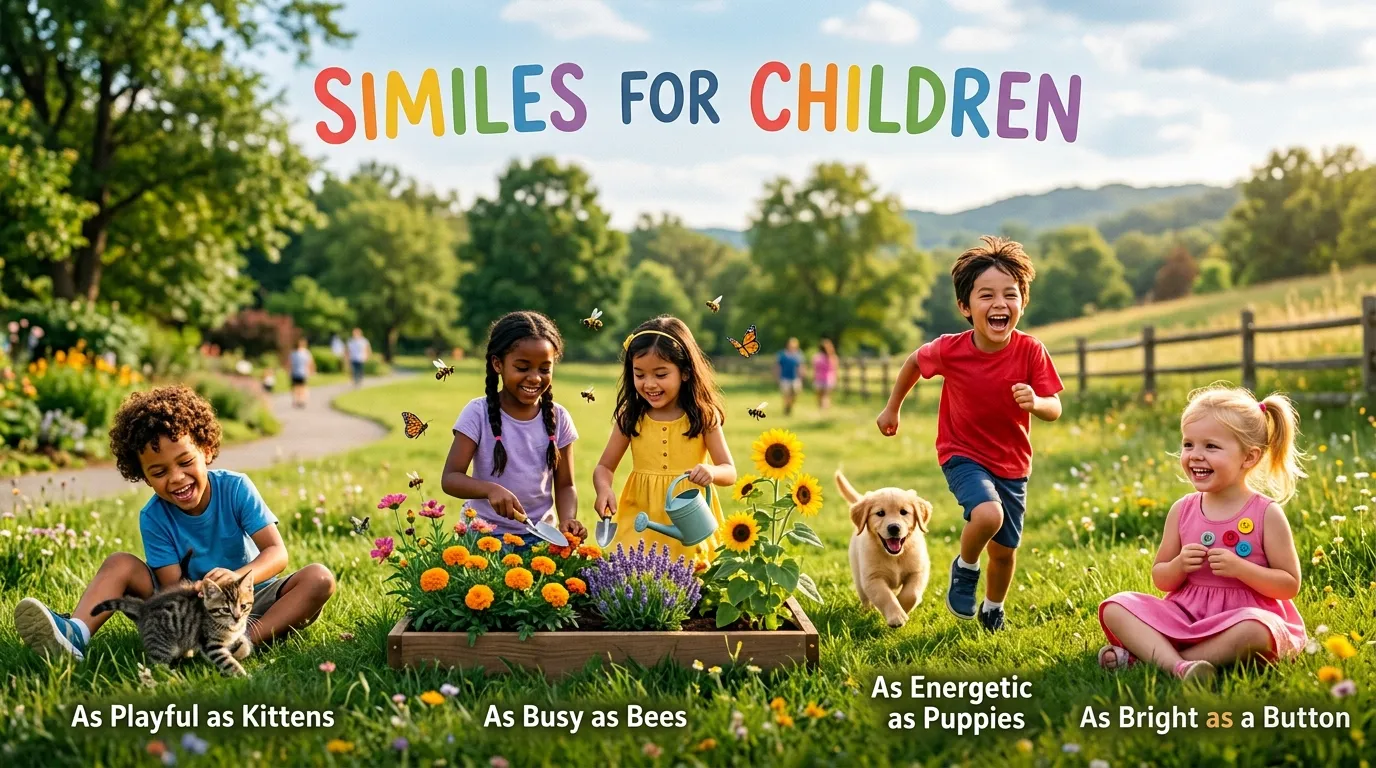
Similes are one of the easiest and most enjoyable ways to help children develop stronger language and writing skills. By comparing two different things using the words “like” or “as,” similes make descriptions more colorful, interesting, and easier to understand. Children naturally enjoy imaginative comparisons because they connect new ideas with familiar objects, animals, and everyday experiences. Whether they’re reading a story, writing a school essay, or learning English, similes help young learners express themselves with confidence and creativity.
Whether you’re a teacher planning a language arts lesson, a parent helping with homework, a homeschool educator creating fun activities, or a blogger writing educational content, learning and teaching similes for children can make learning both exciting and meaningful. Similes encourage imagination, improve vocabulary, strengthen reading comprehension, and help children become more confident writers and speakers.
In this comprehensive guide, you’ll discover some of the best similes for children, complete with easy meanings, simple definitions, practical usage insights, and realistic examples. You’ll also learn how children can use similes effectively in essays, stories, poems, speeches, and everyday conversations.
What Is a Simile?
A simile is a figure of speech that compares two different things using the words “like” or “as.” The comparison helps explain an idea by relating it to something familiar.
Similes make writing more fun because they create clear pictures in the reader’s mind.
Simple Examples
- She was as brave as a lion.
- The pillow was as soft as a cloud.
These comparisons help children imagine people, objects, and feelings more easily.
58 Powerful Similes for Children
1. As Busy as a Bee
Meaning: Very hardworking and active.
Definition: Bees spend their day collecting nectar and working together, making them a perfect symbol of being busy.
Usage Insight: Great for classroom writing, conversations, and children’s stories. Suitable for both school assignments and everyday speech.
Examples:
- Emma was as busy as a bee finishing her science project.
- Everyone helped clean the classroom before going home.
2. As Brave as a Lion
Meaning: Very courageous.
Definition: Lions are known for their strength and fearlessness.
Usage Insight: Perfect for stories, speeches, and encouraging children to be confident.
Examples:
- Noah was as brave as a lion when he spoke on stage.
- The little firefighter in the story rescued everyone.
3. As Quiet as a Mouse
Meaning: Very silent.
Definition: Mice move carefully and quietly.
Usage Insight: Commonly used in classrooms and children’s books.
Examples:
- The class became as quiet as a mouse during the test.
- Mia tiptoed into the room without making a sound.
4. As Happy as a Clam
Meaning: Very happy and content.
Definition: This simile describes someone who feels relaxed and cheerful.
Usage Insight: Great for stories, conversations, and descriptive writing.
Examples:
- Ben was as happy as a clam on his birthday.
- The children smiled all afternoon at the park.
5. As Fast as Lightning
Meaning: Extremely fast.
Definition: Lightning moves incredibly quickly, making it a perfect comparison for speed.
Usage Insight: Excellent for describing races, games, and sports.
Examples:
- Lily ran as fast as lightning to win the race.
- The rabbit disappeared in seconds.
6. As Gentle as a Lamb
Meaning: Very kind and calm.
Definition: Lambs are often associated with gentleness and sweetness.
Usage Insight: Perfect for describing caring people or friendly animals.
Examples:
- Our teacher was as gentle as a lamb with every student.
- The puppy played carefully with the kitten.
7. As Light as a Feather
Meaning: Very light in weight.
Definition: Feathers weigh very little and float easily.
Usage Insight: Useful for descriptive writing and classroom activities.
Examples:
- The balloon felt as light as a feather.
- Her scarf floated in the breeze.
8. Like a Fish in Water
Meaning: Feeling comfortable and confident.
Definition: Fish naturally belong in water, so this simile describes someone who feels completely at ease.
Usage Insight: Great for school, sports, and new experiences.
Examples:
- Maya felt like a fish in water during swimming lessons.
- He quickly became comfortable in his new classroom.
9. As Bright as the Sun
Meaning: Very cheerful or shining.
Definition: The sun is bright and full of light, making it a symbol of happiness.
Usage Insight: Perfect for poems, stories, and descriptive writing.
Examples:
- Her smile was as bright as the sun.
- The colorful painting made everyone smile.
10. As Sweet as Honey
Meaning: Very kind or pleasant.
Definition: Honey is naturally sweet, making it a common comparison for friendly people.
Usage Insight: Ideal for describing caring friends, family members, and teachers.
Examples:
- Grandma was as sweet as honey to everyone.
- My best friend always says kind words.
How to Use These Similes Effectively
Learning similes for children becomes easier when kids practice using them in different types of writing and speaking.
Essays
Children can replace simple words like nice, happy, or fast with colorful similes to make school essays more interesting.
Stories
Similes help young writers describe characters, places, and adventures in a way that keeps readers engaged.
Poems
Children can use similes to create beautiful imagery and express emotions in creative poetry.
Content Writing
Educational websites, classroom resources, and homeschool materials often include similes for children to teach figurative language in a fun and memorable way.
Everyday Conversations
Kids can naturally use similes when describing friends, family, pets, sports, or school experiences, helping them become more confident communicators.
Frequently Asked Questions
What are similes for children?
Similes for children are simple comparisons using “like” or “as” that help kids understand ideas through familiar objects, animals, and everyday experiences.
Why are similes important for children?
They improve vocabulary, reading comprehension, creative thinking, descriptive writing, and speaking skills while making learning more enjoyable.
At what age should children learn similes?
Most children begin learning basic similes in elementary school, but younger learners can also understand simple comparisons through stories and classroom activities.
What’s the difference between a simile and a metaphor?
A simile compares two things using “like” or “as,” while a metaphor compares them directly without using those words.
How can children practice similes?
Children can practice by reading books, completing worksheets, writing stories, creating poems, playing language games, and using similes in everyday conversations.
Conclusion
Learning similes for children is a wonderful way to help young learners become more creative, confident, and expressive communicators. These simple comparisons make writing more colorful, improve reading comprehension, and encourage children to think imaginatively about the world around them. By using familiar objects, animals, and everyday experiences, similes make even complex ideas easier to understand and remember.
Whether you’re a teacher planning engaging language arts lessons, a parent supporting learning at home, a homeschool educator creating fun activities, or a content creator developing educational resources, the best similes for children provide valuable opportunities to build strong literacy skills. Encourage children to practice using similes in essays, stories, poems, classroom discussions, and daily conversations. With regular practice, they’ll not only improve their vocabulary and writing but also discover the joy of expressing their ideas with creativity, confidence, and imagination.

James Williams is a dedicated language writer and contributor at Mitaphor.com, where he explores the art of similes, metaphors, and word meanings. With a passion for making language simple and engaging, James breaks down complex expressions into clear, easy-to-understand insights. His work is designed to help students, writers, and curious readers better understand figurative language and use it effectively in everyday communication.