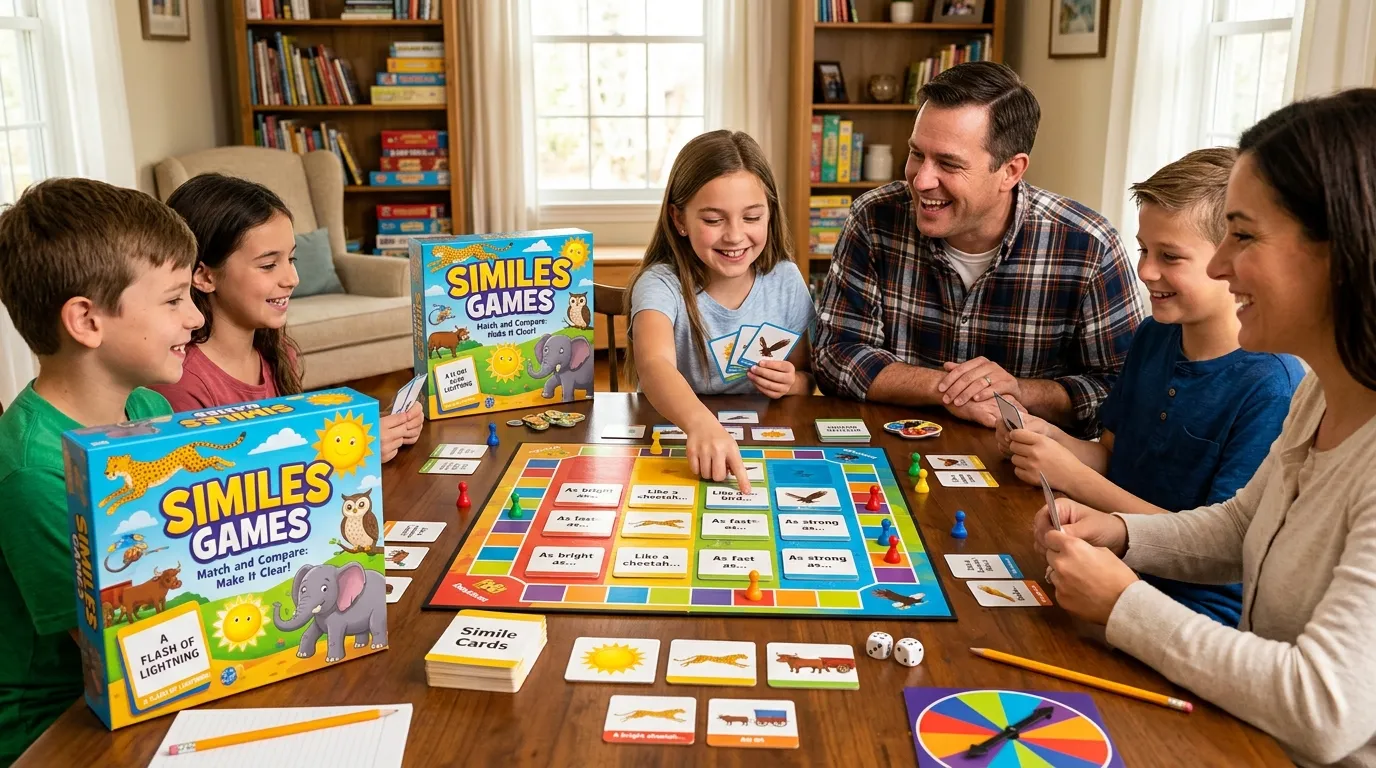
Learning figurative language doesn’t have to be boring. In fact, one of the most effective ways to teach and practice similes is through interactive games that keep students engaged while reinforcing important language skills. Similes compare two different things using the words “like” or “as,” helping writers create vivid descriptions that capture readers’ attention. By turning lessons into games, students learn to recognize, understand, and create similes in a fun, memorable way while improving their creativity, vocabulary, and writing confidence.
Whether you’re a classroom teacher planning an exciting English lesson, a homeschool parent searching for engaging literacy activities, a tutor working with English learners, or a blogger creating educational resources, exploring similes games can make figurative language easier to teach and more enjoyable to learn. These games encourage teamwork, critical thinking, speaking, reading, and creative writing while helping students apply similes naturally in real-world communication.
In this comprehensive guide, you’ll discover some of the best similes games, complete with simple explanations, classroom applications, usage insights, and practical examples. You’ll also learn how these games can strengthen essays, stories, poems, speeches, and everyday writing.
What Is a Simile?
A simile is a figure of speech that compares two different things using the words “like” or “as.” Instead of giving a plain description, a simile helps readers picture an idea more clearly through a familiar comparison.
Similes make writing more expressive by adding imagery, emotion, and creativity.
Simple Examples
- She was as brave as a lion.
- His smile was like sunshine after the rain.
These comparisons make writing more vivid and memorable.
71 Powerful Similes Games
1. Simile Bingo
Meaning: Players match common similes on bingo cards.
Definition: Students listen for similes and mark the matching phrases until they complete a row, column, or full card. This is one of the most popular similes games for elementary classrooms.
Usage Insight: Perfect for literacy centers, review sessions, ESL classes, and homeschool lessons. Suitable for both formal classroom instruction and fun learning activities.
Examples:
- Mark As busy as a bee when it’s called.
- The first player to complete a row wins.
2. Simile Charades
Meaning: Act out a simile while others guess.
Definition: Students use actions instead of words to represent common similes.
Usage Insight: Great for active classrooms and group learning.
Examples:
- Act out As slow as a turtle.
- Classmates guess the correct simile.
3. Simile Memory Match
Meaning: Match similes with their meanings.
Definition: Players flip over cards to pair each simile with its correct definition.
Usage Insight: Excellent for vocabulary review and literacy centers.
Examples:
- Match As brave as a lion with Very courageous.
- Match As quiet as a mouse with Very silent.
4. Simile Scavenger Hunt
Meaning: Find similes in books or around the classroom.
Definition: Students search for figurative language in reading materials or posted classroom cards.
Usage Insight: Ideal for reading comprehension lessons.
Examples:
- Find five similes in today’s reading assignment.
- Record each example in your notebook.
5. Finish the Simile
Meaning: Complete well-known similes.
Definition: Players fill in missing words to complete common comparisons.
Usage Insight: Great for quizzes, warm-ups, and review games.
Examples:
- As light as a ________. (feather)
- As cold as ________. (ice)
6. Simile Story Challenge
Meaning: Write a short story using several similes.
Definition: Students creatively include multiple similes within one paragraph or story.
Usage Insight: Perfect for writing workshops and assessments.
Examples:
- Include As busy as a bee and Like a rainbow after the rain.
- Highlight each simile in your story.
7. Simile Drawing Game
Meaning: Draw a picture that represents a simile.
Definition: Classmates guess the simile based on the illustration.
Usage Insight: Excellent for visual learners and younger students.
Examples:
- Draw As strong as an ox.
- Draw Like a fish in water.
8. Simile Sorting Race
Meaning: Sort similes into categories as quickly as possible.
Definition: Students organize similes by themes such as emotions, animals, nature, or personality.
Usage Insight: Great for collaborative learning and vocabulary practice.
Examples:
- Place As gentle as a lamb under Animals.
- Place Like sunshine after the rain under Nature.
9. Simile Wheel Spin
Meaning: Spin a wheel and create a simile.
Definition: Players spin for a topic and immediately create a matching simile.
Usage Insight: Perfect for speaking practice and creative thinking.
Examples:
- Topic: Happiness → As happy as a child on vacation.
- Topic: Speed → As fast as lightning.
10. Simile Relay Race
Meaning: Teams compete to write correct similes.
Definition: Players race to the board, write a simile, and return so the next teammate can continue.
Usage Insight: Excellent for classroom competitions and review days.
Examples:
- Team members write different similes without repeating any.
- The team with the most correct answers wins.
How to Use These Similes Games Effectively
Using similes games helps students remember figurative language while making lessons interactive and enjoyable.
Essays
After playing games, encourage students to use similes naturally in descriptive essays instead of relying on simple adjectives.
Stories
Creative games inspire students to write richer stories with vivid characters, settings, and emotions.
Poems
Many simile games generate ideas that students can later include in original poems.
Content Writing
Whether you’re creating educational blogs, classroom resources, homeschool materials, or literacy websites, examples of similes games improve reader engagement while naturally strengthening SEO.
Classroom Learning
Teachers can use these games during lesson introductions, literacy centers, guided reading, review sessions, writing workshops, substitute plans, and end-of-unit celebrations to reinforce figurative language in an enjoyable way.
Frequently Asked Questions
What are similes games?
Similes games are interactive learning activities that help students identify, understand, and create similes through fun challenges, teamwork, and creative thinking.
Why are similes games important?
They make learning figurative language more engaging while improving vocabulary, writing, reading comprehension, and communication skills.
Who can use similes games?
Teachers, students, homeschool families, tutors, ESL learners, parents, and education bloggers can all benefit from similes games.
What’s the difference between a simile and a metaphor?
A simile compares two things using “like” or “as,” while a metaphor makes a direct comparison without those comparison words.
Are similes games suitable for all grade levels?
Yes. Similes games can be adapted for elementary, middle school, high school, ESL learners, and adult education by adjusting the complexity of the activities.
Conclusion
Interactive similes games transform figurative language lessons into exciting learning experiences that students genuinely enjoy. Instead of simply memorizing definitions, learners actively participate in creative challenges, teamwork, storytelling, drawing, and speaking activities that reinforce the meaning and purpose of similes. These games not only improve vocabulary and reading comprehension but also encourage students to think creatively and use descriptive language with confidence in their everyday writing.
Whether you’re a teacher planning engaging classroom lessons, a homeschool parent searching for educational activities, a tutor supporting language learners, or a content creator developing literacy resources, the best similes games provide countless opportunities to make learning meaningful and enjoyable. By incorporating these games into regular lessons, you’ll help learners develop stronger writing skills, build confidence with figurative language, and discover that mastering similes can be just as fun as it is educational.

Chris Woak is a passionate language enthusiast and the creative voice behind Mitaphor.com. With a deep interest in similes, metaphors, and word meanings, Chris simplifies complex expressions into clear, engaging explanations that readers of all levels can understand. His work focuses on helping students, writers, and language lovers explore the power of figurative language and improve their communication skills.