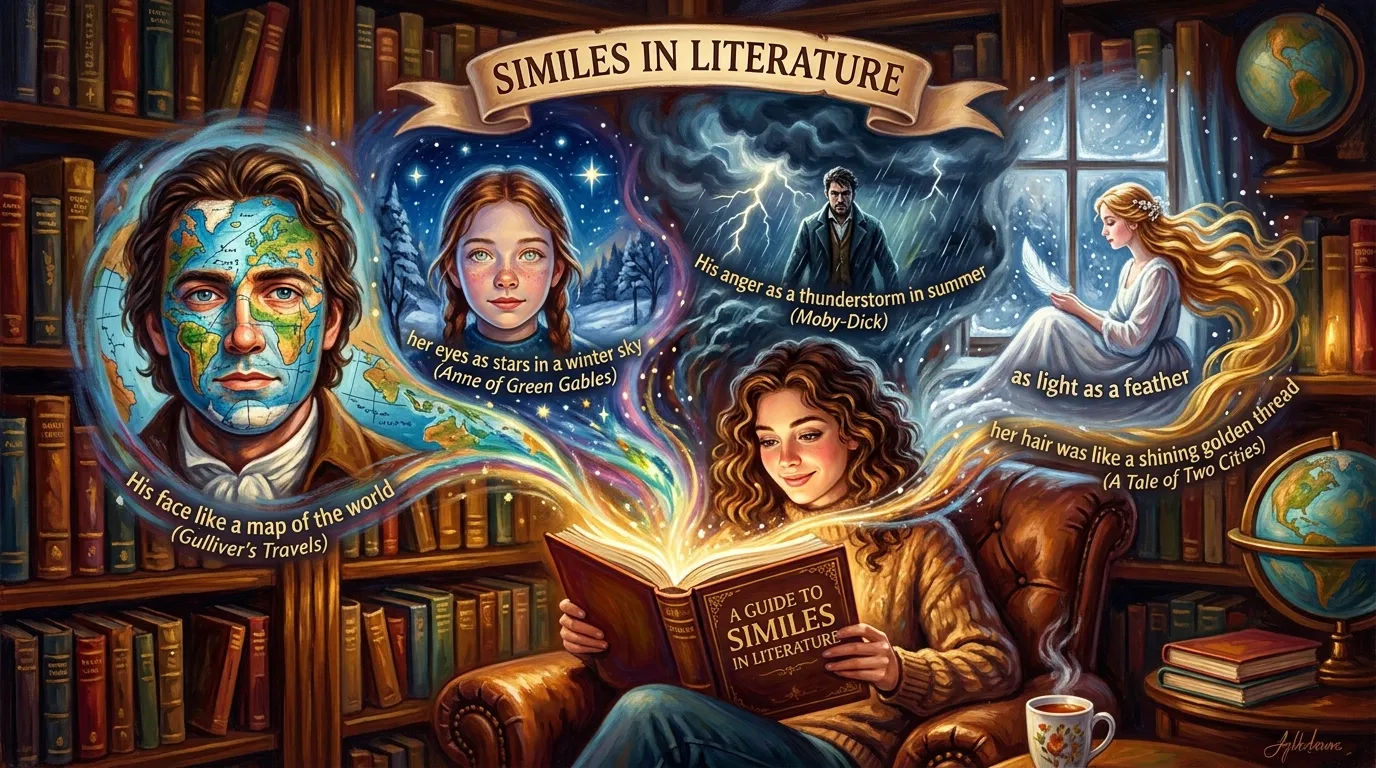
Similes have been an essential part of literature for centuries, helping authors create vivid imagery, express emotions, and make their writing more memorable. By comparing two different things using the words “like” or “as,” similes allow readers to visualize characters, settings, and feelings in a way that plain language often cannot. From classic novels and epic poems to modern fiction and children’s books, similes in literature enrich storytelling by adding beauty, depth, and emotional impact.
Whether you’re a student studying English literature, a teacher preparing classroom lessons, a writer looking for inspiration, or a blogger creating educational content, understanding similes in literature can improve your reading comprehension and writing skills. Learning how famous authors use similes also helps readers appreciate literary techniques while encouraging them to create their own vivid comparisons in essays, stories, poems, and creative writing.
In this comprehensive guide, you’ll discover some of the best similes in literature, learn what a simile is, explore famous literary examples, understand when to use them, and find practical tips for applying similes in different forms of writing.
What Is a Simile?
A simile is a figure of speech that compares two different things using the words “like” or “as.” The purpose of a simile is to create a clear and memorable image by connecting an unfamiliar idea with something familiar.
Writers use similes to make descriptions more vivid, emotional, and engaging.
Simple Examples
- She was as brave as a lion.
- The stars shone like diamonds in the sky.
These comparisons help readers imagine the scene more clearly.
63 Powerful Similes in Literature
1. As Brave as a Lion
Meaning: Extremely courageous.
Definition: This timeless simile compares a person’s courage to the strength and fearlessness of a lion. It appears frequently in literature to describe heroic characters.
Usage Insight: Best used in adventure stories, historical fiction, fantasy novels, speeches, and essays. Suitable for formal, creative, and descriptive writing.
Examples:
- The knight was as brave as a lion as he entered the battlefield.
- She faced every challenge with remarkable confidence.
2. As Quiet as a Mouse
Meaning: Very silent.
Definition: This simile describes someone moving or behaving without making noise.
Usage Insight: Common in children’s literature, novels, and classroom writing.
Examples:
- The children became as quiet as a mouse during the story.
- He slipped into the room unnoticed.
3. Like a Storm at Sea
Meaning: Full of chaos or strong emotions.
Definition: Authors use this comparison to describe conflict, anger, or emotional turmoil.
Usage Insight: Perfect for novels, poetry, and dramatic storytelling.
Examples:
- Her thoughts were like a storm at sea.
- The argument grew more intense with every minute.
4. As Cold as Ice
Meaning: Emotionally distant or extremely cold.
Definition: This simile may describe weather, objects, or a person’s attitude.
Usage Insight: Frequently used in mystery, drama, and romance.
Examples:
- His reply was as cold as ice.
- The wind felt freezing against our faces.
5. Like a Candle in the Dark
Meaning: A symbol of hope during difficult times.
Definition: This literary simile represents guidance, comfort, or optimism.
Usage Insight: Excellent for inspirational writing and poetry.
Examples:
- Her encouragement was like a candle in the dark.
- The teacher’s words gave everyone hope.
6. As Gentle as a Breeze
Meaning: Calm, peaceful, and kind.
Definition: This comparison emphasizes softness and tranquility.
Usage Insight: Ideal for romantic novels, poetry, and descriptive passages.
Examples:
- Her voice was as gentle as a breeze.
- The evening air felt calm and refreshing.
7. Like Leaves in the Wind
Meaning: Easily moved or uncertain.
Definition: Authors use this simile to describe change, instability, or uncertainty.
Usage Insight: Common in literary fiction and reflective essays.
Examples:
- Their plans scattered like leaves in the wind.
- The crowd moved in every direction.
8. As Bright as the Morning Sun
Meaning: Full of happiness or intelligence.
Definition: The morning sun symbolizes hope, warmth, and new beginnings.
Usage Insight: Perfect for descriptive writing and character development.
Examples:
- Her smile was as bright as the morning sun.
- His ideas inspired everyone in the room.
9. Like a River Flowing to the Sea
Meaning: Natural, continuous, or unstoppable.
Definition: This simile represents steady progress or the passage of time.
Usage Insight: Great for novels, speeches, and reflective writing.
Examples:
- Time passed like a river flowing to the sea.
- Their friendship grew stronger every year.
10. As Strong as an Oak
Meaning: Powerful and dependable.
Definition: Oak trees symbolize strength, resilience, and endurance.
Usage Insight: Frequently used in historical fiction, biographies, and motivational writing.
Examples:
- The old sailor remained as strong as an oak.
- Her determination never weakened.
How to Use These Similes Effectively
Understanding similes in literature helps writers create stronger imagery while making their writing more engaging and meaningful.
Essays
Use literary similes to explain ideas more clearly and support thoughtful analysis without overusing figurative language.
Stories
Describe characters, settings, and emotions through vivid comparisons that help readers imagine every scene.
Poems
Poetry often depends on imagery, and similes create emotional depth and memorable visual effects.
Content Writing
Whether you’re writing educational blogs, literature guides, book reviews, or classroom resources, similes in literature naturally improve readability and strengthen SEO by providing valuable examples and explanations.
Literary Analysis
Students can analyze why authors use specific similes, how they develop mood or theme, and how these comparisons influence readers’ understanding of characters and events.
Frequently Asked Questions
What are similes in literature?
Similes in literature are comparisons that use “like” or “as” to create vivid imagery, express emotions, and make descriptions more memorable.
Why do authors use similes in literature?
Authors use similes to help readers visualize scenes, understand characters, create emotional impact, and make writing more engaging.
What’s the difference between a simile and a metaphor?
A simile compares two things using “like” or “as,” while a metaphor makes a direct comparison without those words.
Can similes be used in modern literature?
Yes. Similes appear in classic literature, contemporary novels, poetry, children’s books, speeches, and even digital content because they make writing more expressive.
How can students identify similes in literature?
Students should look for comparisons that use “like” or “as” and ask how the comparison helps explain a character, setting, object, or emotion.
Conclusion
Studying similes in literature allows readers to appreciate the creativity and skill behind great writing. These comparisons transform ordinary descriptions into vivid images, helping readers connect more deeply with characters, settings, and emotions. From timeless classics to modern novels, similes continue to play an important role in storytelling by making language more expressive, memorable, and meaningful.
Whether you’re a student analyzing literary texts, a teacher introducing figurative language, a writer seeking inspiration, or a content creator developing educational resources, exploring the best similes in literature will strengthen your understanding of effective writing techniques. Practice identifying similes in the books you read, experiment with creating your own comparisons, and use them thoughtfully in essays, stories, poems, speeches, and creative projects. With regular practice, you’ll develop a richer writing style that captures readers’ imagination and brings every scene to life.

James Williams is a dedicated language writer and contributor at Mitaphor.com, where he explores the art of similes, metaphors, and word meanings. With a passion for making language simple and engaging, James breaks down complex expressions into clear, easy-to-understand insights. His work is designed to help students, writers, and curious readers better understand figurative language and use it effectively in everyday communication.