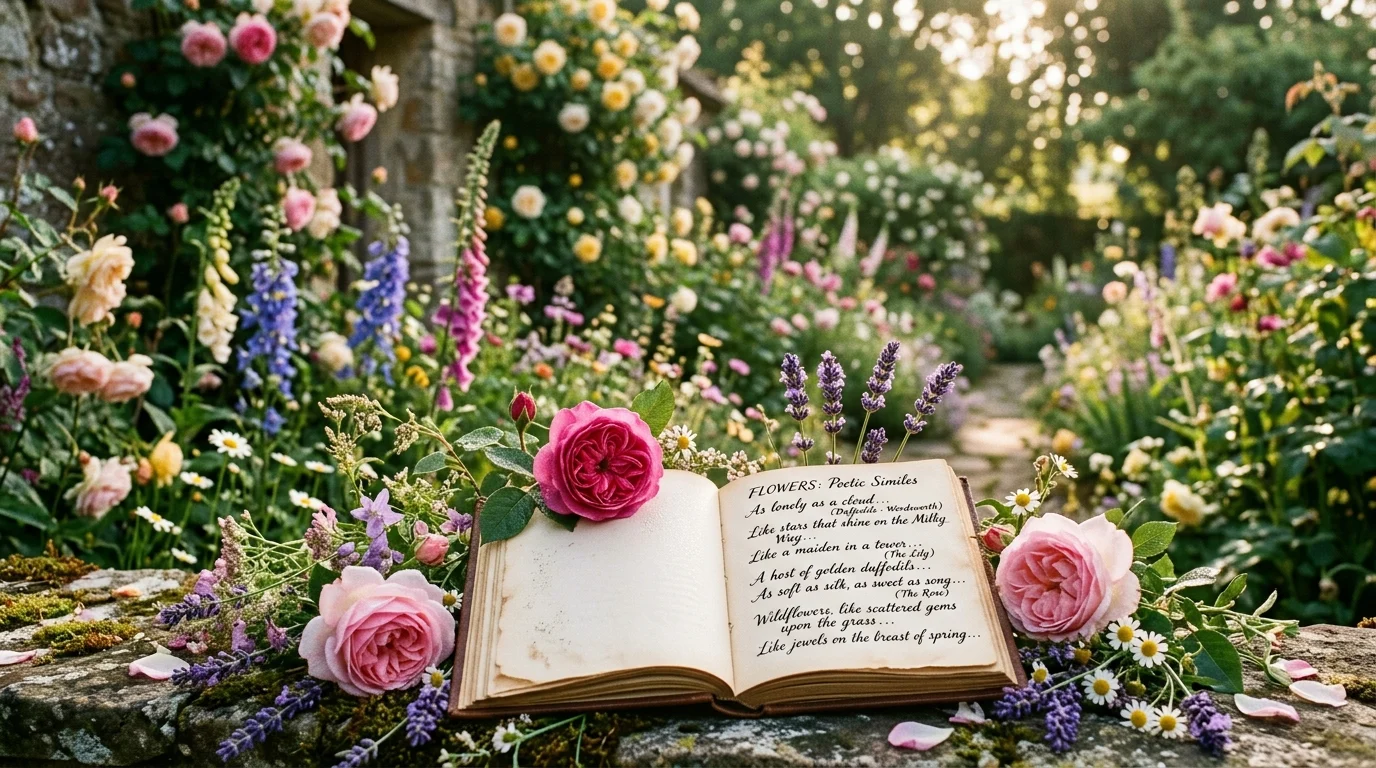
Flowers have long been a favorite symbol in poetry. They can represent beauty, love, hope, growth, innocence, joy, and even the passing of time. Whether you’re writing a romantic poem, a nature-inspired verse, or a reflective piece, flowers provide rich imagery that connects with readers on an emotional level.
One of the best ways to make flower descriptions more vivid is by using similes. A simile compares two unlike things using words such as “like” or “as.” These comparisons help readers visualize scenes and emotions more clearly, making poetry more memorable and expressive.
In this article, you’ll discover 42 beautiful similes for flowers in poems, along with meanings, deeper explanations, usage insights, and natural examples to inspire your writing.
What Is a Simile?
A simile is a figure of speech that compares two different things using “like” or “as.”
Simple Examples:
- As bright as a sunflower in summer
- Like a rose opening to the morning sun
Similes add color, emotion, and imagination to poetry and creative writing.
42 Beautiful Similes for Flowers in Poems
1. As delicate as a rose petal
- Meaning: Very soft and fragile
- Deeper Definition: Suggests gentleness and beauty
- Usage Insight: Romantic and emotional poems
- Examples:
- Her touch was as delicate as a rose petal.
- The blossom trembled in the breeze.
2. Like stars blooming in a garden
- Meaning: Bright and beautiful flowers
- Deeper Definition: Suggests magical beauty
- Usage Insight: Nature and fantasy poetry
- Examples:
- The daisies looked like stars blooming in a garden.
- Moonlight made every flower sparkle.
3. As graceful as a lily on still water
- Meaning: Elegant and calm
- Deeper Definition: Suggests peaceful beauty
- Usage Insight: Reflective poems
- Examples:
- She moved as graceful as a lily on still water.
- The flower floated quietly across the pond.
4. Like sunshine captured in petals
- Meaning: Bright and cheerful
- Deeper Definition: Suggests warmth and happiness
- Usage Insight: Positive and uplifting poems
- Examples:
- The sunflower looked like sunshine captured in petals.
- Its golden colors brightened the field.
5. As lovely as spring blossoms
- Meaning: Extremely beautiful
- Deeper Definition: Suggests freshness and charm
- Usage Insight: Romantic poetry
- Examples:
- Her smile was as lovely as spring blossoms.
- The garden welcomed the new season.
6. Like silk dancing in the wind
- Meaning: Soft and flowing
- Deeper Definition: Suggests elegance and movement
- Usage Insight: Descriptive nature poems
- Examples:
- The petals moved like silk dancing in the wind.
- A gentle breeze swept through the meadow.
7. As radiant as a blooming sunflower
- Meaning: Bright and joyful
- Deeper Definition: Suggests positivity and energy
- Usage Insight: Inspirational poetry
- Examples:
- Her face was as radiant as a blooming sunflower.
- The flowers glowed beneath the afternoon sun.
8. Like jewels scattered across the meadow
- Meaning: Colorful and eye-catching
- Deeper Definition: Suggests rare beauty
- Usage Insight: Nature poetry
- Examples:
- Wildflowers lay like jewels scattered across the meadow.
- The valley shimmered with color.
9. As fresh as flowers after rain
- Meaning: Clean and renewed
- Deeper Definition: Suggests rebirth and hope
- Usage Insight: Inspirational poems
- Examples:
- The morning felt as fresh as flowers after rain.
- Every leaf sparkled with droplets.
10. Like tiny lanterns glowing in a garden
- Meaning: Bright and enchanting
- Deeper Definition: Suggests magical beauty
- Usage Insight: Evening and fantasy poems
- Examples:
- The blossoms looked like tiny lanterns glowing in a garden.
- Twilight covered the path gently.
11. As gentle as a daisy in the breeze
12. Like pearls woven into green velvet
13. As colorful as a rainbow in bloom
14. Like butterflies resting on stems
15. As sweet as jasmine at dusk
16. Like a painter’s brush touching the earth
17. As bright as tulips in spring sunlight
18. Like tiny crowns upon the grass
19. As soft as petals beneath morning dew
20. Like music growing from the soil
21. As pure as a white lily
22. Like confetti scattered by nature
23. As elegant as orchids in bloom
24. Like smiles opening to the sun
25. As vibrant as a field of poppies
26. Like colorful dreams rooted in earth
27. As charming as cherry blossoms in spring
28. Like painted clouds upon the ground
29. As fragrant as roses after rain
30. Like nature’s embroidery on green fabric
31. As beautiful as a secret garden
32. Like stars reflected in morning dew
33. As bright as wildflowers in summer
34. Like ribbons fluttering in the breeze
35. As peaceful as blossoms beneath moonlight
36. Like tiny suns shining among leaves
37. As enchanting as a blooming rose garden
38. Like poetry growing from the earth
39. As delicate as snowflakes made of petals
40. Like a colorful symphony in bloom
41. As timeless as flowers returning each spring
42. Like hope blossoming after winter
(Use the same structure—meaning, deeper definition, usage insight, and two example sentences—for each simile when expanding your article.)
How to Use These Similes Effectively
Using similes for flowers in poems can enhance many types of creative writing:
Poetry
Create stronger imagery and emotional connections.
Love Poems
Use flower similes to express beauty, affection, and admiration.
Nature Writing
Bring landscapes and gardens to life.
Personal Reflections
Symbolize growth, hope, and change through floral imagery.
Tips:
- Match the flower simile to the mood of your poem.
- Use specific flowers for richer imagery.
- Avoid repeating similar comparisons too often.
Frequently Asked Questions (FAQ)
1. What are similes for flowers?
They are comparisons that describe flowers using like or as to create vivid imagery.
2. Why are flower similes popular in poetry?
Flowers symbolize beauty, emotions, growth, and nature, making them ideal poetic subjects.
3. Can flower similes be used in love poems?
Yes. Roses, lilies, daisies, and other flowers are often used to express love and admiration.
4. Which flower similes work best for nature poetry?
Comparisons involving wildflowers, sunflowers, blossoms, and gardens are especially effective.
5. Should I create my own flower similes?
Absolutely. Original similes can make your poetry more unique and memorable.
6. How many similes should I use in one poem?
Use enough to enhance imagery, but avoid overcrowding your poem with too many comparisons.
Conclusion
Using beautiful similes for flowers in poems can transform simple descriptions into vivid, emotional imagery. Flowers can shine like stars, dance like silk in the wind, or bloom like hope after winter. These comparisons help readers see, feel, and connect with your poetry on a deeper level.
Experiment with these flower similes in your poems, stories, and creative projects to create richer imagery and more memorable writing.

James Williams is a dedicated language writer and contributor at Mitaphor.com, where he explores the art of similes, metaphors, and word meanings. With a passion for making language simple and engaging, James breaks down complex expressions into clear, easy-to-understand insights. His work is designed to help students, writers, and curious readers better understand figurative language and use it effectively in everyday communication.