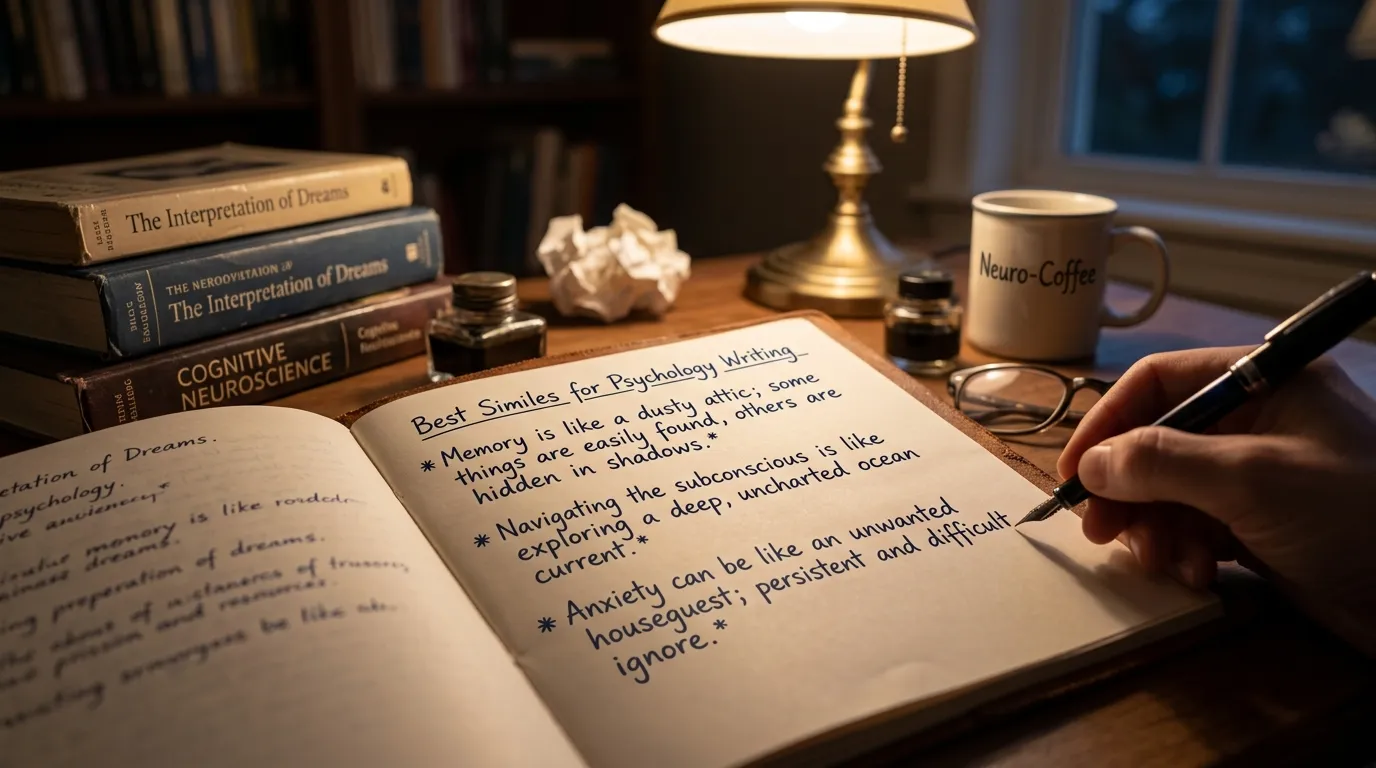
Psychology explores how people think, feel, behave, learn, remember, and interact with the world around them. Whether you’re writing a psychology essay, research summary, blog post, academic paper, self-improvement article, or fictional story, explaining psychological concepts clearly is essential. However, topics like emotions, memory, perception, motivation, and personality can often seem abstract. That’s where similes become incredibly valuable.
Similes compare two different things using the words “like” or “as.” They transform complex psychological ideas into vivid, relatable images that readers can easily understand. Instead of saying someone’s mind was overwhelmed, you could write that “their thoughts swirled like leaves caught in a strong wind.” This simple comparison helps readers visualize the experience and connect with it emotionally.
For students, psychologists, researchers, teachers, bloggers, and writers, learning the best similes for psychology writing can improve clarity, strengthen explanations, and make academic or creative writing far more engaging. This guide includes carefully selected similes, clear meanings, practical usage insights, and realistic examples that can be applied across many areas of psychology.
What Is a Simile?
A simile is a figure of speech that compares two unlike things using the words “like” or “as.” Similes help explain unfamiliar or abstract ideas by relating them to familiar experiences.
Simple Examples of Similes
- Her memory was as sharp as a camera lens.
- His thoughts drifted like clouds across the sky.
In psychology writing, similes make difficult concepts such as emotions, cognition, attention, stress, and behavior easier to understand while keeping readers engaged.
91 Best Similes for Psychology Writing
1. Like a puzzle slowly coming together
Meaning: Gradually understanding something.
Deeper Definition: Represents the process of gaining insight as separate thoughts, memories, or observations begin to form a complete picture.
Usage Insight: Perfect for psychology essays, research papers, educational blogs, and academic writing. Suitable for both formal and semi-formal contexts.
Examples:
- As therapy continued, her understanding of past experiences came together like a puzzle slowly coming together.
- The research findings fit together like pieces of a puzzle.
2. As calm as a still lake
Meaning: Emotionally balanced.
Deeper Definition: Represents emotional regulation and inner peace despite external stress.
Usage Insight: Ideal for discussions about emotional intelligence, mindfulness, and mental well-being.
Examples:
- His mind became as calm as a still lake after meditation.
- She responded as calmly as a still lake despite the criticism.
3. Like waves rising and falling in the ocean
Meaning: Emotions naturally change.
Deeper Definition: Represents the normal rhythm of emotional experiences over time.
Usage Insight: Excellent for writing about emotional regulation and resilience.
Examples:
- Her emotions moved like waves rising and falling in the ocean.
- Anxiety gradually faded as new confidence developed.
4. As clear as a polished mirror
Meaning: Completely aware and focused.
Deeper Definition: Represents mental clarity, self-awareness, and accurate perception.
Usage Insight: Great for mindfulness, cognition, and self-awareness topics.
Examples:
- His thinking became as clear as a polished mirror.
- Self-reflection improved her decision-making.
5. Like roots growing beneath the soil
Meaning: Hidden influences shaping behavior.
Deeper Definition: Represents unconscious thoughts, beliefs, and experiences that affect actions.
Usage Insight: Perfect for personality psychology and developmental psychology discussions.
Examples:
- Childhood experiences spread like roots growing beneath the soil.
- Many behaviors have unseen psychological foundations.
6. As steady as a lighthouse in a storm
Meaning: Emotionally stable under pressure.
Deeper Definition: Represents resilience and healthy emotional regulation.
Usage Insight: Useful for leadership psychology, resilience, and coping strategies.
Examples:
- She remained as steady as a lighthouse in a storm.
- Emotional resilience helped him support others.
7. Like a bridge connecting two minds
Meaning: Deep understanding between people.
Deeper Definition: Represents empathy, communication, and meaningful relationships.
Usage Insight: Excellent for social psychology and counseling topics.
Examples:
- Active listening became like a bridge connecting two minds.
- Empathy strengthened their relationship.
8. As flexible as bamboo in the wind
Meaning: Mentally adaptable.
Deeper Definition: Represents psychological flexibility and healthy coping.
Usage Insight: Ideal for resilience and personal growth writing.
Examples:
- She remained as flexible as bamboo in the wind during life’s changes.
- Adaptability reduced unnecessary stress.
9. Like sunlight breaking through clouds
Meaning: Gaining insight after confusion.
Deeper Definition: Represents moments of realization and emotional healing.
Usage Insight: Great for counseling, therapy, and self-improvement content.
Examples:
- Understanding arrived like sunlight breaking through clouds.
- The session gave him a fresh perspective.
10. As balanced as perfectly aligned scales
Meaning: Rational and emotionally controlled.
Deeper Definition: Represents thoughtful judgment and balanced thinking.
Usage Insight: Excellent for cognitive psychology and decision-making discussions.
Examples:
- Her judgment remained as balanced as perfectly aligned scales.
- Careful reflection improved every decision.
11. Like a compass pointing north
Meaning: Guided by clear values.
Deeper Definition: Represents purpose, self-awareness, and internal motivation.
Usage Insight: Perfect for motivational psychology and personality development.
Examples:
- His values acted like a compass pointing north.
- Clear goals improved his motivation.
12. As refreshing as spring rain
Meaning: Mentally renewing.
Deeper Definition: Represents emotional recovery and fresh perspectives.
Usage Insight: Great for wellness and mental health writing.
Examples:
- The vacation felt as refreshing as spring rain.
- Rest helped restore her concentration.
13. Like stars guiding travelers at night
Meaning: Providing direction during uncertainty.
Deeper Definition: Represents supportive relationships and wise guidance.
Usage Insight: Suitable for counseling, mentoring, and educational psychology.
Examples:
- His mentor guided him like stars guiding travelers at night.
- Good advice reduced uncertainty.
14. As patient as a gardener waiting for spring
Meaning: Allowing growth to happen naturally.
Deeper Definition: Represents understanding that psychological growth takes time.
Usage Insight: Excellent for therapy, education, and personal development writing.
Examples:
- She was as patient as a gardener waiting for spring.
- Personal growth cannot be rushed.
15. Like a key unlocking a hidden door
Meaning: Discovering new understanding.
Deeper Definition: Represents breakthroughs in thinking or emotional awareness.
Usage Insight: Perfect for cognitive psychology and self-discovery topics.
Examples:
- The new perspective was like a key unlocking a hidden door.
- Reflection helped him understand his behavior.
16–91 Additional Best Similes for Psychology Writing
- As peaceful as a quiet forest at dawn
- Like birds returning home at sunset
- As dependable as the sunrise
- Like moonlight reflecting on calm water
- As thoughtful as a wise teacher
- Like fresh air after rainfall
- As bright as the morning sun
- Like rivers flowing toward the sea
- As resilient as grass growing through stone
- Like lanterns lighting a dark path
- As gentle as a spring breeze
- Like a tree deeply rooted in rich soil
- As open as the horizon
- Like a melody calming the mind
- As comforting as home after a long journey
- Like rain nourishing dry earth
- As graceful as a swan gliding across a lake
- Like petals floating on the breeze
- As hopeful as the first light of dawn
- Like butterflies emerging from a cocoon
- As steady as ancient mountains
- Like waves smoothing rough stones
- As inspiring as mountain peaks
- Like sunshine filling every corner of a room
- As patient as changing seasons
- Like a river finding its course
- As calm as drifting clouds
- Like stars reflected on a peaceful lake
- As encouraging as a helping hand
- Like a candle shining in darkness
- As trustworthy as solid stone
- Like blossoms opening in spring
- As nurturing as fertile soil
- Like an anchor holding firm in rough waters
- As limitless as the sky
- Like fresh pages in a new notebook
- As dependable as an old friend
- Like a path leading toward understanding
- As resilient as bamboo bending in strong winds
- Like a bridge connecting distant places
- As warm as sunshine after winter
- Like hope blooming after hardship
- As gentle as falling snow
- Like echoes carrying meaningful words
- As uplifting as birds greeting the morning
- Like golden light filling a valley
- As composed as a seasoned captain
- Like a mirror reflecting every detail
- As determined as a river carving through rock
- Like fresh blossoms after winter
- As reassuring as a familiar voice
- Like moonlight calming restless waves
- As organized as a well-arranged library
- Like sunlight revealing hidden paths
- As focused as an eagle hunting prey
- Like cool water on a warm afternoon
- As meaningful as a handwritten letter
- Like a gardener nurturing new growth
- As confident as an experienced guide
- Like a window opened to fresh air
- As resilient as a phoenix rising from the ashes
- Like the first bloom of spring
- As wise as an ancient oak
- Like stars illuminating the night
- As comforting as a warm blanket
- Like a road leading toward hope
- As enduring as the ocean tides
- Like the sunrise ending the longest night
- As steady as the rhythm of breathing
- Like a book revealing new chapters
- As illuminating as a candle in darkness
- Like fresh winds clearing heavy clouds
- As optimistic as spring after winter
- Like an artist adding color to a blank canvas
- As composed as still water at dawn
- Like a gentle breeze clearing the air
How to Use These Similes Effectively in Different Forms of Writing
In Psychology Essays
Use similes to explain complex theories, emotions, and behaviors in language that readers can easily visualize.
Example: Emotions rise and fall like waves in the ocean, making emotional regulation an important psychological skill.
In Stories
Use similes to reveal characters’ thoughts, emotions, and inner conflicts.
Example: His thoughts drifted like clouds across the sky after hearing the unexpected news.
In Poems
Similes create vivid emotional imagery and deepen symbolic meaning.
Example: Hope spread like sunlight breaking through heavy clouds.
In Content Writing
Use similes to simplify self-help, mindfulness, and mental health topics for readers.
Example: Building healthy habits is like planting a garden—small daily efforts lead to lasting growth.
Frequently Asked Questions
What are similes for psychology writing?
They are comparisons using “like” or “as” that help explain emotions, thoughts, behaviors, memory, motivation, and psychological concepts.
Why are similes useful in psychology?
Similes make abstract psychological ideas easier to understand, remember, and relate to.
Can similes be used in academic psychology papers?
Yes. When used appropriately, similes can clarify difficult concepts without reducing academic quality.
Are similes suitable for mental health blogs?
Absolutely. Similes help readers connect emotionally with complex experiences and practical advice.
How can I create original psychology similes?
Compare emotions, thoughts, or behaviors with familiar experiences in nature, everyday life, or common objects while keeping the comparison relevant and clear.
Do similes improve psychology storytelling?
Yes. Similes make characters’ emotions, motivations, and internal conflicts more vivid and believable.
Conclusion
Using these best similes for psychology writing can transform complex psychological concepts into clear, engaging, and memorable descriptions. Whether you’re writing academic essays, research summaries, blogs, self-improvement articles, stories, or poems, similes help readers visualize emotions, thoughts, and behaviors with greater understanding.
These similes for psychology writing not only improve clarity but also create stronger emotional connections with your audience. Practice using them naturally, develop your own creative comparisons, and let vivid language make every psychological concept easier to understand and more enjoyable to read.

James Williams is a dedicated language writer and contributor at Mitaphor.com, where he explores the art of similes, metaphors, and word meanings. With a passion for making language simple and engaging, James breaks down complex expressions into clear, easy-to-understand insights. His work is designed to help students, writers, and curious readers better understand figurative language and use it effectively in everyday communication.