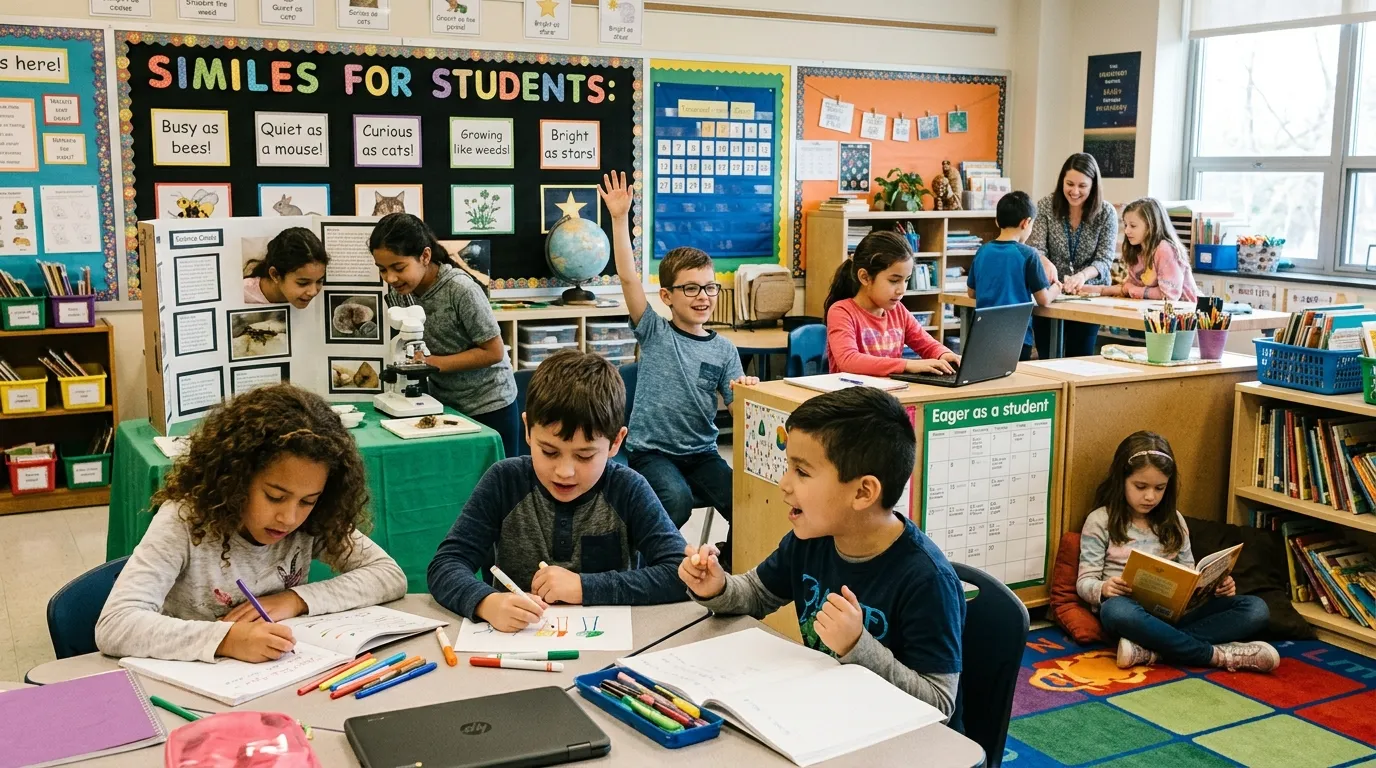
Students are the heart of every school, college, and university. They are learners, dreamers, problem-solvers, and future leaders who continuously grow through education and life experiences. Every student follows a unique journey filled with challenges, achievements, friendships, and valuable lessons. Whether studying for exams, participating in classroom discussions, or discovering new talents, students experience countless moments that shape their character and future. Describing these experiences with simple language is effective, but using similes makes writing far more engaging and memorable. By comparing students to familiar objects, animals, natural elements, and everyday experiences, similes create vivid imagery that helps readers better understand their determination, curiosity, and growth.
Whether you’re a student writing an essay, a teacher preparing educational materials, a blogger creating academic content, or a storyteller developing school-themed characters, learning similes for students can make your writing more expressive and impactful. These creative comparisons add depth, emotion, and clarity while helping readers connect with educational experiences in a meaningful way.
In this comprehensive guide, you’ll discover some of the best similes for students, complete with simple meanings, detailed definitions, practical usage insights, and realistic examples. You’ll also learn how to use these similes effectively in essays, stories, poems, speeches, and content writing.
What Is a Simile?
A simile is a figure of speech that compares two different things using the words “like” or “as.” Instead of describing something directly, a simile creates a vivid comparison that helps readers imagine ideas, emotions, and experiences more clearly.
Similes make writing more engaging because they transform ordinary descriptions into memorable and meaningful imagery.
Simple Examples
- He was as brave as a lion.
- Her smile was like sunshine after the rain.
These comparisons make writing more expressive and enjoyable to read.
68 Powerful Similes for Students
1. As busy as a bee
Meaning: Extremely hardworking and active.
Definition: Bees are constantly gathering nectar and working together, making this one of the most popular similes for students because students often spend their days learning, studying, and completing assignments.
Usage Insight: Perfect for essays, speeches, blogs, and classroom writing. Suitable for formal, casual, and educational contexts.
Examples:
- The students were as busy as bees preparing for the science fair.
- Everyone worked hard to finish the group project on time.
2. Like a sponge soaking up water
Meaning: Learning quickly and absorbing knowledge.
Definition: A sponge easily absorbs water, symbolizing a student’s ability to learn new information.
Usage Insight: Excellent for educational blogs, essays, and speeches.
Examples:
- She learned new concepts like a sponge soaking up water.
- The young student eagerly absorbed every lesson.
3. As curious as a kitten
Meaning: Eager to learn and explore.
Definition: Kittens naturally investigate everything around them, representing curiosity and discovery.
Usage Insight: Great for children’s writing and classroom discussions.
Examples:
- The students were as curious as kittens during the science experiment.
- He asked thoughtful questions throughout the lesson.
4. Like a seed growing into a tree
Meaning: Developing through education.
Definition: Seeds gradually become strong trees, just as students grow through learning and experience.
Usage Insight: Perfect for graduation speeches and motivational writing.
Examples:
- Every student is like a seed growing into a strong tree.
- Education helped her reach her full potential.
5. As determined as a mountain climber
Meaning: Working hard to achieve goals.
Definition: Mountain climbers overcome obstacles step by step, symbolizing persistence and determination.
Usage Insight: Excellent for motivational blogs and essays.
Examples:
- He studied as determinedly as a mountain climber reaching the summit.
- Every challenge motivated her to improve.
6. Like a candle lighting another candle
Meaning: Sharing knowledge with others.
Definition: A candle can light many others without losing its own flame, symbolizing collaborative learning.
Usage Insight: Great for teamwork essays and educational content.
Examples:
- She helped her classmates like a candle lighting another candle.
- Sharing ideas made the entire class stronger.
7. As focused as an eagle hunting its prey
Meaning: Paying close attention.
Definition: Eagles concentrate carefully before making a move, representing strong focus and determination.
Usage Insight: Ideal for exam preparation articles and school speeches.
Examples:
- He remained as focused as an eagle during the final exam.
- Nothing distracted her from her studies.
8. Like a traveler exploring a new world
Meaning: Discovering new knowledge every day.
Definition: Travelers explore unfamiliar places, just as students explore new subjects.
Usage Insight: Perfect for educational blogs and storytelling.
Examples:
- Every lesson felt like a new adventure.
- The students explored history with great enthusiasm.
9. As bright as the morning sun
Meaning: Full of hope and potential.
Definition: The sunrise symbolizes fresh beginnings and endless possibilities.
Usage Insight: Excellent for graduation speeches and inspirational writing.
Examples:
- The students were as bright as the morning sun.
- Their enthusiasm inspired the teachers.
10. Like a bridge connecting dreams to reality
Meaning: Moving toward future success.
Definition: Bridges connect one destination to another, symbolizing education leading to future opportunities.
Usage Insight: Suitable for speeches, essays, and career guidance articles.
Examples:
- Every student crossed the bridge toward a brighter future.
- Education opened countless new opportunities.
How to Use These Similes Effectively
Learning similes for students is only the first step. Using them naturally can make your writing more engaging, descriptive, and memorable.
Essays
Use similes to describe students’ curiosity, determination, teamwork, and academic growth instead of repeating ordinary descriptions. This creates stronger imagery and improves readability.
Stories
Student characters become more realistic when their learning experiences are illustrated through vivid comparisons rather than plain statements.
Poems
Poetry often celebrates learning, dreams, friendship, and growth. Similes help express these themes with meaningful and memorable imagery.
Content Writing
Whether you’re writing educational blogs, parenting articles, study guides, school newsletters, or motivational content, examples of similes for students make your writing more engaging while naturally improving SEO and reader interest.
Speeches and Personal Messages
Graduation speeches, welcome addresses, teacher appreciation messages, school assemblies, and award ceremonies become more inspiring when carefully chosen similes describe students’ growth and achievements.
Frequently Asked Questions
What are similes for students?
Similes for students compare learners, their qualities, or their educational experiences to familiar things using words like “like” or “as.” They make writing more vivid and engaging.
Why should writers use similes for students?
They create stronger imagery, improve descriptions, and help readers better understand learning, growth, and determination.
Can students use these similes in school assignments?
Yes. These common similes for students are ideal for essays, speeches, creative writing, classroom presentations, and educational projects.
What’s the difference between a simile and a metaphor?
A simile compares two things using “like” or “as,” while a metaphor makes a direct comparison without using those words.
Are similes for students useful for bloggers?
Absolutely. Bloggers frequently use creative similes for students in education, parenting, study tips, career guidance, and motivational content to make articles more engaging and informative.
Conclusion
Students represent curiosity, determination, growth, and the promise of a brighter future. Every lesson they learn and every challenge they overcome helps shape their knowledge, confidence, and character. Using carefully chosen similes for students allows writers to describe these experiences through vivid comparisons that readers can easily picture and relate to. Instead of relying on ordinary descriptions, similes add creativity, emotion, and depth, making educational writing more engaging and memorable.
Whether you’re writing an essay, a graduation speech, an educational blog, a poem, or a school-themed story, the best similes for students can bring your ideas to life and create a stronger connection with your audience. Choose comparisons that fit naturally within your message, vary your language to keep readers interested, and don’t hesitate to create original similes inspired by real classroom experiences. With regular practice, you’ll develop a richer writing style that celebrates the journey of learning while leaving a lasting impression on every reader.

Chris Woak is a passionate language enthusiast and the creative voice behind Mitaphor.com. With a deep interest in similes, metaphors, and word meanings, Chris simplifies complex expressions into clear, engaging explanations that readers of all levels can understand. His work focuses on helping students, writers, and language lovers explore the power of figurative language and improve their communication skills.