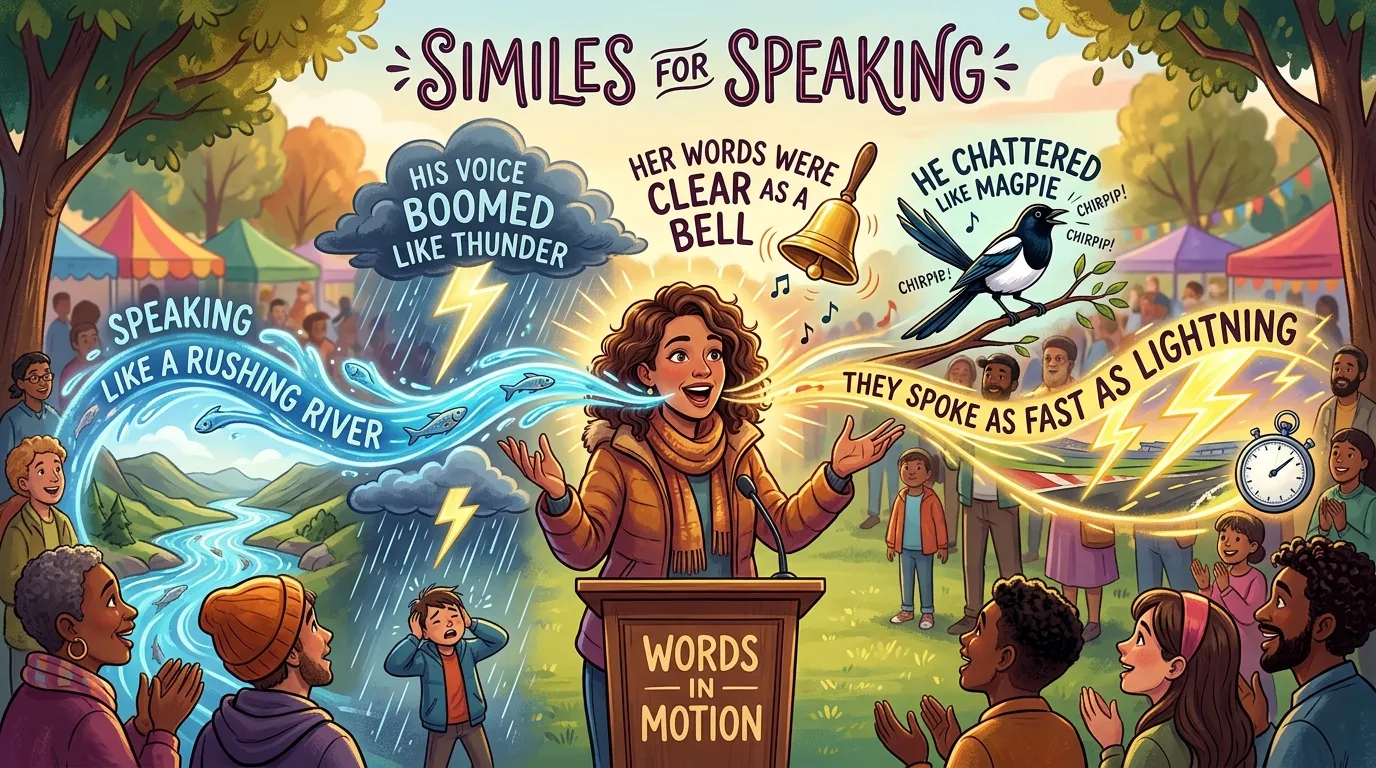
Speaking is one of the most powerful ways people communicate ideas, emotions, and knowledge. Whether you’re delivering a speech, teaching a class, participating in a meeting, or simply chatting with friends, the way you speak can influence, inspire, and connect with others. Good speaking isn’t only about choosing the right words—it’s also about clarity, confidence, tone, and expression. Since speaking can take many forms, describing it vividly can sometimes be difficult. That’s where similes become an excellent writing tool. By comparing speaking to familiar objects, animals, natural elements, and everyday experiences, similes create memorable imagery that helps readers understand different speaking styles and communication skills.
Whether you’re a student writing an essay, a blogger creating communication content, a teacher explaining figurative language, or a storyteller describing dialogue, learning similes for speaking can make your writing more expressive and engaging. These creative comparisons add emotion, depth, and realism while helping readers visualize how someone speaks.
In this comprehensive guide, you’ll discover some of the best similes for speaking, complete with simple meanings, detailed definitions, practical usage insights, and realistic examples. You’ll also learn how to use these similes effectively in essays, stories, poems, speeches, and content writing.
What Is a Simile?
A simile is a figure of speech that compares two different things using the words “like” or “as.” Instead of simply describing something, a simile creates a vivid comparison that helps readers imagine ideas and emotions more clearly.
Similes make writing richer by transforming ordinary descriptions into memorable images.
Simple Examples
- She was as brave as a lion.
- His voice was like gentle rain.
These comparisons make writing more engaging and expressive.
67 Powerful Similes for Speaking
1. As clear as a bell
Meaning: Very easy to understand.
Definition: A bell produces a crisp, distinct sound, making this one of the most popular similes for speaking when describing clear communication.
Usage Insight: Perfect for essays, speeches, blogs, business writing, and storytelling. Works well in both formal and casual contexts.
Examples:
- Her explanation was as clear as a bell during the presentation.
- The teacher spoke so clearly that everyone understood the lesson.
2. Like a flowing river
Meaning: Speaking smoothly without hesitation.
Definition: A flowing river moves continuously and naturally, symbolizing fluent speech.
Usage Insight: Ideal for storytelling, speeches, and descriptive writing.
Examples:
- He spoke like a flowing river throughout the interview.
- Her ideas flowed naturally from one point to the next.
3. As gentle as a whisper
Meaning: Speaking softly and kindly.
Definition: A whisper represents calmness, care, and quiet communication.
Usage Insight: Excellent for emotional stories and poetry.
Examples:
- She spoke as gentle as a whisper to comfort the child.
- His quiet words eased everyone’s worries.
4. Like music to the ears
Meaning: Pleasant and enjoyable to hear.
Definition: Beautiful music creates happiness, just as pleasant speech delights listeners.
Usage Insight: Great for descriptive essays and speeches.
Examples:
- Her encouraging words were like music to the ears.
- Everyone appreciated his thoughtful compliments.
5. As confident as a news anchor
Meaning: Speaking with confidence and authority.
Definition: News anchors communicate clearly and professionally, symbolizing confidence.
Usage Insight: Perfect for leadership and public speaking content.
Examples:
- She answered every question as confidently as a news anchor.
- His presentation impressed the judges.
6. Like sunshine after the rain
Meaning: Bringing hope through words.
Definition: Positive speech can brighten someone’s mood just as sunshine brightens the sky.
Usage Insight: Excellent for motivational blogs and inspirational speeches.
Examples:
- His encouraging speech was like sunshine after the rain.
- Her words gave everyone renewed confidence.
7. As smooth as silk
Meaning: Speaking gracefully and effortlessly.
Definition: Silk is soft and smooth, representing polished communication.
Usage Insight: Great for describing skilled speakers.
Examples:
- The presenter was as smooth as silk.
- She answered every question with confidence.
8. Like a teacher explaining a lesson
Meaning: Speaking clearly and patiently.
Definition: Good teachers simplify difficult ideas for everyone to understand.
Usage Insight: Suitable for educational writing and tutorials.
Examples:
- He explained the process like a teacher explaining a lesson.
- Everyone quickly understood the instructions.
9. As bright as the morning sun
Meaning: Cheerful and uplifting speech.
Definition: The morning sun symbolizes optimism and positive communication.
Usage Insight: Excellent for speeches and storytelling.
Examples:
- Her greeting was as bright as the morning sun.
- His enthusiasm energized the audience.
10. Like a compass guiding travelers
Meaning: Providing direction through words.
Definition: A compass helps people find their way, just as wise speech guides listeners.
Usage Insight: Perfect for leadership blogs and graduation speeches.
Examples:
- His advice was like a compass guiding travelers.
- Her words helped us make the right decision.
How to Use These Similes Effectively
Learning similes for speaking is only the first step. Using them naturally can make your writing more vivid and memorable.
Essays
Use similes to describe confidence, clarity, persuasion, or communication styles instead of repeating simple adjectives.
Stories
Describe how characters speak through vivid comparisons to make dialogue more engaging and realistic.
Poems
Similes create beautiful imagery that captures the rhythm, emotion, and impact of spoken words.
Content Writing
Whether you’re writing communication guides, leadership blogs, educational resources, or self-improvement articles, examples of similes for speaking improve readability while naturally strengthening SEO.
Speeches
Motivational talks, graduation speeches, presentations, and workshops become more memorable when meaningful similes highlight the power of effective communication.
Frequently Asked Questions
What are similes for speaking?
Similes for speaking compare the way someone talks to familiar things using “like” or “as.” They make descriptions more vivid and engaging.
Why should writers use similes for speaking?
They improve imagery, make communication styles easier to understand, and create more memorable writing.
Can students use these similes in school assignments?
Yes. These common similes for speaking are excellent for essays, speeches, presentations, and creative writing.
What’s the difference between a simile and a metaphor?
A simile compares two things using “like” or “as,” while a metaphor makes a direct comparison without using those words.
Are similes for speaking useful for bloggers?
Absolutely. Bloggers often use creative similes for speaking in communication, leadership, education, and public speaking content to make articles more engaging and relatable.
Conclusion
Speaking is one of the most valuable skills we use every day. It allows us to share ideas, inspire others, build relationships, and communicate with confidence. Whether you’re delivering a presentation, telling a story, teaching a lesson, or having a casual conversation, the way you speak shapes how people understand and remember your message. Using carefully chosen similes for speaking helps writers describe communication through vivid comparisons that readers can easily imagine and appreciate. Instead of relying on ordinary descriptions, similes add creativity, emotion, and personality to your writing.
Whether you’re writing an essay, a speech, a blog post, a poem, or a fictional story, the best similes for speaking can make your work more expressive and impactful. Experiment with different comparisons, choose those that fit your message naturally, and don’t be afraid to create original similes inspired by everyday conversations. Over time, these descriptive techniques will strengthen your writing and help your words leave a lasting impression on every reader.

James Williams is a dedicated language writer and contributor at Mitaphor.com, where he explores the art of similes, metaphors, and word meanings. With a passion for making language simple and engaging, James breaks down complex expressions into clear, easy-to-understand insights. His work is designed to help students, writers, and curious readers better understand figurative language and use it effectively in everyday communication.