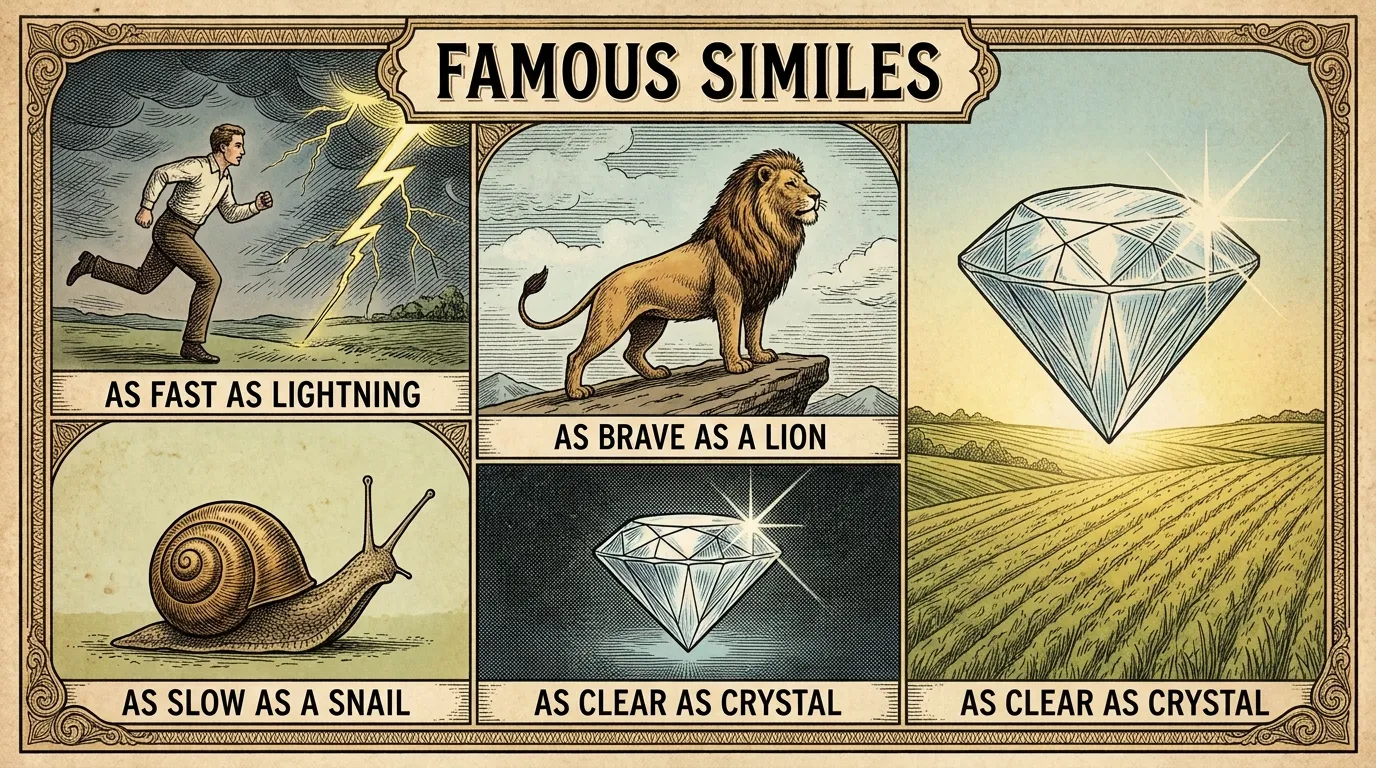
Similes are among the most recognizable and widely used figures of speech in the English language. From classic literature and famous speeches to everyday conversations and modern writing, similes help people express ideas through vivid and memorable comparisons. By using the words “like” or “as,” similes make descriptions more engaging, relatable, and easier to understand. Expressions such as “as brave as a lion,” “as busy as a bee,” and “like a fish out of water” have become part of everyday language because they instantly create clear mental images. Learning famous similes not only improves your vocabulary but also strengthens your writing, speaking, and creative thinking.
Whether you’re a student studying figurative language, a teacher preparing classroom lessons, a writer looking to enrich your descriptions, or a blogger creating educational content, exploring famous similes can help you communicate more effectively. These timeless comparisons appear in literature, poetry, novels, speeches, movies, and daily conversations, making them valuable for learners and writers of all ages.
In this comprehensive guide, you’ll discover some of the most famous similes, learn what a simile is, explore their meanings and practical uses, and find helpful tips for using them naturally in essays, stories, poems, speeches, and content writing.
What Is a Simile?
A simile is a figure of speech that compares two different things using the words “like” or “as.” The comparison helps readers or listeners understand an idea more clearly by relating it to something familiar.
Similes make language more colorful because they create vivid mental images while adding emotion and creativity to communication.
Simple Examples
- She was as brave as a lion.
- The stars shone like diamonds.
These comparisons make descriptions more memorable and expressive.
76 Famous Similes
1. As Brave as a Lion
Meaning: Extremely courageous.
Definition: Lions are symbols of strength and fearlessness, making this one of the most famous similes for bravery.
Usage Insight: Perfect for essays, stories, speeches, classroom writing, and everyday conversations. Suitable for both formal and informal situations.
Examples:
- The firefighter was as brave as a lion during the rescue.
- She faced every challenge without fear.
2. As Busy as a Bee
Meaning: Very hardworking and active.
Definition: Bees constantly work gathering nectar and maintaining their hive.
Usage Insight: Common in conversations, school assignments, and workplace discussions.
Examples:
- I’ve been as busy as a bee preparing for exams.
- Everyone worked together before the event.
3. As Quiet as a Mouse
Meaning: Very silent.
Definition: Mice move quietly, making this comparison easy to understand.
Usage Insight: Ideal for stories, classrooms, and daily conversations.
Examples:
- The students were as quiet as a mouse during the test.
- He entered the room without making a sound.
4. As Cool as a Cucumber
Meaning: Very calm under pressure.
Definition: This simile describes someone who remains relaxed in stressful situations.
Usage Insight: Great for conversations, interviews, and storytelling.
Examples:
- She stayed as cool as a cucumber before her presentation.
- He handled the emergency calmly.
5. As Fast as Lightning
Meaning: Extremely fast.
Definition: Lightning moves at incredible speed, making it a popular comparison.
Usage Insight: Excellent for sports writing, stories, and conversations.
Examples:
- The runner was as fast as lightning.
- The motorcycle disappeared within seconds.
6. As Strong as an Ox
Meaning: Very powerful.
Definition: Oxen are known for their physical strength and endurance.
Usage Insight: Suitable for descriptive writing and everyday speech.
Examples:
- My grandfather is still as strong as an ox.
- The worker lifted the heavy boxes alone.
7. As Light as a Feather
Meaning: Extremely light.
Definition: Feathers weigh very little, making this a common comparison.
Usage Insight: Perfect for describing objects and movement.
Examples:
- The scarf was as light as a feather.
- The balloon floated into the sky.
8. Like a Fish Out of Water
Meaning: Feeling uncomfortable or out of place.
Definition: A fish belongs in water, so outside it feels unnatural and uncomfortable.
Usage Insight: Frequently used in conversations and personal stories.
Examples:
- I felt like a fish out of water on my first day at college.
- He struggled to fit into the new environment.
9. As Blind as a Bat
Meaning: Unable to see well.
Definition: Although bats navigate effectively, this traditional simile refers to poor eyesight.
Usage Insight: Best used casually and humorously.
Examples:
- Without my glasses, I’m as blind as a bat.
- She couldn’t read the sign from a distance.
10. Like Water Off a Duck’s Back
Meaning: Criticism has little or no effect.
Definition: Water slides off a duck’s feathers without soaking in, symbolizing resilience.
Usage Insight: Great for conversations and motivational writing.
Examples:
- The negative comments were like water off a duck’s back.
- He didn’t let criticism affect his confidence.
How to Use These Famous Similes Effectively
Knowing famous similes helps you write and speak with greater clarity, creativity, and confidence.
Essays
Use familiar similes to make descriptions more vivid, but avoid overusing them in formal academic writing.
Stories
Similes help readers picture characters, settings, and emotions while making narratives more engaging.
Poems
Many classic similes work beautifully in poetry because they create strong imagery and emotional depth.
Content Writing
Whether you’re writing blogs, educational resources, speeches, or marketing content, famous similes naturally improve readability and keep readers interested.
Everyday Conversations
Using well-known similes can make your speech more expressive, memorable, and enjoyable without sounding overly complicated.
Frequently Asked Questions
What are famous similes?
Famous similes are well-known comparisons that use “like” or “as” to describe people, objects, emotions, or situations in a vivid and memorable way.
Why are famous similes important?
They make communication more engaging, improve descriptive writing, strengthen vocabulary, and help readers visualize ideas more clearly.
What’s the difference between a simile and a metaphor?
A simile compares two things using “like” or “as,” while a metaphor compares them directly without those words.
Can famous similes be used in formal writing?
Yes, but they should be used carefully. In academic writing, choose similes that support your point without making the text sound overly informal.
How can I learn more famous similes?
Read books, poems, novels, speeches, and articles, and practice using common similes naturally in your own writing and conversations.
Conclusion
Learning famous similes is one of the easiest ways to make your language more expressive and memorable. These timeless comparisons have remained popular because they communicate ideas quickly, create vivid imagery, and help readers and listeners connect with what you’re saying. Whether describing courage, speed, happiness, strength, or everyday experiences, famous similes bring life and personality to both spoken and written English.
Whether you’re a student improving your language skills, a teacher introducing figurative language, a writer crafting engaging content, or a blogger creating educational resources, exploring the best famous similes will strengthen your vocabulary and creativity. Practice using these classic comparisons naturally, experiment with developing your own original similes, and apply them thoughtfully in essays, stories, poems, speeches, and conversations. With consistent practice, you’ll become a more confident communicator who can capture attention through vivid and meaningful language.

James Williams is a dedicated language writer and contributor at Mitaphor.com, where he explores the art of similes, metaphors, and word meanings. With a passion for making language simple and engaging, James breaks down complex expressions into clear, easy-to-understand insights. His work is designed to help students, writers, and curious readers better understand figurative language and use it effectively in everyday communication.