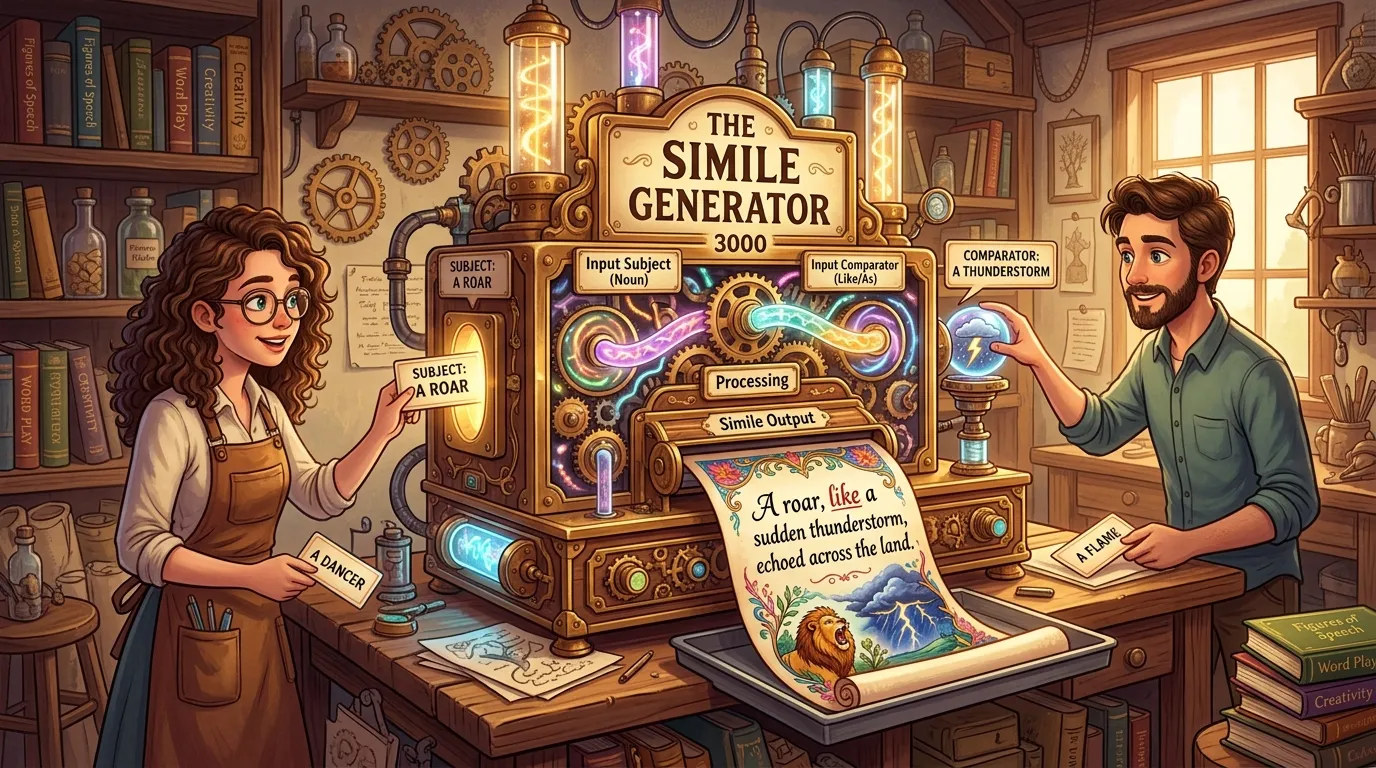
A simile generator is a useful tool for creating creative comparisons that make writing more vivid, expressive, and memorable. Similes compare two unlike things using words such as “like” or “as.” They are commonly used in creative writing, poetry, storytelling, essays, speeches, classroom assignments, social media captions, and everyday communication.
Coming up with original comparisons can sometimes be difficult, especially when you want your writing to sound fresh rather than repetitive. A simile generator can provide inspiration by turning simple ideas, emotions, objects, or qualities into descriptive comparisons. For example, instead of simply saying “she was happy,” you could write, “she was as happy as a child discovering a hidden treasure.”
Whether you’re a student looking for writing inspiration, a teacher creating classroom activities, or a writer searching for fresh descriptions, learning how a simile generator works can help you develop stronger and more imaginative language.
What Is a Simile?
A simile is a figure of speech that compares two different things using “like” or “as.” The comparison highlights a shared quality between the two things.
For example:
- As brave as a lion
- Runs like the wind
- As soft as silk
- Shines like a star
- As cold as ice
The goal is not to say that two things are literally the same. Instead, the comparison helps readers picture or understand something more clearly.
What Is a Simile Generator?
A simile generator is a creative writing tool that helps users produce similes based on a particular word, subject, emotion, or quality.
For example, if you enter “fast,” a generator might produce:
He was as fast as a racing arrow.
If you enter “beautiful,” it might suggest:
The garden was beautiful like a painting brought to life.
A generator can be especially helpful when you need several different comparisons quickly or want inspiration for creating your own original similes.
How Does a Simile Generator Work?
A simile generator generally starts with a subject or quality and connects it with an appropriate image or comparison.
The basic process is:
- Choose a word or topic.
- Identify its main quality.
- Think of something that strongly represents that quality.
- Connect the two using “like” or “as.”
- Adjust the wording so the comparison sounds natural.
For example:
Topic: Quiet
Quality: Silence
Comparison: Snowfall
Simile: The room was as quiet as falling snow.
Why Use a Simile Generator?
There are several reasons writers may use a simile generator.
1. Find Inspiration
A generator can provide ideas when you cannot think of an interesting comparison.
2. Make Writing More Creative
Similes add imagery and personality to ordinary sentences.
3. Save Time
Instead of brainstorming dozens of possibilities yourself, you can quickly generate ideas and select the ones that fit your writing.
4. Improve Descriptive Writing
Similes help readers visualize people, places, emotions, objects, and situations.
5. Help Students Learn Figurative Language
Students can use generated examples to understand how comparisons work before creating their own.
Simile Generator Examples
Here are examples based on common qualities:
| Quality | Simile |
|---|---|
| Happy | As happy as a child on a sunny morning |
| Fast | As fast as a racing arrow |
| Slow | As slow as a drifting turtle |
| Bright | As bright as a summer sunrise |
| Dark | As dark as a moonless night |
| Strong | As strong as an ancient oak |
| Soft | As soft as a cloud |
| Cold | As cold as winter ice |
| Hot | As hot as a desert afternoon |
| Quiet | As quiet as falling snow |
| Loud | As loud as a thunderstorm |
| Brave | As brave as a fearless lion |
| Beautiful | Like a garden in full bloom |
| Angry | As fierce as a raging storm |
| Calm | As calm as a still lake |
Similes Using “Like”
One common way to create a simile is by using “like.”
Examples include:
- She danced like a butterfly.
- The children laughed like birds in spring.
- The river moved like a silver ribbon.
- His words struck like thunder.
- The stars glittered like diamonds.
This structure is simple and works well in stories, poems, captions, and descriptive writing.
Similes Using “As”
Another common structure uses “as.”
Examples include:
- As bright as the sun.
- As gentle as a breeze.
- As light as a feather.
- As strong as steel.
- As peaceful as a quiet garden.
The “as…as” structure is especially useful when describing qualities such as strength, color, speed, size, temperature, or emotion.
Similes for Creative Writing
Writers can use similes to make scenes more vivid.
Instead of:
The forest was quiet.
You could write:
The forest was as quiet as a sleeping child.
Instead of:
The rain fell heavily.
You could write:
The rain fell like silver curtains from the sky.
Instead of:
She was nervous.
You could write:
Her thoughts raced like birds startled from a tree.
These comparisons give readers a stronger mental picture.
Similes for Students
A simile generator can be useful for school assignments and creative writing exercises. Students can enter a simple adjective and explore different ways to describe it.
For example:
Brave:
- As brave as a lion.
- As fearless as a mountain climber.
- Like a soldier standing against the storm.
Sad:
- As sad as a rainy afternoon.
- Her tears fell like autumn leaves.
- His heart felt as heavy as a stone.
Students should use generated examples as inspiration rather than simply copying them. Creating their own comparisons helps develop imagination and writing skills.
How to Create Your Own Similes
You do not always need a tool to create a good simile. Follow these simple steps.
Step 1: Choose a Subject
Pick something you want to describe.
Example: A runner.
Step 2: Identify Its Quality
Ask what makes the subject noticeable.
Example: The runner is very fast.
Step 3: Think of a Strong Comparison
Choose something associated with speed.
Example: Lightning.
Step 4: Connect the Ideas
Use “like” or “as.”
Example:
The runner moved like lightning.
Step 5: Make It Original
Try a more specific comparison:
The runner moved like a spark racing across dry grass.
The more specific the image, the more memorable the simile can become.
Simile Generator for Different Topics
Nature
- The river flowed like a silver ribbon.
- The clouds were as soft as cotton.
- The moon hung like a glowing lantern.
Love
- Her love was like a warm summer morning.
- His heart was as gentle as a spring breeze.
- Their relationship grew like flowers after rain.
Friendship
- A true friend is like a lighthouse in a storm.
- Their friendship was as strong as an old oak tree.
- They laughed like children sharing a secret.
School
- The classroom was as busy as a beehive.
- The students rushed around like excited birds.
- Her ideas were as bright as morning sunlight.
Success
- His success rose like the morning sun.
- Her determination was as strong as steel.
- Progress moved like a steady river.
Simile Generator vs. Metaphor Generator
Similes and metaphors are both forms of figurative language, but they are not identical.
A simile uses “like” or “as.”
Her smile was like sunshine.
A metaphor makes a direct comparison.
Her smile was sunshine.
The simile clearly signals a comparison, while the metaphor presents one thing as another.
Benefits of Using Original Similes
Original similes can make your writing stand out because they offer readers an unexpected comparison.
Compare:
He was as busy as a bee.
with:
He was as busy as a conductor directing a hundred trains at once.
The second comparison creates a more specific image. This is why writers should use generators for inspiration, then personalize and improve the results.
Common Mistakes When Using Similes
Using a Comparison That Does Not Fit
A comparison should have a clear connection to the subject.
Using Too Many Clichés
Expressions such as “as busy as a bee” are familiar, but original comparisons can make writing more interesting.
Making Similes Too Complicated
A simile should enhance your writing rather than make the sentence difficult to understand.
Forgetting the Purpose
The comparison should add meaning, emotion, humor, or imagery.
Using Random Comparisons
Choose images that match the tone and context of your writing.
Tips for Writing Better Similes
- Choose vivid and specific images.
- Think about the five senses.
- Use comparisons your audience can understand.
- Avoid unnecessary words.
- Match the simile to your topic.
- Experiment with unexpected comparisons.
- Read the sentence aloud to check whether it sounds natural.
- Use familiar comparisons when clarity is more important than originality.
Frequently Asked Questions
What is a simile generator?
A simile generator is a tool that creates or suggests comparisons between different things using words such as “like” and “as.”
How do I make a good simile?
Choose a subject, identify its main quality, find something that represents that quality, and connect the two with “like” or “as.”
Can students use a simile generator?
Yes. It can be a useful learning and brainstorming tool, especially for understanding figurative language and developing creative writing skills.
Are generated similes always original?
Not necessarily. Some generated comparisons may resemble common expressions. It is a good idea to edit and personalize them.
What is the difference between a simile and a metaphor?
A simile uses “like” or “as” to compare two things, while a metaphor makes a direct comparison without those words.
Can I use a simile generator for poetry?
Yes. Simile generators can provide ideas for poems, stories, songs, captions, essays, and other creative writing projects.
Conclusion
A simile generator can be a helpful source of inspiration for anyone who wants to make their writing more vivid and creative. By comparing two unlike things with “like” or “as,” similes help readers visualize emotions, objects, people, places, and experiences in memorable ways.
Whether you’re a student working on an assignment, a teacher preparing a lesson, or a writer looking for fresh ideas, a simile generator can help you brainstorm quickly. However, the strongest similes are often created by combining generated inspiration with your own imagination. Experiment with different comparisons, choose vivid images, and make each simile fit your unique voice and purpose.

James Williams is a dedicated language writer and contributor at Mitaphor.com, where he explores the art of similes, metaphors, and word meanings. With a passion for making language simple and engaging, James breaks down complex expressions into clear, easy-to-understand insights. His work is designed to help students, writers, and curious readers better understand figurative language and use it effectively in everyday communication.