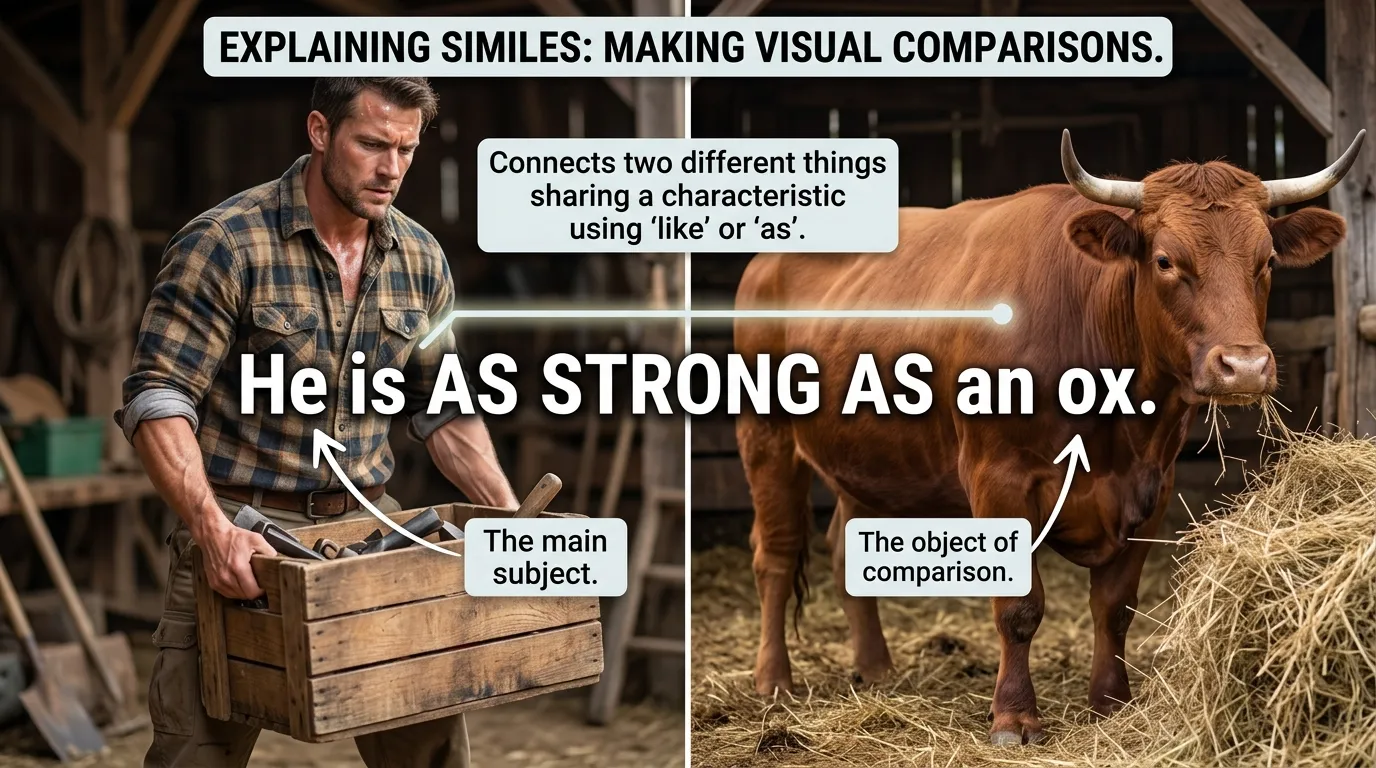
Understanding how to explain similes is essential for helping students, children, and English learners grasp figurative language. A simile is a figure of speech that compares two unlike things using the words “like” or “as.” These comparisons make descriptions more vivid, engaging, and easier to understand by connecting unfamiliar ideas with familiar ones.
Whether you’re a teacher, parent, tutor, or student, learning how to explain similes can make lessons more interactive and enjoyable. Using simple definitions, relatable examples, visual aids, and everyday comparisons helps learners quickly recognize and create their own similes.
In this guide, you’ll discover 13 simple ways to explain similes, along with easy examples, teaching tips, common mistakes, and frequently asked questions to make figurative language easy to understand.
What Is a Simile?
A simile is a figure of speech that compares two different things using the words “like” or “as.”
The comparison highlights a shared quality and helps readers or listeners create a clear mental image.
Examples of Similes
- As brave as a lion.
- She runs like the wind.
- The water was as smooth as glass.
- His smile is as bright as the sun.
Why Are Similes Important?
Similes help people:
- Create vivid mental images.
- Improve descriptive writing.
- Understand ideas more easily.
- Make stories and poems more interesting.
- Develop creative thinking and communication skills.
How to Explain Similes: 13 Simple Ways
1. Start with a Simple Definition
Explain that a simile compares two unlike things using “like” or “as.”
Keep the definition short and easy to remember.
2. Give Familiar Examples
Use common similes students may already know.
Examples:
- As busy as a bee.
- As light as a feather.
- As cold as ice.
3. Point Out the Comparison Words
Teach learners to look for “like” and “as.”
These words often signal a simile.
4. Identify the Two Things Being Compared
Show exactly what is being compared.
Example:
- She runs like the wind.
Comparison:
- Person
- Wind
5. Explain the Shared Quality
Ask what both things have in common.
Example:
- Wind = Fast
- Runner = Fast
Shared quality: Speed
6. Use Visual Images
Show pictures of animals, weather, objects, or nature to make comparisons easier to understand.
7. Compare Literal and Figurative Meaning
Explain that similes are figurative, not literal.
Example:
“He is as strong as an ox” means he is very strong, not actually an ox.
8. Encourage Students to Imagine the Picture
Ask learners what image comes to mind when they hear the simile.
Visualization strengthens understanding.
9. Compare Similes and Metaphors
Explain that:
- Similes use “like” or “as.”
- Metaphors make direct comparisons without those words.
10. Practice with Everyday Sentences
Read simple sentences and ask learners to identify the simile and explain its meaning.
11. Let Students Create Their Own Similes
Encourage original comparisons using familiar objects, animals, or places.
Example:
- As cheerful as a rainbow after rain.
12. Correct Common Misunderstandings
Explain that not every sentence containing “like” or “as” is a simile. The sentence must compare two unlike things in a figurative way.
13. Reinforce Through Practice
Use stories, poems, classroom games, worksheets, and discussions to help learners recognize and use similes confidently.
Easy Simile Examples
| Simile | What It Means |
|---|---|
| As brave as a lion | Very brave |
| As quiet as a mouse | Very quiet |
| As white as snow | Extremely white |
| Like a rocket | Very fast |
| As soft as cotton | Very soft |
| As cool as a cucumber | Very calm |
| As bright as the sun | Very bright |
| Like a feather | Very light |
| As busy as a bee | Very busy |
| As smooth as silk | Very smooth |
Common Mistakes to Avoid
- Forgetting that similes use “like” or “as.”
- Confusing similes with metaphors.
- Treating figurative comparisons as literal facts.
- Choosing comparisons that don’t share a clear quality.
- Overusing common similes without encouraging creativity.
Tips for Explaining Similes Effectively
- Use simple, age-appropriate language.
- Start with familiar examples.
- Ask learners what the two things have in common.
- Use pictures and real-life objects.
- Encourage students to create original similes.
- Practice regularly through reading and writing activities.
Frequently Asked Questions
What is the easiest way to explain a simile?
Say that a simile is a comparison between two unlike things using “like” or “as” to make a description clearer or more interesting.
How do you explain similes to children?
Use familiar examples such as “as busy as a bee” or “as soft as a teddy bear,” then ask what the two things have in common.
Why do writers use similes?
Writers use similes to create vivid images, express emotions, and help readers understand ideas more clearly.
What’s the difference between a simile and a metaphor?
A simile uses “like” or “as,” while a metaphor makes a direct comparison without those words.
How can students practice similes?
Students can read poems and stories, identify similes, complete worksheets, and write their own comparisons using everyday objects and experiences.
Conclusion
Learning how to explain similes becomes much easier when you keep the definition simple, use familiar examples, and encourage learners to think about the shared quality between two unlike things. By focusing on the comparison words “like” and “as,” using visuals, and providing plenty of practice, students can quickly understand and apply similes in both reading and writing.
Whether you’re a teacher, parent, tutor, or student, these 13 simple strategies will make figurative language easier to teach and learn. With regular practice and creative activities, learners will gain confidence in recognizing, understanding, and writing similes that make their communication more vivid and engaging.

James Williams is a dedicated language writer and contributor at Mitaphor.com, where he explores the art of similes, metaphors, and word meanings. With a passion for making language simple and engaging, James breaks down complex expressions into clear, easy-to-understand insights. His work is designed to help students, writers, and curious readers better understand figurative language and use it effectively in everyday communication.