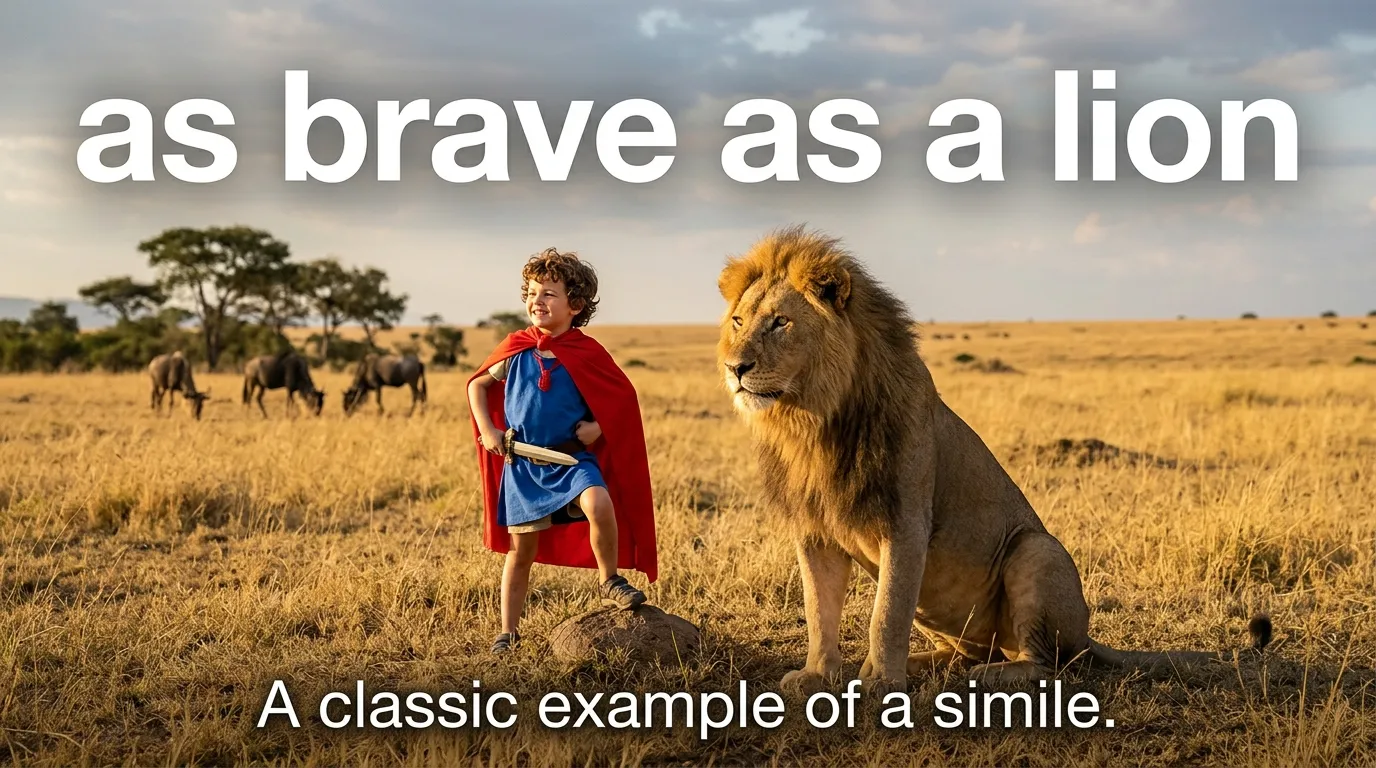
Simile examples in English are a simple way to understand and use figurative language. A simile compares two unlike things using words such as “like” or “as.” Writers and speakers use similes to make descriptions clearer, more vivid, and more memorable.
Whether you’re a student, English learner, teacher, writer, or simply interested in improving your vocabulary, learning common similes can make your English more expressive. From everyday phrases like “as busy as a bee” to creative comparisons used in stories and poems, similes appear in many forms of communication.
This guide includes 56 simile examples in English, with simple meanings and examples to help you understand how they work.
What Is a Simile?
A simile is a figure of speech that compares two different things using “like” or “as.”
For example:
He is as brave as a lion.
This does not mean he is literally a lion. It means he is very brave.
Another example is:
She runs like the wind.
This means she runs very quickly.
56 Simile Examples in English
1. As brave as a lion
Meaning: Very courageous.
2. As busy as a bee
Meaning: Extremely busy.
3. As quiet as a mouse
Meaning: Very quiet.
4. As light as a feather
Meaning: Very light.
5. As cold as ice
Meaning: Extremely cold.
6. As white as snow
Meaning: Very white.
7. As soft as silk
Meaning: Very soft and smooth.
8. As fast as lightning
Meaning: Extremely fast.
9. As strong as an ox
Meaning: Very strong.
10. As bright as the sun
Meaning: Very bright.
11. As sweet as honey
Meaning: Very sweet or pleasant.
12. As clear as glass
Meaning: Very clear or easy to understand.
13. As smooth as a mirror
Meaning: Extremely smooth.
14. As hungry as a wolf
Meaning: Extremely hungry.
15. As proud as a peacock
Meaning: Very proud.
16. As wise as an owl
Meaning: Very wise.
17. As gentle as a lamb
Meaning: Very gentle and kind.
18. As happy as a lark
Meaning: Extremely happy.
19. As sly as a fox
Meaning: Very clever or cunning.
20. As stubborn as a mule
Meaning: Very unwilling to change one’s mind.
21. She sings like a bird.
Meaning: She sings beautifully.
22. He runs like the wind.
Meaning: He runs very quickly.
23. The stars shine like diamonds.
Meaning: The stars look bright and sparkling.
24. Her smile is like sunshine.
Meaning: Her smile is warm and cheerful.
25. The baby slept like a log.
Meaning: The baby slept very deeply.
26. The moon looked like a silver coin.
Meaning: The moon looked round and shiny.
27. The leaves moved like butterflies.
Meaning: The leaves moved lightly and gracefully.
28. The water was as smooth as glass.
Meaning: The water was very calm and smooth.
29. His voice was as loud as thunder.
Meaning: His voice was extremely loud.
30. She moved like a graceful swan.
Meaning: She moved elegantly.
31. The children ran like rabbits.
Meaning: The children ran quickly and energetically.
32. His hands were as cold as snow.
Meaning: His hands were extremely cold.
33. The pillow was as soft as a cloud.
Meaning: The pillow was very soft.
34. The classroom was as busy as a beehive.
Meaning: The classroom was full of activity.
35. The road was as straight as an arrow.
Meaning: The road was very straight.
36. The puppy was as playful as a kitten.
Meaning: The puppy was very playful.
37. The wind howled like a wolf.
Meaning: The wind made a loud, eerie sound.
38. The snow fell like feathers.
Meaning: The snow fell softly.
39. Her eyes sparkled like stars.
Meaning: Her eyes looked bright and beautiful.
40. The athlete moved like a rocket.
Meaning: The athlete moved extremely fast.
41. The garden looked like a colorful painting.
Meaning: The garden was very beautiful and colorful.
42. His backpack was as heavy as a rock.
Meaning: His backpack felt very heavy.
43. She was as calm as a still lake.
Meaning: She was very peaceful and relaxed.
44. His anger burned like a fire.
Meaning: His anger was very intense.
45. Her laughter was like music.
Meaning: Her laughter sounded beautiful and pleasant.
46. The city glittered like a sea of stars.
Meaning: The city lights looked bright and beautiful.
47. The rain fell like silver curtains.
Meaning: The rain appeared thick and continuous.
48. He stood as still as a statue.
Meaning: He did not move.
49. She was as nervous as a bird in a cage.
Meaning: She was extremely nervous.
50. His determination was as strong as steel.
Meaning: He was very determined.
51. Time passed like a river.
Meaning: Time continued to move forward.
52. Memories returned like old songs.
Meaning: Familiar memories came back to mind.
53. Her voice was as gentle as a summer breeze.
Meaning: Her voice was soft and calming.
54. The sunset looked like a painting.
Meaning: The sunset was exceptionally beautiful.
55. Hope shone like a candle in the darkness.
Meaning: Hope provided comfort during a difficult situation.
56. His ideas flowed like a river.
Meaning: He had many ideas that came naturally and continuously.
Common Simile Patterns in English
English similes often follow two simple structures.
“As…as” Structure
As + adjective + as + noun
Examples:
- As cold as ice.
- As strong as steel.
- As quiet as a mouse.
- As bright as the sun.
“Like” Structure
Subject + verb + like + noun
Examples:
- She dances like a butterfly.
- He runs like the wind.
- The stars shine like diamonds.
- The baby sleeps like a log.
Similes for Everyday English
Many similes are commonly used in everyday conversations:
- As easy as pie.
- As cool as a cucumber.
- As clear as day.
- As busy as a bee.
- As quiet as a mouse.
- As stubborn as a mule.
- Like a breath of fresh air.
- Like finding a needle in a haystack.
These expressions can make everyday English more colorful and natural.
Similes for Students
Students can use similes to make essays, stories, and poems more descriptive.
Instead of:
The girl was nervous.
Write:
The girl was as nervous as a bird trapped in a room.
Instead of:
The rain was heavy.
Write:
The rain fell like a curtain across the sky.
Instead of:
The boy ran quickly.
Write:
The boy ran like lightning.
Simile vs. Metaphor
A simile uses “like” or “as.”
Her smile is like sunshine.
A metaphor makes a direct comparison.
Her smile is sunshine.
Both are forms of figurative language, but their structures are different.
How to Create Your Own Similes
Creating an original simile is easy.
Step 1: Choose Something to Describe
For example: a very fast runner.
Step 2: Identify the Quality
The main quality is speed.
Step 3: Think of Something Fast
You might choose:
- Lightning
- A rocket
- A cheetah
- An arrow
Step 4: Create the Comparison
The runner was as fast as a cheetah.
You can make it more creative:
The runner shot across the track like an arrow released from a bow.
Tips for Using Similes
- Choose comparisons that make sense.
- Use vivid and familiar images.
- Avoid unnecessary repetition.
- Match the simile to your audience.
- Use original comparisons when possible.
- Don’t put too many similes in one paragraph.
- Make sure the comparison adds meaning to your writing.
Frequently Asked Questions
What is a simple simile example in English?
“She is as busy as a bee.” This compares her level of activity with a busy bee.
What words are used in similes?
The most common words are “like” and “as.”
Why are similes important in English?
Similes make language more descriptive, expressive, memorable, and creative.
Are similes used in everyday English?
Yes. Many common English expressions are similes, such as “as easy as pie” and “as cool as a cucumber.”
Can English learners use similes?
Absolutely. Learning common similes can help English learners understand vocabulary, expressions, descriptions, and natural communication.
Conclusion
These 56 simile examples in English show how simple comparisons can make language more vivid and expressive. Similes allow speakers and writers to connect an unfamiliar idea with something familiar, helping readers and listeners create a stronger mental image.
Start by learning common “like” and “as” patterns, then experiment with your own creative comparisons. With regular practice, similes can become a natural and effective part of your English vocabulary and writing.

James Williams is a dedicated language writer and contributor at Mitaphor.com, where he explores the art of similes, metaphors, and word meanings. With a passion for making language simple and engaging, James breaks down complex expressions into clear, easy-to-understand insights. His work is designed to help students, writers, and curious readers better understand figurative language and use it effectively in everyday communication.