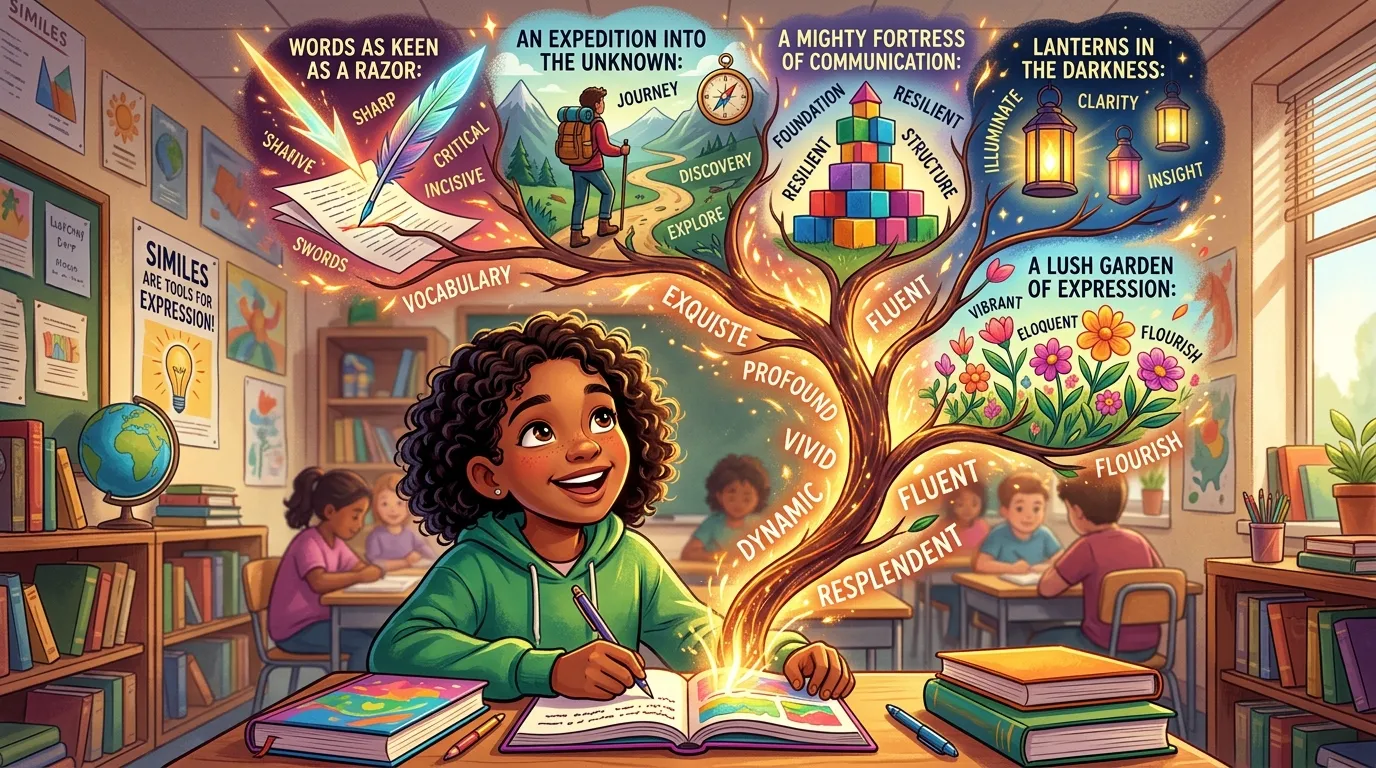
A strong vocabulary is the foundation of effective communication. Whether you’re a student preparing for exams, a writer crafting compelling stories, a blogger creating engaging content, or a professional aiming to communicate clearly, expanding your vocabulary can significantly improve your writing and speaking abilities. One creative and enjoyable way to build vocabulary is by learning similes.
Similes compare two different things using the words “like” or “as.” These comparisons make language more vivid, memorable, and expressive. Instead of simply saying someone is intelligent, you might say they are “as sharp as a razor.” Such expressions not only enrich your vocabulary but also make your writing more engaging and impactful.
Learning similes helps writers, students, and language learners express ideas with greater precision and creativity. In this comprehensive guide, you’ll discover 72 powerful similes for vocabulary building, complete with meanings, usage insights, and realistic examples that will help you enhance your language skills.
What Is a Simile?
A simile is a figure of speech that compares two unlike things using the words “like” or “as.” Similes help readers and listeners understand ideas more clearly by relating them to familiar experiences.
Simple Examples of Similes
- As busy as a bee.
- As brave as a lion.
- Like a feather floating in the wind.
- As bright as the morning sun.
These comparisons make communication more descriptive, memorable, and expressive.
Why Use Similes for Vocabulary Building?
Learning similes offers numerous benefits:
- Expands your vocabulary.
- Improves creative writing skills.
- Enhances speaking and communication.
- Makes essays and stories more engaging.
- Strengthens descriptive language.
- Helps language learners remember new expressions.
By incorporating similes into daily writing and conversation, you can develop a richer and more versatile vocabulary.
72 Powerful Similes for Vocabulary Building
1. As sharp as a razor
Meaning: Extremely intelligent or perceptive.
Definition: Used to describe someone with quick understanding or keen thinking.
Usage Insight: Suitable for academic writing, essays, and everyday conversations. Appropriate in both formal and informal contexts.
Example Sentences:
- Despite his young age, he is as sharp as a razor when solving complex problems.
- Her analytical skills are as sharp as a razor.
2. As busy as a bee
Meaning: Extremely active and hardworking.
Definition: Describes someone constantly occupied with tasks.
Usage Insight: Common in casual conversations, essays, and descriptive writing.
Example Sentences:
- During examination week, the students were as busy as bees.
- My mother is always as busy as a bee preparing for family gatherings.
3. As brave as a lion
Meaning: Very courageous.
Definition: Describes someone showing great courage in difficult situations.
Usage Insight: Ideal for storytelling, essays, speeches, and motivational writing.
Example Sentences:
- The firefighter remained as brave as a lion during the rescue.
- She was as brave as a lion when facing her fears.
4. As clear as crystal
Meaning: Extremely easy to understand.
Definition: Used to describe something that is obvious or transparent.
Usage Insight: Frequently used in academic and professional writing.
Example Sentences:
- The professor’s explanation was as clear as crystal.
- Her instructions were as clear as crystal.
5. As light as a feather
Meaning: Extremely light in weight.
Definition: Describes something that weighs very little or moves gracefully.
Usage Insight: Suitable for descriptive and creative writing.
Example Sentences:
- The scarf felt as light as a feather.
- She danced across the stage as light as a feather.
6. Like a sponge soaking up water
Meaning: Learning quickly and eagerly.
Definition: Describes someone who absorbs knowledge rapidly.
Usage Insight: Excellent for educational and motivational contexts.
Example Sentences:
- The new student learned like a sponge soaking up water.
- Children often absorb information like sponges.
7. As calm as a still lake
8. As quick as lightning
9. As strong as an oak tree
10. As gentle as spring rain
11. As cold as ice
12. As free as a bird
13. As bright as the sun
14. As smooth as silk
15. As silent as the grave
16. As stubborn as a mule
17. As happy as a lark
18. As wise as an owl
19. As fresh as a daisy
20. As blind as a bat
21. As proud as a peacock
22. As sly as a fox
23. As graceful as a swan
24. As cool as a cucumber
25. As hungry as a wolf
26. As quiet as a mouse
27. As playful as a kitten
28. As gentle as a lamb
29. As restless as the sea
30. As radiant as the sunrise
31. Like a river flowing endlessly
32. Like thunder rolling through mountains
33. Like stars scattered across the sky
34. Like a candle flickering in darkness
35. Like sunshine after rain
36. Like a butterfly emerging from a cocoon
37. Like leaves dancing in the wind
38. Like waves crashing on the shore
39. Like a key unlocking possibilities
40. Like a compass guiding travelers
41. As dependable as sunrise
42. As peaceful as dawn
43. As deep as the ocean
44. As fragile as glass
45. As endless as the horizon
46. As fierce as a wildfire
47. As refreshing as morning dew
48. As timeless as the stars
49. As mysterious as a moonlit forest
50. As vibrant as a blooming garden
51. Like a bridge connecting two worlds
52. Like a beacon in the darkness
53. Like rain nourishing dry soil
54. Like footprints in the sand
55. Like a ladder leading to success
56. Like a torch lighting the way
57. Like a phoenix rising from ashes
58. Like music drifting through the air
59. Like a puzzle waiting to be solved
60. Like a dream fading at dawn
61. As precious as gold
62. As valuable as a rare jewel
63. As unpredictable as summer lightning
64. As haunting as an abandoned house
65. As soothing as ocean waves
66. As magnificent as a mountain peak
67. As delicate as a snowflake
68. As warm as a summer afternoon
69. As captivating as a fairy tale
70. As unforgettable as first love
71. Like an artist painting the sky
72. Like a lighthouse guiding ships home
How to Use These Similes Effectively
In Essays
Use similes to explain ideas more clearly and make arguments memorable.
Example:
Education acts like a key unlocking countless opportunities.
In Stories
Similes help create vivid descriptions and emotional depth.
Example:
The hero stood as brave as a lion before the enemy.
In Poetry
Poets use similes to create imagery and emotional resonance.
Example:
Her laughter floated like music drifting through the air.
In Everyday Conversation
Similes can make speech more expressive and engaging.
Example:
After the vacation, I felt as fresh as a daisy.
Frequently Asked Questions
What are similes?
Similes are comparisons using the words “like” or “as” to make descriptions more vivid and meaningful.
How do similes improve vocabulary?
Similes introduce new descriptive expressions and help learners communicate more effectively.
Can students use similes in academic writing?
Yes. Appropriate similes can make essays and presentations more engaging and memorable.
How can I remember similes more easily?
Practice using them regularly in speaking and writing, and group them by themes such as emotions, nature, or personality.
Are similes useful for language learners?
Absolutely. Similes expand vocabulary, improve fluency, and enhance creative expression.
Conclusion
Building a strong vocabulary is essential for effective communication, and similes offer an enjoyable way to enrich your language skills. By learning and using these 72 powerful similes for vocabulary building, you can make your writing more vivid, expressive, and memorable. Whether you’re writing essays, stories, poems, or simply improving everyday communication, these comparisons will help you express ideas with greater creativity and confidence.
Keep practicing, experiment with new comparisons, and don’t hesitate to create your own original similes. The more you use them, the stronger and more versatile your vocabulary will become.

James Williams is a dedicated language writer and contributor at Mitaphor.com, where he explores the art of similes, metaphors, and word meanings. With a passion for making language simple and engaging, James breaks down complex expressions into clear, easy-to-understand insights. His work is designed to help students, writers, and curious readers better understand figurative language and use it effectively in everyday communication.