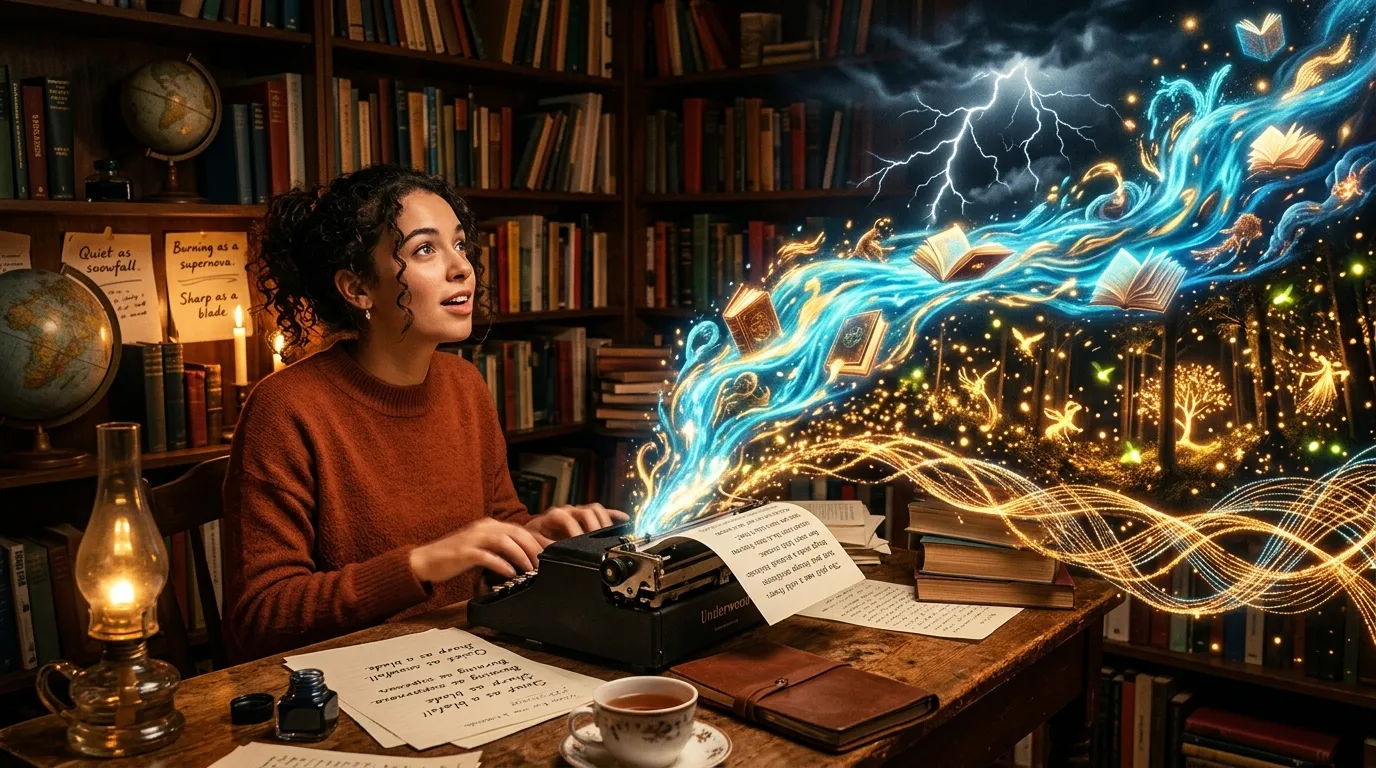
Creative writing thrives on vivid imagery, emotional depth, and memorable descriptions. Whether you’re crafting a novel, short story, poem, essay, or blog post, the right words can transport readers into your world. One of the most effective literary devices for achieving this is the simile.
Similes help writers compare one thing to another using the words “like” or “as.” These comparisons make writing more colorful, relatable, and engaging. Instead of simply stating that a character was sad, you might say they were “as lonely as a lighthouse in a storm.” Such imagery allows readers not only to understand emotions but also to feel them.
For students, bloggers, poets, novelists, and aspiring authors, mastering similes can dramatically improve the quality of writing. In this guide, you’ll discover 71 powerful similes for creative writing, along with meanings, usage insights, and realistic examples to inspire your next masterpiece.
What Is a Simile?
A simile is a figure of speech that compares two unlike things using the words “like” or “as.” Similes create vivid imagery and help readers visualize ideas, emotions, and scenes more clearly.
Simple Examples of Similes
- As brave as a lion.
- Like a feather drifting in the wind.
- As bright as the morning sun.
- Like thunder rolling across the sky.
These comparisons add life and personality to writing, making it more memorable.
Why Are Similes Important in Creative Writing?
Similes are essential because they:
- Create strong visual imagery.
- Make emotions easier to understand.
- Add depth to characters and settings.
- Enhance storytelling and poetry.
- Keep readers engaged.
- Make descriptions unique and memorable.
Whether you’re writing fiction or nonfiction, similes can turn ordinary sentences into extraordinary ones.
71 Powerful Similes for Creative Writing
1. As brave as a lion
Meaning: Extremely courageous.
Definition: Used to describe someone showing great courage in difficult situations.
Usage Insight: Ideal for stories, essays, and inspirational writing. Works well in both formal and informal contexts.
Example Sentences:
- The young firefighter was as brave as a lion during the rescue.
- Despite her fear, she stood as brave as a lion before the audience.
2. Like a feather floating on the breeze
Meaning: Moving lightly and effortlessly.
Definition: Describes graceful movement or a carefree attitude.
Usage Insight: Excellent for poetic and descriptive writing.
Example Sentences:
- She danced across the stage like a feather floating on the breeze.
- His thoughts drifted like a feather on the wind.
3. As quiet as a whisper in the night
Meaning: Extremely silent.
Definition: Refers to complete or near-complete silence.
Usage Insight: Perfect for suspenseful scenes, poetry, and atmospheric descriptions.
Example Sentences:
- The forest was as quiet as a whisper in the night.
- The library remained as quiet as a whisper after closing time.
4. Like lightning across a stormy sky
Meaning: Very fast or sudden.
Definition: Describes rapid movement or unexpected events.
Usage Insight: Suitable for action scenes and dramatic storytelling.
Example Sentences:
- The idea struck him like lightning across a stormy sky.
- She sprinted across the field like lightning.
5. As steady as a lighthouse in a storm
Meaning: Calm and dependable.
Definition: Describes unwavering strength during difficult situations.
Usage Insight: Useful in character descriptions and motivational writing.
Example Sentences:
- Throughout the crisis, she remained as steady as a lighthouse in a storm.
- His support was as steady as a lighthouse.
6. Like a candle flickering in the wind
Meaning: Fragile or uncertain.
Definition: Represents vulnerability or instability.
Usage Insight: Effective in emotional and dramatic writing.
Example Sentences:
- Her confidence trembled like a candle flickering in the wind.
- Hope remained like a candle struggling against darkness.
7. As bright as a shooting star
8. Like waves crashing against the shore
9. As gentle as spring rain
10. Like a bird released from its cage
11. As strong as an oak tree
12. Like a river carving through stone
13. As cold as winter ice
14. Like a dream fading at dawn
15. As free as the wind
16. Like shadows dancing on the wall
17. As calm as a still lake
18. Like fire spreading through dry grass
19. As soft as velvet
20. Like stars scattered across the sky
21. As restless as the sea during a storm
22. Like leaves swirling in autumn wind
23. As sharp as a razor
24. Like sunshine breaking through clouds
25. As graceful as a swan gliding across water
26. Like thunder rumbling in the distance
27. As mysterious as a moonlit forest
28. Like a flower blooming after rain
29. As fragile as glass
30. Like a secret whispered in the dark
31. As warm as a summer afternoon
32. Like an arrow flying toward its target
33. As deep as the ocean
34. Like mist rolling over the hills
35. As radiant as the sunrise
36. Like a spark igniting dry leaves
37. As endless as the horizon
38. Like a butterfly emerging from its cocoon
39. As heavy as a mountain
40. Like music drifting through the air
41. As peaceful as snowfall at midnight
42. Like a mirror reflecting hidden truths
43. As wild as a raging river
44. Like rain tapping softly on windows
45. As brilliant as a diamond in sunlight
46. Like a ship lost at sea
47. As graceful as falling snow
48. Like a phoenix rising from ashes
49. As lonely as a lighthouse on a deserted coast
50. Like vines climbing ancient walls
51. As fierce as a wildfire
52. Like moonlight dancing on water
53. As smooth as silk
54. Like echoes fading through a canyon
55. As majestic as snow-capped mountains
56. Like a storm gathering on the horizon
57. As delicate as a snowflake
58. Like an artist painting the sky
59. As timeless as the stars
60. Like footprints disappearing in sand
61. As vibrant as a blooming garden
62. Like sunlight filtering through trees
63. As haunting as an abandoned house
64. Like waves pulling back from the shore
65. As refreshing as morning dew
66. Like a melody lingering in memory
67. As powerful as an ocean tide
68. Like embers glowing in the darkness
69. As unpredictable as summer lightning
70. Like a bridge connecting distant worlds
71. As unforgettable as a first love
How to Use These Similes Effectively
In Essays
Use similes sparingly to make arguments and descriptions more engaging.
Example:
The leader remained as steady as a lighthouse in a storm during the crisis.
In Stories
Similes enrich character emotions, settings, and actions.
Example:
The old mansion stood as haunting as an abandoned house beneath the moonlight.
In Poetry
Poetry thrives on imagery, making similes essential tools.
Example:
Her laughter drifted like music through the evening air.
In Content Writing
Bloggers can use similes to make articles more relatable and memorable.
Example:
Productivity can spread like fire through a motivated team.
Frequently Asked Questions
What are similes in creative writing?
Similes are comparisons using “like” or “as” to create vivid imagery and strengthen descriptions.
Why are similes important in creative writing?
They make writing more engaging, emotional, descriptive, and memorable.
Can similes improve storytelling?
Yes. Similes help readers visualize scenes, understand emotions, and connect with characters.
How many similes should I use in a story?
Use similes naturally and avoid overusing them. A few strong similes are often more effective than many weak ones.
What’s the difference between a simile and a metaphor?
A simile uses “like” or “as” to compare things, while a metaphor makes a direct comparison without those words.
Conclusion
Similes are among the most powerful tools available to writers. They transform simple descriptions into vivid experiences, helping readers see, feel, and connect with your words. Whether you’re writing stories, poems, essays, or blog posts, these 71 powerful similes for creative writing can inspire richer imagery and stronger emotional impact.
Experiment with these similes, adapt them to your unique voice, and don’t be afraid to create your own comparisons. The most memorable writing often comes from fresh, imaginative imagery that resonates with readers.

Chris Woak is a passionate language enthusiast and the creative voice behind Mitaphor.com. With a deep interest in similes, metaphors, and word meanings, Chris simplifies complex expressions into clear, engaging explanations that readers of all levels can understand. His work focuses on helping students, writers, and language lovers explore the power of figurative language and improve their communication skills.