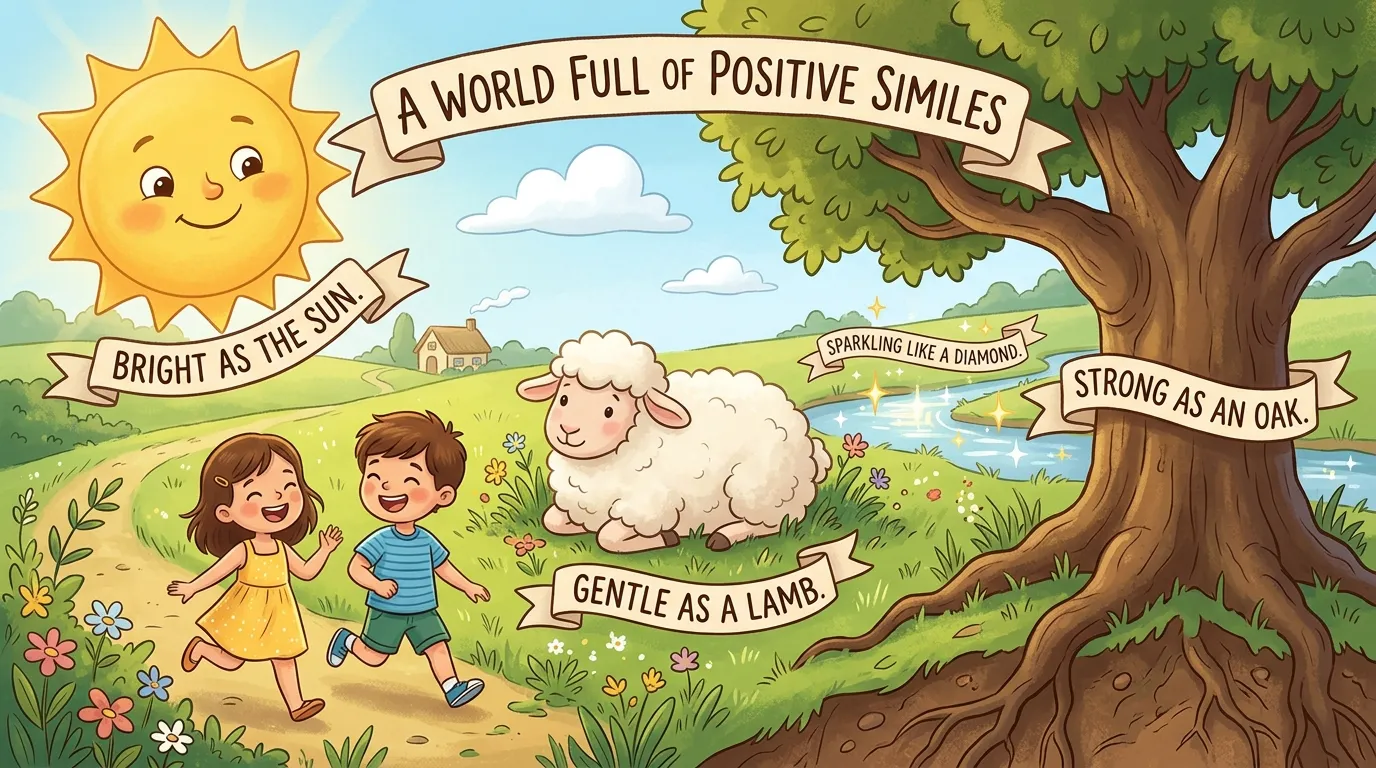
Positive language has the power to inspire, encourage, and leave a lasting impression on readers. One of the most effective ways to create optimistic and engaging writing is by using positive similes. A simile compares two different things using the words “like” or “as,” making descriptions more vivid and meaningful. Positive similes highlight qualities such as kindness, happiness, confidence, courage, hope, success, generosity, and resilience. Whether you’re writing an essay, speech, poem, story, motivational article, or heartfelt message, these comparisons can make your words more expressive and uplifting.
Whether you’re a student learning figurative language, a teacher preparing classroom lessons, a writer crafting inspiring stories, a public speaker motivating an audience, or a blogger creating encouraging content, mastering positive similes can improve your communication skills. These optimistic comparisons help readers connect emotionally with your ideas while making your writing more memorable and enjoyable.
In this comprehensive guide, you’ll discover some of the best positive similes, learn what a simile is, explore uplifting examples, understand when and where to use them, and find practical tips for incorporating positive similes into essays, speeches, poems, stories, and content writing.
What Is a Simile?
A simile is a figure of speech that compares two different things using the words “like” or “as.” These comparisons make ideas easier to understand by connecting them with familiar images or experiences.
Positive similes focus on encouraging, cheerful, and inspiring qualities that create optimistic and memorable descriptions.
Simple Examples
- She was as cheerful as the morning sun.
- His determination was like a river that never stops flowing.
These comparisons help readers imagine positive qualities more clearly.
83 Positive Similes
1. As Bright as the Morning Sun
Meaning: Cheerful, hopeful, and full of energy.
Definition: The morning sun symbolizes new beginnings, optimism, and happiness.
Usage Insight: Perfect for motivational speeches, essays, poems, and inspirational blogs. Suitable for both formal and creative writing.
Examples:
- Her smile was as bright as the morning sun.
- The team’s success gave everyone renewed confidence.
2. Like a Rainbow After the Rain
Meaning: Hope following difficult times.
Definition: Rainbows represent optimism, beauty, and fresh beginnings after challenges.
Usage Insight: Excellent for motivational articles, graduation speeches, and personal development content.
Examples:
- The opportunity arrived like a rainbow after the rain.
- Every setback became a lesson for future success.
3. As Strong as a Mountain
Meaning: Reliable, resilient, and determined.
Definition: Mountains symbolize strength and endurance through every season.
Usage Insight: Great for leadership content, speeches, and biographies.
Examples:
- Her confidence remained as strong as a mountain.
- He supported his family through every challenge.
4. Like a Bird Soaring Through the Sky
Meaning: Feeling free and confident.
Definition: Birds flying high symbolize freedom, achievement, and limitless possibilities.
Usage Insight: Ideal for inspirational writing and personal growth stories.
Examples:
- She pursued her dreams like a bird soaring through the sky.
- Graduation made him feel truly free.
5. As Sweet as Honey
Meaning: Kind and caring.
Definition: Honey represents warmth, kindness, and pleasant behavior.
Usage Insight: Perfect for compliments, stories, and greeting cards.
Examples:
- She is as sweet as honey to everyone she meets.
- His thoughtful words encouraged the entire team.
6. Like a Flower Blooming in Spring
Meaning: Growing beautifully and confidently.
Definition: Flowers blooming symbolize growth, success, and fresh opportunities.
Usage Insight: Excellent for educational writing and motivational speeches.
Examples:
- Her confidence blossomed like a flower blooming in spring.
- Every experience helped him become stronger.
7. As Calm as a Peaceful Lake
Meaning: Emotionally balanced and relaxed.
Definition: A still lake symbolizes inner peace and tranquility.
Usage Insight: Great for reflective essays and wellness content.
Examples:
- His mind became as calm as a peaceful lake.
- She handled every challenge with patience.
8. Like a Lighthouse Guiding Ships Home
Meaning: Providing hope and guidance.
Definition: A lighthouse safely directs ships, symbolizing leadership and encouragement.
Usage Insight: Ideal for leadership blogs, speeches, and biographies.
Examples:
- My mentor was like a lighthouse guiding ships home.
- Her advice gave everyone confidence.
9. As Fresh as Morning Dew
Meaning: Full of energy and new ideas.
Definition: Morning dew represents freshness, renewal, and vitality.
Usage Insight: Excellent for descriptive writing and inspirational content.
Examples:
- His ideas were as fresh as morning dew.
- The peaceful morning inspired creativity.
10. Like a Star Lighting the Night Sky
Meaning: Inspiring and unforgettable.
Definition: Stars symbolize hope, dreams, and guidance.
Usage Insight: Perfect for speeches, poems, and heartfelt messages.
Examples:
- Her kindness shone like a star lighting the night sky.
- The young athlete inspired everyone around him.
How to Use These Positive Similes Effectively
Positive similes become more effective when they naturally support your message and fit the context.
Essays
Use uplifting comparisons to strengthen descriptive writing and explain personal growth, leadership, or success.
Stories
Positive similes help readers connect with hopeful characters and memorable moments while creating vivid imagery.
Poems
Optimistic comparisons add warmth, inspiration, and emotional beauty to poetic writing.
Speeches
Motivational speeches become more memorable when positive similes reinforce messages of hope, courage, and perseverance.
Content Writing
Whether you’re writing blogs, educational resources, leadership articles, or personal development content, positive similes help create engaging, encouraging, and reader-friendly material.
Frequently Asked Questions
What are positive similes?
Positive similes are comparisons that use “like” or “as” to describe uplifting qualities such as kindness, hope, confidence, success, happiness, and resilience.
Why are positive similes important?
They make writing more inspiring, improve emotional engagement, and help readers visualize positive ideas more clearly.
What’s the difference between a positive simile and a regular simile?
A regular simile can compare any quality, while a positive simile specifically emphasizes encouraging or optimistic characteristics.
Can positive similes be used in professional writing?
Yes. They work well in speeches, educational materials, leadership articles, presentations, and motivational content when used appropriately.
How can I create my own positive similes?
Choose a positive quality such as courage, joy, or kindness, then compare it to an inspiring image from nature or everyday life using “like” or “as.” Keep the comparison original, meaningful, and easy to understand.
Conclusion
Mastering positive similes is an excellent way to make your writing more encouraging, memorable, and emotionally engaging. These uplifting comparisons help readers visualize optimism, resilience, confidence, and kindness while adding warmth and creativity to your words. Whether you’re writing about success, hope, friendship, leadership, or personal growth, positive similes can transform simple descriptions into meaningful expressions that inspire and motivate.
Whether you’re a student strengthening your English skills, a teacher introducing figurative language, a writer crafting inspirational stories, a speaker motivating an audience, or a content creator producing uplifting articles, learning the best positive similes will enhance both your creativity and communication. Practice using these comparisons naturally, observe the positive moments in everyday life, and create your own original similes inspired by nature, relationships, and personal experiences. With thoughtful use and regular practice, positive similes will become a valuable part of your writing style, helping you create content that informs, encourages, and leaves readers with a sense of hope and inspiration.

Chris Woak is a passionate language enthusiast and the creative voice behind Mitaphor.com. With a deep interest in similes, metaphors, and word meanings, Chris simplifies complex expressions into clear, engaging explanations that readers of all levels can understand. His work focuses on helping students, writers, and language lovers explore the power of figurative language and improve their communication skills.