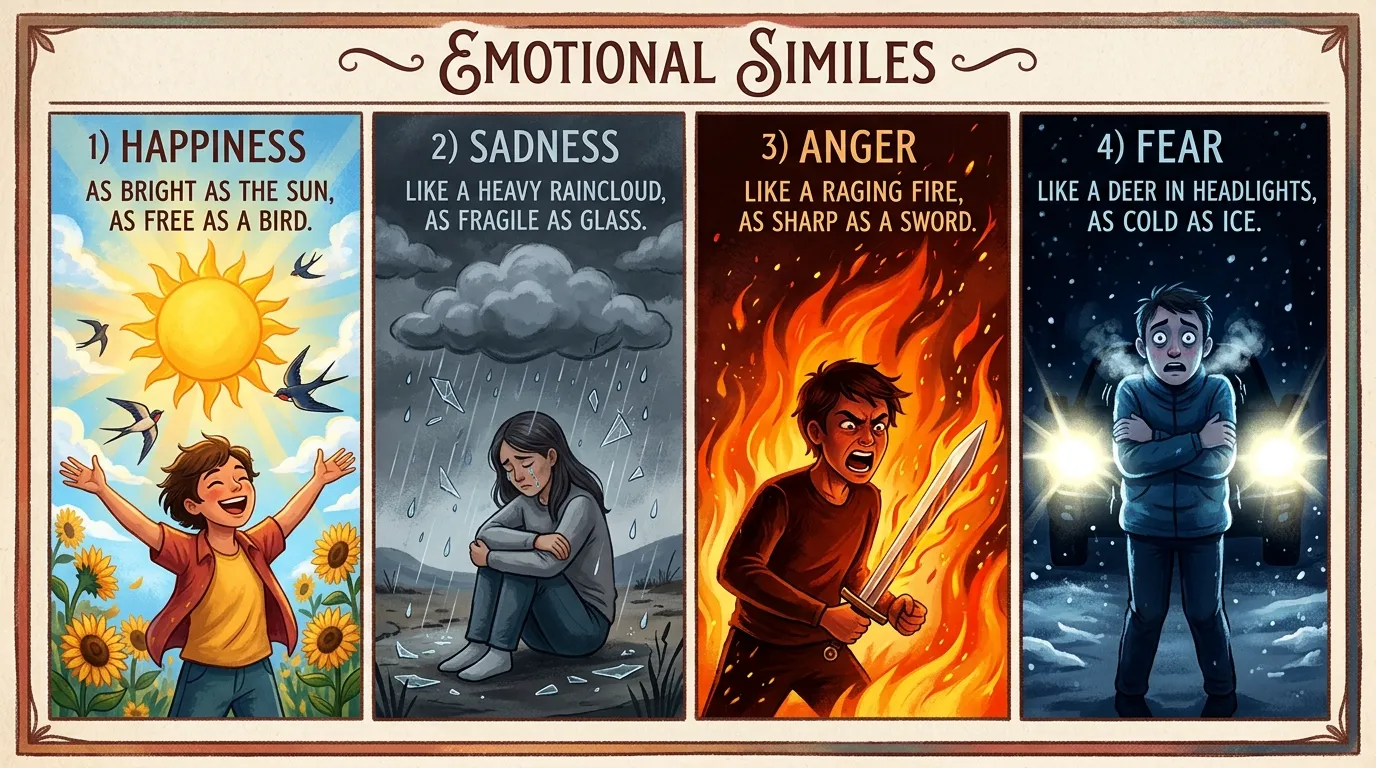
Emotions are at the heart of every memorable story, poem, speech, and conversation. One of the most effective ways to express those emotions is by using emotional similes. A simile compares two different things using the words “like” or “as,” helping readers and listeners understand feelings through vivid and relatable imagery. Whether you’re describing happiness, sadness, love, fear, hope, anger, or excitement, emotional similes make your writing more expressive, engaging, and meaningful. They allow readers to feel emotions instead of simply reading about them.
Whether you’re a student learning figurative language, a teacher preparing engaging English lessons, a novelist developing emotional characters, a poet writing heartfelt verses, or a blogger creating meaningful content, mastering emotional similes can greatly improve your writing. These comparisons create stronger emotional connections with readers, making stories, essays, speeches, and creative writing more memorable and impactful.
In this comprehensive guide, you’ll discover some of the best emotional similes, learn what a simile is, explore meaningful examples, understand when and where to use them, and find practical tips for incorporating emotional similes into essays, stories, poems, speeches, journals, and content writing.
What Is a Simile?
A simile is a figure of speech that compares two different things using the words “like” or “as.” These comparisons help readers visualize emotions, actions, or ideas by relating them to familiar images.
Emotional similes specifically focus on expressing feelings such as joy, sorrow, hope, love, fear, excitement, and resilience in a vivid and relatable way.
Simple Examples
- Her heart felt like a bird set free.
- His sadness was as heavy as a storm cloud.
These comparisons make emotions easier to understand and more powerful for readers.
76 Emotional Similes
1. Like a Bird Set Free
Meaning: Feeling joyful, relieved, or liberated.
Definition: A bird flying freely symbolizes happiness, hope, and freedom after overcoming difficulties.
Usage Insight: Perfect for personal essays, inspirational stories, speeches, and poems. Suitable for both creative and reflective writing.
Examples:
- After hearing the good news, she felt like a bird set free.
- Finishing the difficult project filled him with relief.
2. As Heavy as a Storm Cloud
Meaning: Overwhelmed with sadness or worry.
Definition: Storm clouds symbolize emotional burdens and difficult moments.
Usage Insight: Excellent for emotional storytelling, novels, poetry, and journal writing.
Examples:
- His heart felt as heavy as a storm cloud after the farewell.
- The disappointing news changed everyone’s mood.
3. Like Sunshine Breaking Through the Clouds
Meaning: Hope returning after hardship.
Definition: Sunshine appearing after clouds represents optimism and new beginnings.
Usage Insight: Great for motivational writing, graduation speeches, and inspirational blogs.
Examples:
- Her smile was like sunshine breaking through the clouds.
- The unexpected opportunity renewed his confidence.
4. As Calm as a Still Lake
Meaning: Peaceful and emotionally balanced.
Definition: A calm lake reflects quietness, inner peace, and emotional stability.
Usage Insight: Ideal for meditation writing, reflective essays, and descriptive stories.
Examples:
- Her mind became as calm as a still lake.
- He responded thoughtfully despite the pressure.
5. Like Waves Crashing Against the Shore
Meaning: Experiencing intense emotions.
Definition: Ocean waves represent emotions that rise and fall with great intensity.
Usage Insight: Perfect for novels, poetry, and emotional storytelling.
Examples:
- Memories returned like waves crashing against the shore.
- His emotions became difficult to control.
6. As Warm as a Mother’s Hug
Meaning: Full of comfort and love.
Definition: A mother’s embrace symbolizes safety, kindness, and unconditional affection.
Usage Insight: Excellent for family stories, heartfelt speeches, and greeting cards.
Examples:
- Her kindness felt as warm as a mother’s hug.
- The welcoming atmosphere made everyone comfortable.
7. Like a Candle Flickering in the Wind
Meaning: Fragile yet hopeful.
Definition: A flickering candle represents vulnerability while still holding onto hope.
Usage Insight: Great for reflective writing, poetry, and inspirational content.
Examples:
- His confidence was like a candle flickering in the wind.
- Even during uncertainty, she refused to give up.
8. As Bright as a Rainbow After Rain
Meaning: Filled with happiness and hope.
Definition: A rainbow symbolizes beauty, optimism, and fresh beginnings.
Usage Insight: Perfect for motivational speeches, children’s stories, and uplifting articles.
Examples:
- Their future looked as bright as a rainbow after rain.
- Every challenge became a valuable lesson.
9. Like an Echo in a Quiet Valley
Meaning: An emotion or memory that lingers.
Definition: Echoes continue long after the original sound fades, symbolizing lasting feelings.
Usage Insight: Excellent for poetry, literary fiction, and reflective essays.
Examples:
- Her words stayed with him like an echo in a quiet valley.
- The memory remained vivid for years.
10. As Strong as Roots Beneath a Tree
Meaning: Emotionally resilient and grounded.
Definition: Hidden roots provide strength and stability even during storms.
Usage Insight: Ideal for motivational writing, biographies, and personal development articles.
Examples:
- Her courage was as strong as roots beneath a tree.
- He stayed positive despite every setback.
How to Use These Emotional Similes Effectively
Emotional similes work best when they naturally strengthen your message rather than overpower it.
Essays
Use emotional comparisons to describe personal experiences, reflections, and important life lessons while keeping your writing authentic.
Stories
Emotional similes help readers connect with characters by making their feelings vivid and believable.
Poems
Poetry relies on imagery, making emotional similes an excellent tool for expressing joy, grief, hope, love, and longing.
Speeches
Heartfelt similes make speeches more inspiring by helping audiences visualize emotions and connect with your message.
Content Writing
Whether you’re writing blogs, mental wellness articles, motivational content, or relationship advice, emotional similes create stronger emotional engagement and improve readability.
Frequently Asked Questions
What are emotional similes?
Emotional similes are comparisons that use “like” or “as” to express feelings such as love, happiness, sadness, hope, fear, or courage through vivid imagery.
Why are emotional similes important?
They make writing more expressive, help readers connect emotionally, and create memorable descriptions that bring feelings to life.
What’s the difference between an emotional simile and an emotional metaphor?
An emotional simile uses “like” or “as,” while an emotional metaphor directly states that one thing is another without using comparison words.
Can emotional similes be used in formal writing?
Yes. They are effective in speeches, descriptive essays, literary analysis, and creative assignments when used appropriately.
How can I create my own emotional similes?
Start by identifying the emotion you want to express, then compare it to something familiar from nature, everyday life, or personal experience using “like” or “as.” Choose imagery that clearly reflects the feeling.
Conclusion
Mastering emotional similes is one of the best ways to make your writing more heartfelt, expressive, and memorable. These meaningful comparisons help readers understand emotions on a deeper level by transforming abstract feelings into vivid images they can easily imagine. Whether you’re writing about love, hope, fear, sadness, joy, or resilience, emotional similes allow your words to connect with readers in a powerful and lasting way.
Whether you’re a student improving your creative writing, a teacher introducing figurative language, a novelist developing unforgettable characters, a poet crafting emotional verses, or a content creator publishing thoughtful articles, learning the best emotional similes will strengthen your communication skills and expand your creative voice. Practice using these comparisons naturally, observe emotions in everyday life, and create your own original similes inspired by meaningful experiences. With time and consistent practice, emotional similes will become one of your most valuable writing tools, helping you create stories, speeches, poems, and articles that truly resonate with your audience.

James Williams is a dedicated language writer and contributor at Mitaphor.com, where he explores the art of similes, metaphors, and word meanings. With a passion for making language simple and engaging, James breaks down complex expressions into clear, easy-to-understand insights. His work is designed to help students, writers, and curious readers better understand figurative language and use it effectively in everyday communication.