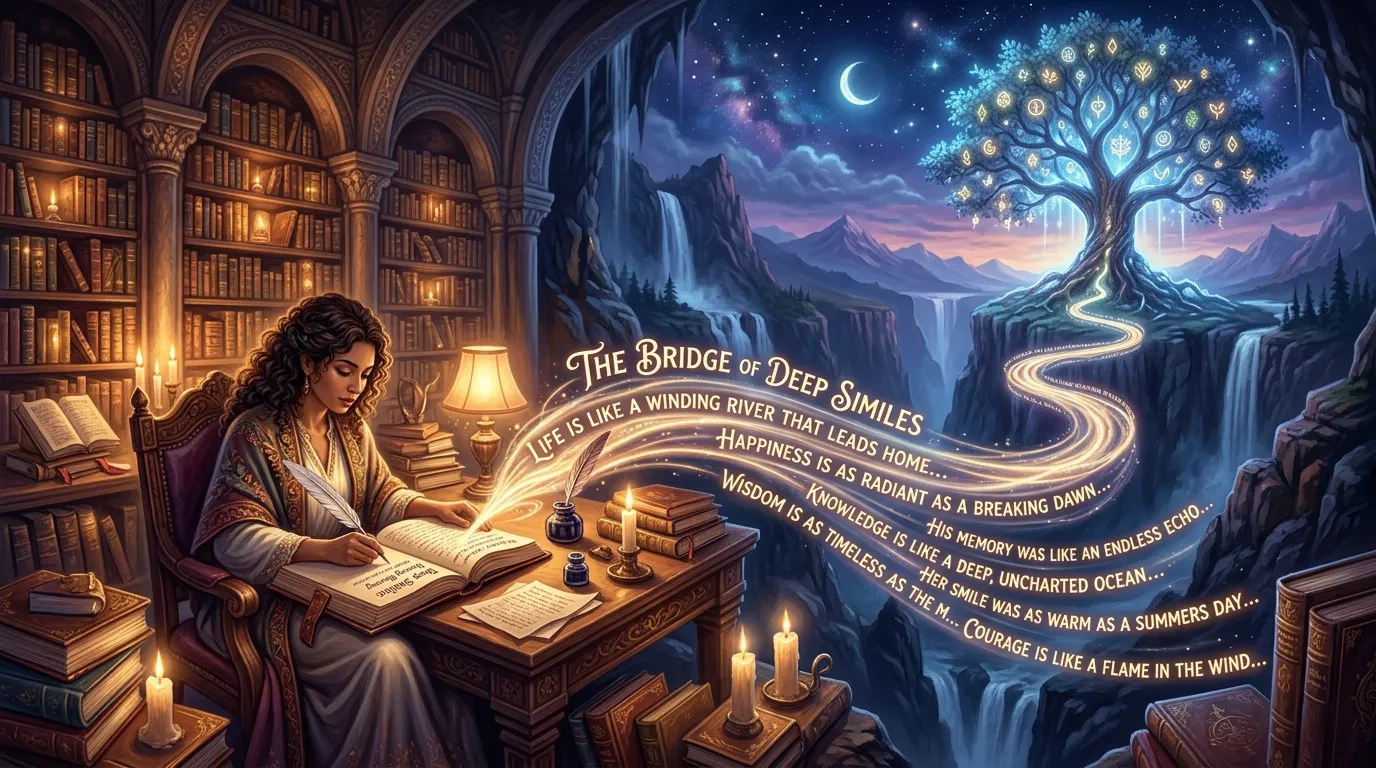
Language becomes truly memorable when it expresses emotions and ideas that resonate on a deeper level. One of the most effective ways to achieve this is by using deep similes. A simile compares two different things using the words “like” or “as,” helping readers understand complex emotions, experiences, and concepts through vivid and meaningful imagery. Unlike simple comparisons, deep similes explore themes such as love, loss, hope, identity, resilience, time, and personal growth, making them ideal for writing that aims to inspire reflection and emotional connection.
Whether you’re a student studying figurative language, a teacher introducing literary devices, a poet searching for expressive imagery, a novelist crafting emotional scenes, or a blogger creating thoughtful content, learning deep similes can elevate your writing. These comparisons encourage readers to think beyond the surface, creating lasting impressions while adding depth and richness to every sentence.
In this comprehensive guide, you’ll discover some of the best deep similes, learn what a simile is, explore meaningful examples, understand when and where to use them, and find practical tips for incorporating deep similes into essays, stories, poems, speeches, journals, and creative writing.
What Is a Simile?
A simile is a figure of speech that compares two different things using the words “like” or “as.” These comparisons help readers visualize ideas, emotions, or experiences by relating them to something familiar.
A deep simile goes beyond simple description by expressing profound emotions, philosophical ideas, or meaningful life experiences through carefully chosen comparisons.
Simple Examples
- Hope was like a candle burning in the darkness.
- Life is as unpredictable as the changing tides.
These comparisons encourage readers to reflect on deeper meanings rather than simply imagine an object or action.
73 Deep Similes
1. Like a Candle Burning in the Darkness
Meaning: Hope that remains during difficult times.
Definition: A single candle symbolizes light, courage, and resilience even when surrounded by darkness.
Usage Insight: Perfect for inspirational essays, speeches, poetry, reflective writing, and personal journals. Suitable for both formal and creative contexts.
Examples:
- Her optimism remained like a candle burning in the darkness despite every hardship.
- His encouraging words gave everyone renewed hope.
2. As Endless as the Ocean Horizon
Meaning: Limitless and full of possibilities.
Definition: The meeting point of the sea and sky represents endless opportunity and mystery.
Usage Insight: Excellent for philosophical writing, travel essays, and inspirational content.
Examples:
- Human curiosity is as endless as the ocean horizon.
- Every new journey revealed fresh possibilities.
3. Like Autumn Leaves Falling Without Regret
Meaning: Letting go and accepting change.
Definition: Falling leaves symbolize the natural cycle of endings and new beginnings.
Usage Insight: Ideal for reflective essays, poetry, and stories about personal growth.
Examples:
- She released her fears like autumn leaves falling without regret.
- Moving forward became easier after acceptance.
4. As Silent as Snow Covering Forgotten Paths
Meaning: Deep peace or quiet reflection.
Definition: Fresh snow covering old paths symbolizes calmness, healing, and new beginnings.
Usage Insight: Great for literary fiction, meditation writing, and emotional storytelling.
Examples:
- The room became as silent as snow covering forgotten paths.
- The peaceful morning encouraged thoughtful reflection.
5. Like a River Searching for the Sea
Meaning: Constantly pursuing purpose.
Definition: Rivers naturally flow toward the sea, symbolizing life’s search for meaning.
Usage Insight: Perfect for motivational articles, biographies, and reflective writing.
Examples:
- He followed his dreams like a river searching for the sea.
- Every challenge brought him closer to his purpose.
6. As Strong as Roots Hidden Beneath the Earth
Meaning: Quiet inner strength.
Definition: Invisible roots provide stability and nourishment, representing resilience that isn’t always seen.
Usage Insight: Excellent for leadership content, self-improvement writing, and biographies.
Examples:
- Her courage was as strong as roots hidden beneath the earth.
- True confidence often grows quietly.
7. Like the Moon Reflecting on Still Water
Meaning: Calm wisdom and quiet beauty.
Definition: The moon’s reflection symbolizes clarity, balance, and thoughtful reflection.
Usage Insight: Great for poetry, philosophical essays, and descriptive storytelling.
Examples:
- His mind became like the moon reflecting on still water.
- Peace came through quiet reflection.
8. As Timeless as the Stars
Meaning: Lasting forever.
Definition: Stars have inspired humanity for thousands of years, representing eternity and enduring truth.
Usage Insight: Perfect for romance, literature, and inspirational speeches.
Examples:
- Their friendship felt as timeless as the stars.
- Great values never lose their importance.
9. Like a Tree Growing Through Solid Rock
Meaning: Overcoming impossible obstacles.
Definition: A tree finding life in difficult conditions symbolizes perseverance and determination.
Usage Insight: Ideal for motivational writing and stories of resilience.
Examples:
- Her success grew like a tree growing through solid rock.
- Every obstacle strengthened his resolve.
10. As Deep as the Quiet Ocean
Meaning: Rich in emotion, wisdom, or thought.
Definition: The vast ocean represents mystery, knowledge, and profound feelings.
Usage Insight: Excellent for literary essays, poetry, and emotional storytelling.
Examples:
- His understanding was as deep as the quiet ocean.
- Her compassion touched everyone she met.
How to Use These Deep Similes Effectively
Deep similes become most meaningful when they support your message without overwhelming your writing.
Essays
Use thoughtful comparisons to explain complex emotions, personal growth, or philosophical ideas while maintaining clarity.
Stories
Deep similes help readers connect emotionally with characters, relationships, and life-changing experiences.
Poems
Poetry benefits greatly from meaningful imagery that encourages readers to interpret emotions on multiple levels.
Speeches
Reflective similes make inspirational and motivational speeches more memorable by creating emotional connections with audiences.
Content Writing
Whether you’re writing blogs, self-improvement articles, inspirational content, or literary analysis, deep similes help readers engage with your ideas in a meaningful way.
Frequently Asked Questions
What are deep similes?
Deep similes are meaningful comparisons that use “like” or “as” to express complex emotions, life experiences, or philosophical ideas through vivid imagery.
Why are deep similes important?
They strengthen emotional impact, encourage thoughtful reflection, and make writing more memorable and expressive.
What’s the difference between a deep simile and a regular simile?
A regular simile simply compares two things, while a deep simile conveys a deeper emotional or symbolic meaning beyond the surface comparison.
Can deep similes be used in academic writing?
Yes. They work well in literary analysis, descriptive essays, speeches, and creative assignments when they support the main idea effectively.
How can I create my own deep similes?
Reflect on meaningful experiences, emotions, or life lessons, then compare them to symbols from nature, time, or everyday life using “like” or “as.” Choose comparisons that add genuine insight rather than decoration.
Conclusion
Mastering deep similes is one of the most rewarding ways to enrich your writing with emotion, symbolism, and lasting meaning. These thoughtful comparisons help readers move beyond simple descriptions, encouraging them to reflect on life’s experiences, relationships, and personal growth through vivid and memorable imagery. Whether you’re writing about hope, resilience, love, loss, identity, or purpose, deep similes can transform ordinary language into meaningful expressions that resonate long after the final sentence.
Whether you’re a student exploring figurative language, a teacher introducing literary techniques, a poet expressing heartfelt emotions, a novelist building unforgettable scenes, or a content creator publishing reflective articles, learning the best deep similes will strengthen both your creativity and communication skills. Practice using these comparisons naturally, draw inspiration from nature and everyday life, and create original similes that genuinely reflect your ideas. With thoughtful use and consistent practice, deep similes will become a valuable part of your writing style, helping you produce content that inspires thought, evokes emotion, and leaves a lasting impression.

James Williams is a dedicated language writer and contributor at Mitaphor.com, where he explores the art of similes, metaphors, and word meanings. With a passion for making language simple and engaging, James breaks down complex expressions into clear, easy-to-understand insights. His work is designed to help students, writers, and curious readers better understand figurative language and use it effectively in everyday communication.