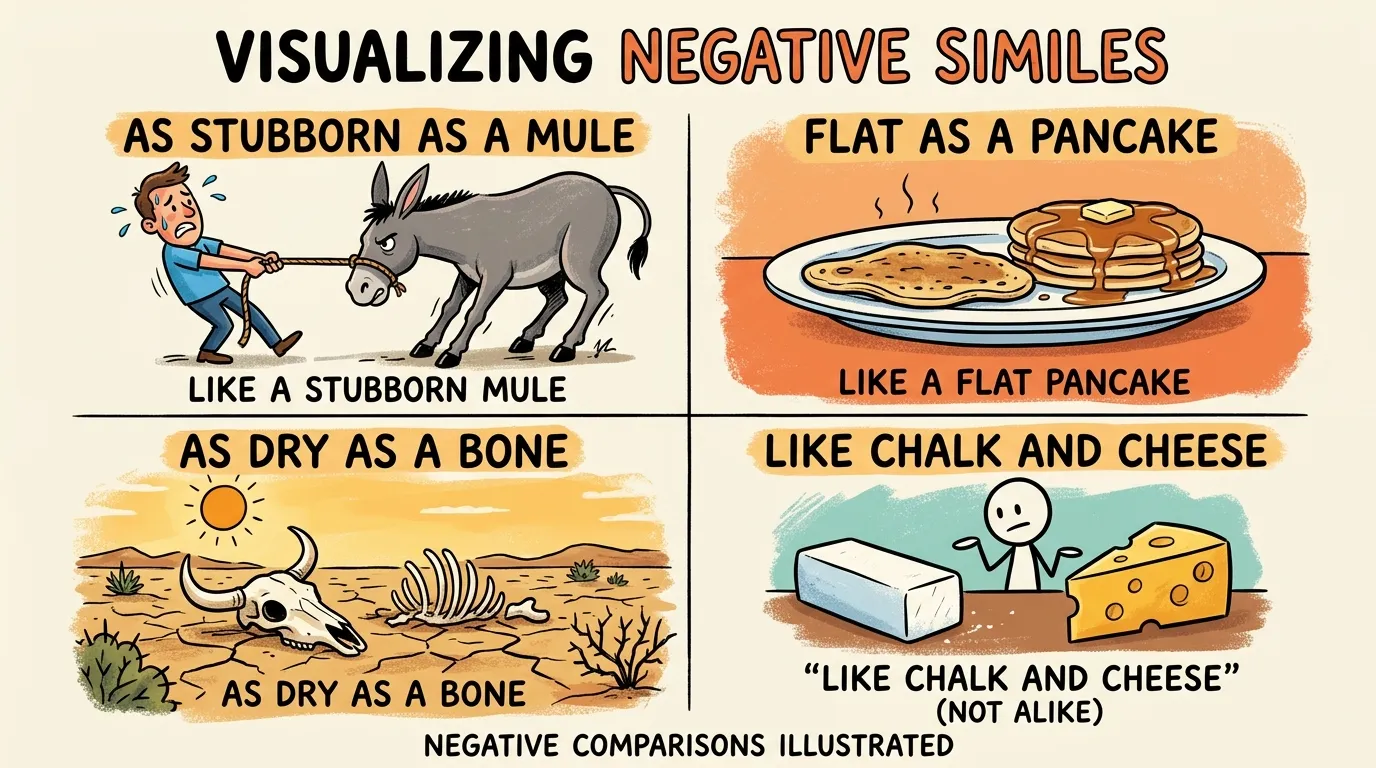
Not every piece of writing focuses on joy and success. Sometimes, the most memorable stories, essays, poems, and speeches explore struggle, disappointment, fear, frustration, or failure. One of the most effective ways to describe these experiences is by using negative similes. A simile compares two different things using the words “like” or “as,” helping readers visualize difficult emotions and challenging situations through vivid comparisons. Whether you’re writing about sadness, anger, loneliness, weakness, confusion, regret, or hardship, negative similes add realism, emotional depth, and stronger imagery to your writing.
Whether you’re a student learning figurative language, a teacher explaining literary devices, a novelist creating emotional conflict, a poet expressing deep feelings, or a blogger writing thoughtful content, mastering negative similes can improve your ability to communicate complex emotions. These comparisons make readers feel the weight of a situation while creating unforgettable scenes and relatable experiences.
In this comprehensive guide, you’ll discover some of the best negative similes, learn what a simile is, explore meaningful examples, understand when and where to use them, and find practical tips for using negative similes in essays, stories, poems, speeches, and creative writing.
What Is a Simile?
A simile is a figure of speech that compares two different things using the words “like” or “as.” It helps readers understand emotions, actions, or situations by connecting them with familiar images.
A negative simile focuses on unpleasant emotions, difficult experiences, or undesirable qualities, making writing more expressive and emotionally engaging.
Simple Examples
- His heart felt as heavy as stone.
- The room was like a prison without windows.
These comparisons create vivid mental images that strengthen emotional impact.
78 Negative Similes
1. As Heavy as Stone
Meaning: Overwhelmed with sadness, stress, or responsibility.
Definition: Stone symbolizes weight and emotional burden, making this one of the most common and effective negative similes.
Usage Insight: Perfect for emotional essays, novels, poetry, and reflective writing. Suitable for both formal and creative contexts.
Examples:
- Her heart felt as heavy as stone after hearing the news.
- The responsibility weighed on him every day.
2. Like a Storm Without End
Meaning: Constant emotional turmoil or difficulty.
Definition: An endless storm symbolizes ongoing hardship and uncertainty.
Usage Insight: Excellent for storytelling, speeches, and motivational articles discussing challenges.
Examples:
- His anxiety felt like a storm without end.
- The difficult year tested everyone’s patience.
3. As Cold as Ice
Meaning: Unfriendly, distant, or emotionally detached.
Definition: Ice represents emotional coldness and lack of warmth.
Usage Insight: Great for character descriptions and relationship writing.
Examples:
- Her response was as cold as ice.
- He avoided showing any emotion.
4. Like a Candle Fading in the Wind
Meaning: Losing hope or strength.
Definition: A fading candle represents fragile hope and emotional exhaustion.
Usage Insight: Ideal for reflective essays, poetry, and inspirational stories about overcoming adversity.
Examples:
- His confidence was like a candle fading in the wind.
- She struggled to stay optimistic.
5. As Empty as an Abandoned House
Meaning: Feeling lonely or emotionally hollow.
Definition: An abandoned house symbolizes isolation and loss.
Usage Insight: Perfect for describing grief, loneliness, and emotional distance.
Examples:
- Her heart felt as empty as an abandoned house.
- He missed his family deeply.
6. Like a Bird Trapped in a Cage
Meaning: Feeling restricted or powerless.
Definition: A caged bird symbolizes lost freedom and frustration.
Usage Insight: Excellent for essays, speeches, and personal reflections.
Examples:
- She felt like a bird trapped in a cage at her old job.
- The strict rules left everyone frustrated.
7. As Dark as a Moonless Night
Meaning: Filled with fear, uncertainty, or despair.
Definition: A moonless night represents confusion and hopelessness.
Usage Insight: Great for horror stories, emotional fiction, and descriptive writing.
Examples:
- His future seemed as dark as a moonless night.
- The uncertainty made everyone uneasy.
8. Like Cracks Spreading Across Glass
Meaning: Slowly breaking apart emotionally.
Definition: Cracked glass symbolizes damage that becomes worse over time.
Usage Insight: Ideal for relationship stories, emotional poetry, and reflective writing.
Examples:
- Their friendship weakened like cracks spreading across glass.
- Small disagreements eventually caused bigger problems.
9. As Bitter as Unsweetened Coffee
Meaning: Full of resentment or disappointment.
Definition: Bitterness represents emotional pain and lingering regret.
Usage Insight: Excellent for character development and emotional storytelling.
Examples:
- His memories were as bitter as unsweetened coffee.
- She found it difficult to forgive.
10. Like Leaves Blown by a Violent Wind
Meaning: Feeling helpless or out of control.
Definition: Leaves carried by strong winds symbolize uncertainty and vulnerability.
Usage Insight: Perfect for novels, speeches, and motivational content about overcoming challenges.
Examples:
- They felt like leaves blown by a violent wind during the crisis.
- Life suddenly became unpredictable.
How to Use These Negative Similes Effectively
Negative similes should enhance your writing by adding emotional depth without making every sentence overly dramatic.
Essays
Use thoughtful comparisons to explain personal struggles, social issues, or emotional experiences while maintaining balance.
Stories
Negative similes strengthen conflict, character development, and emotional realism by helping readers connect with difficult moments.
Poems
Poetry often uses powerful imagery to express grief, loneliness, fear, and heartbreak, making negative similes especially effective.
Speeches
Reflective speeches can use negative similes to describe challenges before transitioning toward hope and solutions.
Content Writing
Whether you’re writing blogs about mental health, personal growth, relationships, or life challenges, negative similes help communicate difficult emotions with clarity and empathy.
Frequently Asked Questions
What are negative similes?
Negative similes are comparisons that use “like” or “as” to describe unpleasant emotions, hardships, or undesirable qualities through vivid imagery.
Why are negative similes important?
They make emotional writing more realistic, strengthen storytelling, and help readers better understand difficult experiences.
What’s the difference between a negative simile and a regular simile?
A regular simile can compare any quality or situation, while a negative simile specifically emphasizes struggle, sadness, fear, anger, disappointment, or other challenging emotions.
Can negative similes be used in academic writing?
Yes. They are appropriate for literary analysis, descriptive essays, speeches, and creative assignments when they support the overall message.
How can I create my own negative similes?
Think about a difficult emotion or experience you want to describe, then compare it to a familiar image from nature or everyday life using “like” or “as.” Focus on creating a comparison that is vivid, meaningful, and easy for readers to understand.
Conclusion
Learning negative similes can make your writing more honest, expressive, and emotionally compelling. These powerful comparisons help readers understand sadness, fear, disappointment, loneliness, and other difficult emotions by transforming abstract feelings into vivid mental images. When used thoughtfully, negative similes add depth to stories, poems, essays, and speeches while making characters and experiences feel more authentic.
Whether you’re a student improving your figurative language skills, a teacher explaining literary techniques, a novelist creating emotional conflict, a poet expressing heartfelt emotions, or a content creator writing reflective articles, mastering the best negative similes will strengthen your ability to communicate challenging experiences with clarity and impact. Practice using these comparisons naturally, draw inspiration from everyday life and nature, and create original similes that support your message. With time and experience, negative similes will become an essential writing tool that helps you create content that is emotionally rich, relatable, and unforgettable.

Chris Woak is a passionate language enthusiast and the creative voice behind Mitaphor.com. With a deep interest in similes, metaphors, and word meanings, Chris simplifies complex expressions into clear, engaging explanations that readers of all levels can understand. His work focuses on helping students, writers, and language lovers explore the power of figurative language and improve their communication skills.