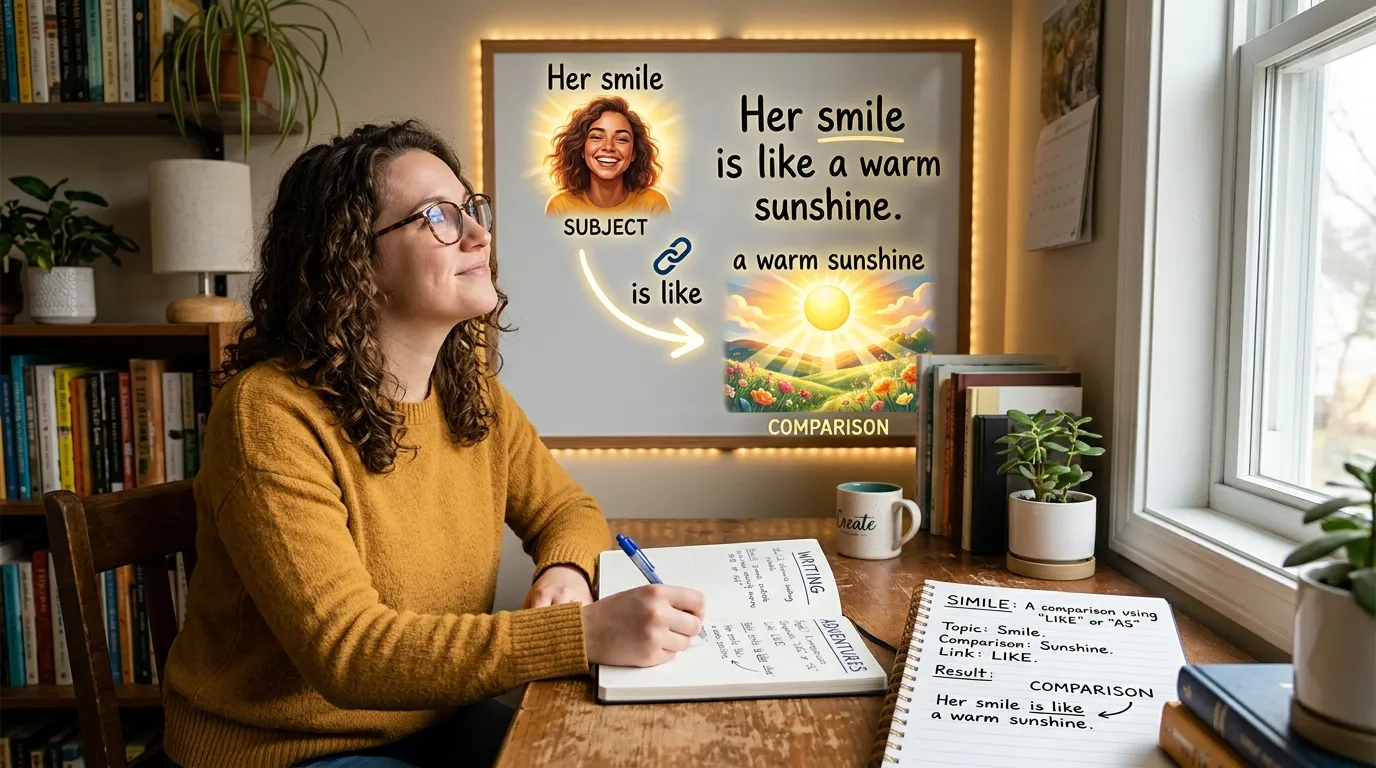
Learning how to write similes is one of the easiest ways to make your writing more vivid, descriptive, and memorable. A simile is a figure of speech that compares two different things using the words “like” or “as.” These comparisons help readers visualize ideas, understand emotions, and connect with your writing more easily.
Whether you’re writing an essay, story, poem, speech, blog post, social media caption, or school assignment, knowing how to write similes can make your content more engaging and creative. From simple comparisons like “as busy as a bee” to original expressions that paint unique pictures, similes add color and personality to your words.
In this guide, you’ll learn 15 simple steps for writing similes, along with examples, writing tips, common mistakes, and frequently asked questions to help you master this essential figurative language skill.
What Is a Simile?
A simile is a figure of speech that compares two unlike things using the words “like” or “as.”
The purpose of a simile is to make descriptions more vivid, relatable, and easy to imagine.
Examples of Similes
- As brave as a lion.
- She shines like the sun.
- The water was as smooth as glass.
- He runs like the wind.
Why Use Similes?
Similes help you:
- Create vivid mental images.
- Make writing more engaging.
- Explain ideas clearly.
- Add emotion and creativity.
- Improve storytelling and descriptive writing.
How to Write Similes: 15 Simple Steps
1. Choose the Subject
Decide what you want to describe.
Example: A person, place, object, feeling, or event.
2. Identify the Main Quality
Think about the strongest characteristic.
Examples:
- Fast
- Bright
- Calm
- Strong
- Happy
3. Find Something Familiar
Choose something everyone recognizes with that quality.
Examples:
- Lion = Brave
- Feather = Light
- Ice = Cold
- Diamond = Bright
4. Use “Like” or “As”
Build your comparison naturally.
Examples:
- She runs like the wind.
- He is as strong as steel.
5. Keep It Clear
Readers should understand the comparison immediately.
✔ As quiet as a mouse.
✘ As mysterious as invisible echoes beneath forgotten dreams.
6. Make It Original
Avoid overusing clichés whenever possible.
Instead of:
- As busy as a bee
Try:
- As busy as a city street at rush hour.
7. Match the Context
Choose comparisons that fit your audience and topic.
Formal writing should use professional similes, while stories and poems can be more imaginative.
8. Use Strong Images
Pick comparisons readers can easily picture.
Example:
- The lake was as smooth as polished glass.
9. Keep It Short
Simple similes are often the most effective.
10. Avoid Mixing Ideas
Use one clear comparison at a time.
11. Read It Aloud
A good simile sounds natural when spoken.
12. Check for Accuracy
Make sure the comparison actually fits the quality you’re describing.
13. Revise for Impact
Replace weak comparisons with stronger, fresher imagery.
14. Practice Often
The more similes you write, the more creative and natural they become.
15. Learn from Great Writers
Read books, poems, speeches, and articles to discover how experienced writers use similes effectively.
Formula for Writing a Simile
A simple formula is:
Subject + like + object
Example:
- The child laughed like a bubbling stream.
Or:
Subject + as + adjective + as + object
Example:
- The snow was as white as cotton.
Examples of Original Similes
| Quality | Simile |
|---|---|
| Fast | As fast as a racing arrow |
| Calm | As calm as a quiet lake |
| Bright | Like the first morning sunrise |
| Strong | As strong as an ancient oak |
| Happy | Like a child opening a surprise gift |
| Busy | As busy as a bustling marketplace |
| Cold | As cold as a winter morning |
| Quiet | As quiet as fresh snowfall |
| Smooth | Like silk gliding through your hands |
| Sharp | As sharp as a chef’s knife |
Common Mistakes to Avoid
- Forgetting to use “like” or “as.”
- Choosing comparisons that don’t make sense.
- Overusing common clichés.
- Making similes too long or confusing.
- Mixing multiple comparisons in one sentence.
Tips for Writing Better Similes
- Observe nature and everyday life.
- Think visually.
- Use fresh, specific comparisons.
- Match your tone to your audience.
- Revise until the comparison feels natural.
Frequently Asked Questions
What is the easiest way to write a simile?
Choose a quality, find something well known for that quality, and compare the two using “like” or “as.”
Can I invent my own similes?
Yes. Original similes often make writing more interesting and memorable.
Should I avoid common similes?
Not always. Familiar similes are useful, but adding fresh comparisons can make your writing stand out.
Where are similes commonly used?
Similes appear in stories, poems, essays, speeches, advertisements, songs, blogs, and everyday conversations.
Why are similes important?
They improve clarity, creativity, and emotional impact while helping readers visualize your ideas.
Conclusion
Learning how to write similes is a valuable skill that can improve every type of writing. By comparing two unlike things with “like” or “as,” you create vivid imagery that captures readers’ attention and makes your ideas easier to understand. Whether you’re writing fiction, poetry, essays, speeches, blog posts, or marketing content, well-crafted similes make your words more expressive and memorable.
With regular practice, you’ll become more confident in creating original and meaningful comparisons. Use the steps, examples, and tips in this guide to develop your own writing style and make every sentence more engaging.

James Williams is a dedicated language writer and contributor at Mitaphor.com, where he explores the art of similes, metaphors, and word meanings. With a passion for making language simple and engaging, James breaks down complex expressions into clear, easy-to-understand insights. His work is designed to help students, writers, and curious readers better understand figurative language and use it effectively in everyday communication.