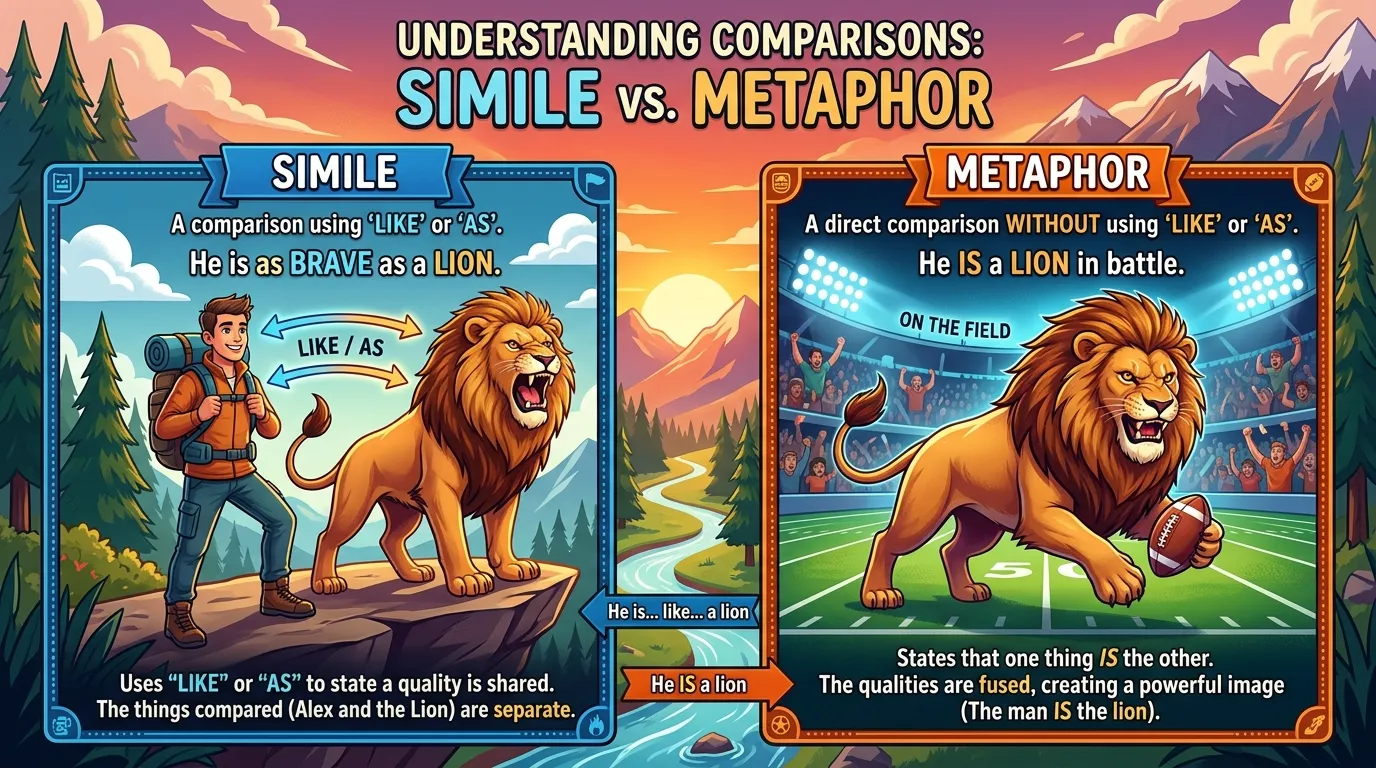
The difference between simile and metaphor is one of the most important concepts in English grammar and figurative language. Both are literary devices that compare two unlike things to make writing more vivid and engaging. However, they do so in different ways. A simile makes a comparison using the words “like” or “as,” while a metaphor makes a direct comparison by stating that one thing is another.
Understanding the difference between simile and metaphor helps students, teachers, writers, bloggers, and English learners improve their descriptive writing, storytelling, speeches, essays, and poetry. Knowing when to use each figure of speech allows you to communicate ideas more clearly and creatively.
In this guide, you’ll learn the difference between simile and metaphor, explore comparison tables, real-life examples, writing tips, common mistakes, FAQs, and practical advice for mastering both literary devices.
What Is a Simile?
A simile is a figure of speech that compares two different things using the words “like” or “as.”
Its purpose is to create vivid imagery and help readers easily visualize an idea.
Examples of Similes
- As brave as a lion.
- She runs like the wind.
- His smile is as bright as the sun.
- The baby slept like a log.
What Is a Metaphor?
A metaphor is a figure of speech that directly states one thing is another without using “like” or “as.”
Metaphors create stronger and more imaginative comparisons.
Examples of Metaphors
- Time is a thief.
- The classroom was a zoo.
- Her voice is music.
- He is a rock.
Difference Between Simile and Metaphor
| Feature | Simile | Metaphor |
|---|---|---|
| Comparison Style | Uses like or as | Direct comparison |
| Comparison Words | Like, as | None |
| Purpose | Creates clear imagery | Creates deeper symbolism |
| Strength | Gentle comparison | Strong comparison |
| Literal Meaning | Clearly figurative | More direct and symbolic |
| Common Use | Everyday writing, essays, speeches | Poetry, literature, storytelling |
| Reader Impact | Easy to visualize | More powerful and emotional |
| Flexibility | Simple and straightforward | Rich and imaginative |
12 Key Differences Between Similes and Metaphors
1. Comparison Method
Simile: Uses “like” or “as.”
Metaphor: Makes a direct comparison.
Example:
- Simile: He runs like the wind.
- Metaphor: He is the wind.
2. Comparison Words
Similes require “like” or “as.”
Metaphors do not use comparison words.
3. Purpose
Similes help readers visualize similarities.
Metaphors create stronger symbolic meaning.
4. Emotional Impact
Similes are descriptive.
Metaphors are often more dramatic and emotional.
5. Ease of Understanding
Similes are generally easier for beginners.
Metaphors may require deeper interpretation.
6. Writing Style
Similes fit descriptive and conversational writing.
Metaphors are common in poetry and creative writing.
7. Reader Experience
Similes guide the reader through a comparison.
Metaphors encourage readers to interpret the meaning.
8. Creativity
Similes create vivid comparisons.
Metaphors create imaginative identities.
9. Sentence Structure
Similes clearly signal a comparison.
Metaphors blend the comparison naturally into the sentence.
10. Tone
Similes often sound lighter and more conversational.
Metaphors usually sound stronger and more expressive.
11. Common Usage
Similes are frequently used in education and everyday speech.
Metaphors are widely used in literature, speeches, and song lyrics.
12. Overall Effect
Similes make descriptions easier to picture.
Metaphors make ideas more memorable and emotionally powerful.
Examples of Similes and Metaphors
| Simile | Metaphor |
| As busy as a bee | She is a busy bee. |
| As cold as ice | His heart is ice. |
| Like a shining star | She is a star. |
| As brave as a lion | He is a lion. |
| Sleeps like a baby | The baby is an angel. |
When Should You Use a Simile?
Use a simile when you want to:
- Create clear comparisons.
- Help readers visualize ideas.
- Improve descriptive writing.
- Make explanations easy to understand.
- Add imagery without sounding overly dramatic.
When Should You Use a Metaphor?
Use a metaphor when you want to:
- Create stronger emotional impact.
- Add symbolism to your writing.
- Write poetry or fiction.
- Make speeches more memorable.
- Strengthen storytelling.
Common Mistakes to Avoid
- Confusing direct comparisons with comparisons using “like” or “as.”
- Mixing similes and metaphors in the same sentence without purpose.
- Using too many figurative expressions in one paragraph.
- Choosing clichés instead of fresh comparisons.
- Forgetting that metaphors do not use “like” or “as.”
Frequently Asked Questions
What is the difference between a simile and a metaphor?
A simile compares two things using “like” or “as,” while a metaphor directly states that one thing is another.
Which is easier to understand?
Similes are generally easier because they clearly signal the comparison.
Can a sentence contain both a simile and a metaphor?
Yes. For example: She fought like a lion because she was a warrior. The first comparison is a simile, while “she was a warrior” is a metaphor.
Are similes and metaphors both figurative language?
Yes. Both are figures of speech used to create vivid and engaging language.
Which is better for creative writing?
Both are valuable. Similes add clarity, while metaphors often add greater depth and emotional impact.
Conclusion
Understanding the difference between simile and metaphor is essential for becoming a stronger writer and communicator. Although both compare unlike things, similes use “like” or “as” to make comparisons clear, while metaphors create direct comparisons that often carry deeper meaning. Choosing the right device depends on your purpose, audience, and writing style.
Whether you’re a student, teacher, writer, blogger, or English learner, mastering similes and metaphors will make your writing more vivid, expressive, and memorable. Practice using both in everyday writing, speeches, stories, and essays to communicate ideas with greater creativity and confidence.

James Williams is a dedicated language writer and contributor at Mitaphor.com, where he explores the art of similes, metaphors, and word meanings. With a passion for making language simple and engaging, James breaks down complex expressions into clear, easy-to-understand insights. His work is designed to help students, writers, and curious readers better understand figurative language and use it effectively in everyday communication.