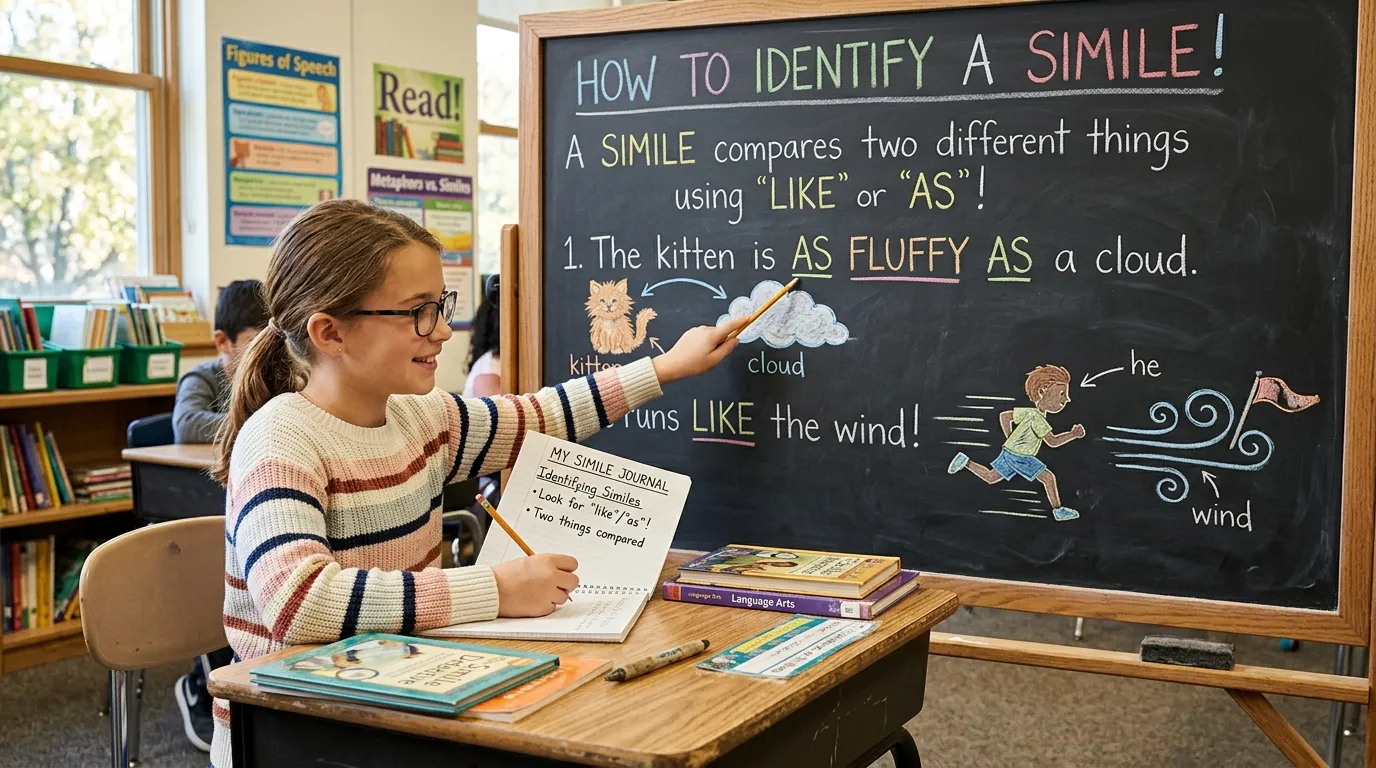
Learning how to identify similes is an important step toward understanding figurative language and improving your reading and writing skills. A simile is a figure of speech that compares two unlike things using the words “like” or “as.” These comparisons create vivid imagery, make descriptions more interesting, and help readers understand ideas through familiar examples.
Whether you’re a student, teacher, writer, parent, or English learner, knowing how to identify similes will help you recognize figurative language in stories, poems, essays, speeches, songs, and everyday conversations. Once you know what to look for, spotting similes becomes much easier.
In this guide, you’ll learn 14 easy ways to identify similes, along with clear examples, common mistakes, practice tips, and frequently asked questions to build your confidence.
What Is a Simile?
A simile is a figure of speech that compares two different things using the words “like” or “as.”
Its purpose is to create a clear mental image by showing how two things are similar.
Examples of Similes
- As brave as a lion.
- She runs like the wind.
- The water was as smooth as glass.
- His smile is as bright as the sun.
Why Is It Important to Identify Similes?
Recognizing similes helps you:
- Understand figurative language.
- Improve reading comprehension.
- Appreciate poetry and literature.
- Write more creatively.
- Recognize descriptive writing techniques.
How to Identify Similes: 14 Easy Ways
1. Look for the Words “Like” or “As”
Most similes contain “like” or “as.”
Example:
- She sings like a bird.
- He is as calm as the sea.
2. Check Whether a Comparison Is Being Made
Ask yourself:
Are two different things being compared?
If yes, it may be a simile.
3. Make Sure the Comparison Is Figurative
The comparison should not be meant literally.
✔ Her smile is as bright as the sun.
✘ The ball is as round as another ball.
4. Identify the Two Things Being Compared
Find both parts of the comparison.
Example:
- He runs like the wind.
5. Find the Shared Quality
Ask what characteristic both things have.
Example:
- Wind = fast
- Runner = fast
Shared quality: Speed
6. Check Whether It Creates Imagery
Similes help readers picture something clearly.
Example:
- The lake was as smooth as glass.
7. Ignore Literal Comparisons
Not every sentence using “like” or “as” is a simile.
Example:
- She looks like her mother.
This is usually a literal comparison, not a simile.
8. Read the Sentence in Context
Context helps determine whether the comparison is figurative or literal.
9. Notice Emotional or Descriptive Language
Similes often make descriptions more vivid.
Example:
- His voice was as gentle as a breeze.
10. Watch for Common Simile Patterns
Common structures include:
- As + adjective + as…
- Like + noun
Examples:
- As cold as ice.
- Like a shooting star.
11. Ask Whether the Comparison Could Be Literally True
If the comparison is clearly imaginative rather than factual, it is likely a simile.
12. Look for Creative Comparisons
Writers often compare everyday things with nature, animals, objects, or emotions.
Example:
- The crowd moved like ocean waves.
13. Practice with Poems and Stories
Poetry, novels, and children’s books contain many similes that are easy to recognize.
14. Read More Figurative Language
The more examples you read, the faster you’ll recognize similes in any type of writing.
Examples of Similes
| Sentence | Why It’s a Simile |
|---|---|
| As brave as a lion | Compares bravery to a lion using as. |
| She dances like a butterfly | Compares dancing to a butterfly using like. |
| The snow was as white as cotton | Compares whiteness using as. |
| He fought like a warrior | Compares fighting style using like. |
| The water sparkled like diamonds | Compares sparkling water to diamonds. |
Common Mistakes to Avoid
- Assuming every sentence with “like” is a simile.
- Confusing literal comparisons with figurative ones.
- Forgetting that similes compare two unlike things.
- Missing the shared quality between the two things.
- Confusing similes with metaphors or personification.
Tips for Recognizing Similes Faster
- Look for “like” and “as” first.
- Ask what is being compared.
- Decide whether the comparison is figurative.
- Find the shared quality.
- Practice reading poems, stories, and speeches.
Frequently Asked Questions
What is the easiest way to identify a simile?
Look for “like” or “as” and check whether two different things are being compared figuratively.
Are all sentences with “like” similes?
No. Sometimes “like” is used for a literal comparison, such as She looks like her sister.
Can a simile exist without “like” or “as”?
In standard English, similes usually use “like” or “as.” Comparisons without those words are generally metaphors instead.
How can students practice identifying similes?
Read poems, children’s stories, novels, and speeches, then highlight sentences that compare two unlike things using “like” or “as.”
Why should I learn to identify similes?
Recognizing similes improves reading comprehension, writing skills, vocabulary, and appreciation of figurative language.
Conclusion
Knowing how to identify similes makes reading and writing more enjoyable and meaningful. By looking for “like” or “as,” checking for a figurative comparison, and identifying the shared quality between two unlike things, you can quickly recognize similes in almost any text. This skill helps you understand literature, improve your own writing, and appreciate the creativity behind figurative language.
Whether you’re a student, teacher, writer, or English learner, practicing these simple techniques will help you spot similes with confidence. The more you read and analyze examples, the easier it becomes to recognize and use similes effectively in everyday communication.

Chris Woak is a passionate language enthusiast and the creative voice behind Mitaphor.com. With a deep interest in similes, metaphors, and word meanings, Chris simplifies complex expressions into clear, engaging explanations that readers of all levels can understand. His work focuses on helping students, writers, and language lovers explore the power of figurative language and improve their communication skills.