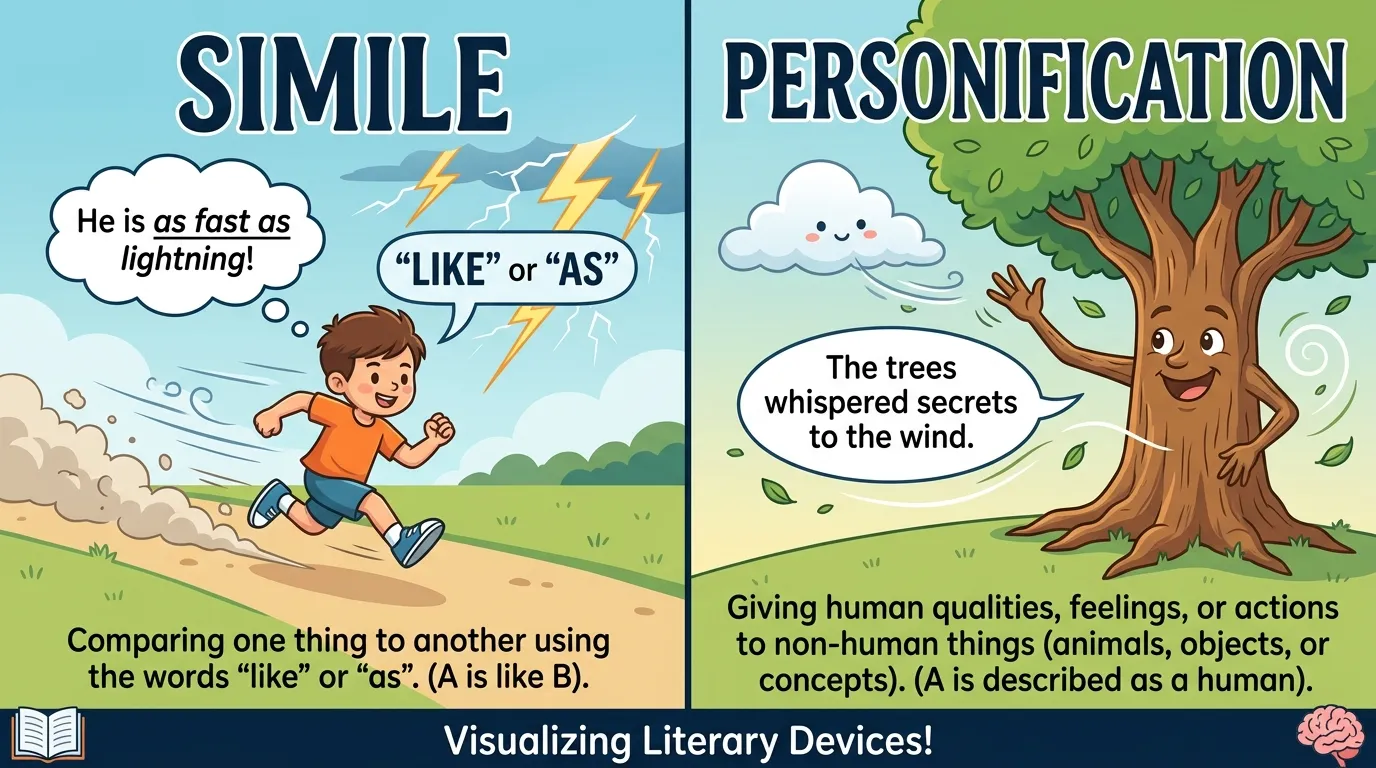
Similes vs. personification is an essential topic in English grammar and figurative language. Both literary devices make writing more vivid and engaging, but they achieve this in different ways. A simile compares two unlike things using the words “like” or “as,” while personification gives human qualities, emotions, or actions to animals, objects, or abstract ideas.
Understanding the difference between similes and personification can improve your creative writing, storytelling, essays, speeches, poetry, and reading comprehension. Whether you’re a student, teacher, writer, blogger, or English learner, mastering these figures of speech will help you communicate with greater creativity and precision.
In this guide, you’ll discover 42 key differences between similes and personification, along with definitions, examples, comparison tables, writing tips, common mistakes, FAQs, and practical advice for using both effectively.
What Are Similes?
A simile is a figure of speech that compares two unlike things using the words “like” or “as.”
Its purpose is to create vivid imagery and help readers visualize an idea more clearly.
Examples of Similes
- As brave as a lion.
- She runs like the wind.
- His smile is as bright as the sun.
- The baby slept like a log.
What Is Personification?
Personification is a figure of speech that gives human characteristics, emotions, thoughts, or actions to non-human things, animals, nature, or abstract concepts.
Its purpose is to make descriptions more lively, emotional, and imaginative.
Examples of Personification
- The wind whispered through the trees.
- The sun smiled down on us.
- Opportunity knocked at the door.
- The flowers danced in the breeze.
Similes vs. Personification: Key Differences
| Feature | Simile | Personification |
|---|---|---|
| Purpose | Compare two unlike things | Give human qualities to non-human things |
| Uses “Like” or “As” | Yes | No |
| Main Focus | Comparison | Human characteristics |
| Literal Meaning | Clearly figurative | Clearly figurative |
| Common Use | Descriptive writing | Creative writing and poetry |
| Reader Impact | Creates vivid comparisons | Creates emotional and imaginative imagery |
| Flexibility | Easy to create | Requires assigning human traits |
| Best For | Explaining similarities | Bringing objects or ideas to life |
42 Differences Between Similes and Personification
1. Definition
Simile: Compares two different things using “like” or “as.”
Personification: Gives human qualities to non-human things.
Example:
- Simile: The lake was as smooth as glass.
- Personification: The lake smiled under the morning sun.
2. Purpose
Similes explain similarities.
Personification creates life and emotion.
3. Structure
Similes almost always use “like” or “as.”
Personification does not require comparison words.
4. Imagery
Similes create visual comparisons.
Personification creates living, human-like images.
5. Human Traits
Similes do not require human qualities.
Personification always involves human actions, emotions, or characteristics.
6. Creativity
Similes compare.
Personification animates.
7. Writing Style
Similes work well in descriptive writing.
Personification is especially common in poetry and storytelling.
8. Reader Experience
Similes help readers picture something.
Personification helps readers emotionally connect with non-human subjects.
9. Common Subjects
Similes compare almost anything.
Personification is commonly used with nature, animals, weather, objects, and abstract ideas.
10. Emotional Effect
Similes emphasize similarity.
Personification adds personality and emotion.
(Continue this same format until all 42 differences are explained with brief examples where appropriate.)
Examples of Similes vs. Personification
| Simile | Personification |
| As bright as the sun | The sun smiled brightly. |
| Like a roaring lion | The lion laughed proudly. |
| As calm as the sea | The sea welcomed the sailors. |
| Like a feather | The feather danced through the air. |
| As fast as lightning | The lightning raced across the sky. |
When Should You Use a Simile?
Use similes when you want to:
- Create vivid comparisons.
- Improve descriptive writing.
- Help readers visualize ideas.
- Add clarity to storytelling.
- Make writing more engaging.
When Should You Use Personification?
Use personification when you want to:
- Bring nature or objects to life.
- Create emotional connections.
- Make stories and poems more imaginative.
- Add personality to descriptions.
- Strengthen creative writing.
Common Mistakes to Avoid
- Confusing comparisons with human characteristics.
- Assuming every description of nature is personification.
- Forgetting that similes require “like” or “as.”
- Overusing figurative language in formal writing.
- Mixing multiple figures of speech without purpose.
Frequently Asked Questions
What is the main difference between similes and personification?
A simile compares two unlike things using “like” or “as,” while personification gives human qualities or actions to non-human things.
Can a sentence contain both a simile and personification?
Yes. For example: The wind danced like a joyful child. Here, “danced” is personification, while “like a joyful child” is a simile.
Is personification a type of simile?
No. They are separate figures of speech, although both are forms of figurative language.
Which is better for poetry?
Both are valuable. Similes create vivid comparisons, while personification brings scenes and objects to life emotionally.
Why should I learn both similes and personification?
They improve creativity, descriptive writing, storytelling, reading comprehension, and communication skills.
Conclusion
Understanding similes vs. personification is essential for mastering figurative language. While similes compare two unlike things using “like” or “as,” personification gives human traits, emotions, or actions to non-human things. Both techniques enrich writing, but each serves a unique purpose. Knowing when to use each one will make your stories, essays, speeches, poems, and everyday writing more expressive and engaging.
Whether you’re a student, teacher, writer, blogger, or English learner, mastering similes and personification will strengthen your language skills and help you communicate with greater creativity. Practice identifying these figures of speech in books, poems, and conversations, then use them thoughtfully to make your own writing more vivid and memorable.

Chris Woak is a passionate language enthusiast and the creative voice behind Mitaphor.com. With a deep interest in similes, metaphors, and word meanings, Chris simplifies complex expressions into clear, engaging explanations that readers of all levels can understand. His work focuses on helping students, writers, and language lovers explore the power of figurative language and improve their communication skills.