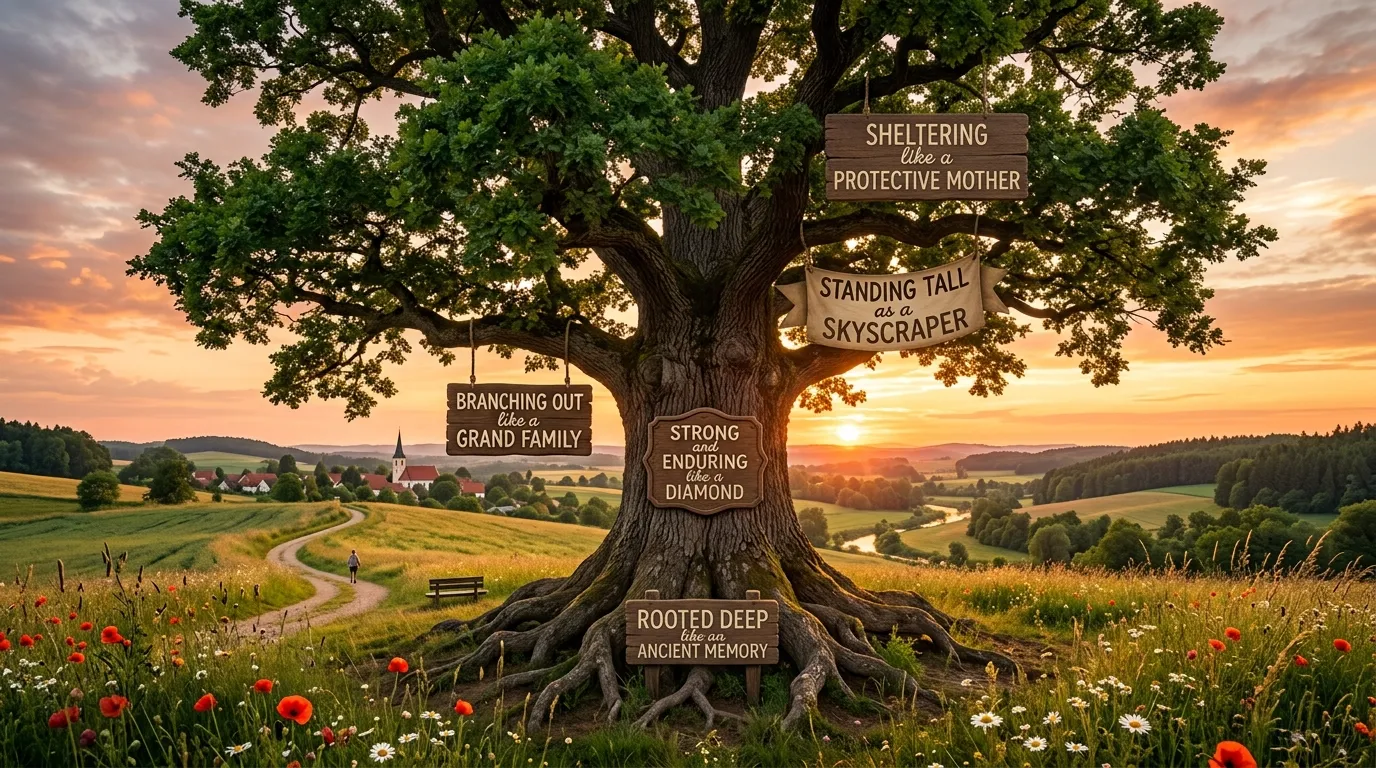
Trees have symbolized strength, growth, wisdom, resilience, and life throughout history. Their deep roots, towering branches, and changing seasons make them one of the richest sources of inspiration for writers and poets. One of the most effective ways to use this symbolism is through tree similes. A simile compares two different things using the words “like” or “as,” helping readers visualize ideas through familiar natural imagery. Whether you’re describing courage, patience, stability, kindness, or personal growth, tree similes make your writing more vivid, meaningful, and memorable.
Whether you’re a student learning figurative language, a teacher creating engaging classroom lessons, a novelist developing descriptive scenes, a poet crafting emotional verses, or a blogger writing educational content, mastering tree similes can improve your writing. These comparisons work beautifully in essays, speeches, poems, stories, journals, and everyday conversations by adding natural beauty and symbolic meaning to your words.
In this comprehensive guide, you’ll discover some of the best tree similes, learn what a simile is, explore meaningful examples, understand when and where to use them, and find practical tips for incorporating tree similes into creative writing, literature, speeches, essays, and classroom activities.
What Is a Simile?
A simile is a figure of speech that compares two different things using the words “like” or “as.” Similes make language more descriptive by connecting ideas with familiar images.
Tree similes compare people, emotions, actions, or experiences to trees or their features—such as roots, branches, leaves, trunks, and forests—to express qualities like strength, growth, patience, resilience, and stability.
Simple Examples
- His determination was as strong as an oak tree.
- Her family stood together like the branches of a tree.
These comparisons help readers picture ideas more clearly and emotionally.
84 Tree Similes
1. As Strong as an Oak Tree
Meaning: Extremely strong, dependable, and resilient.
Definition: Oak trees are known for their strength, longevity, and ability to withstand storms.
Usage Insight: Perfect for motivational speeches, leadership articles, biographies, and descriptive essays. Suitable for both formal and creative writing.
Examples:
- Her determination was as strong as an oak tree.
- The old bridge remained sturdy through every season.
2. Like Roots Anchored Deep in the Earth
Meaning: Stable, grounded, and secure.
Definition: Deep roots represent a strong foundation and lasting support.
Usage Insight: Excellent for describing family values, confidence, and personal beliefs.
Examples:
- His principles were like roots anchored deep in the earth.
- Their friendship remained strong through difficult times.
3. As Tall as a Pine Tree
Meaning: Very tall and impressive.
Definition: Pine trees are admired for their height and graceful appearance.
Usage Insight: Great for descriptive writing, stories, and children’s literature.
Examples:
- The athlete stood as tall as a pine tree.
- The ancient trees dominated the forest.
4. Like a Tree Growing Toward the Sun
Meaning: Constantly improving and reaching goals.
Definition: Trees naturally grow toward sunlight, symbolizing ambition and personal growth.
Usage Insight: Ideal for motivational blogs, educational content, and self-improvement articles.
Examples:
- She pursued her dreams like a tree growing toward the sun.
- Every challenge helped him become wiser.
5. As Calm as a Shady Tree
Meaning: Peaceful and comforting.
Definition: A tree’s shade provides rest, protection, and relief from the heat.
Usage Insight: Perfect for reflective essays, wellness writing, and descriptive passages.
Examples:
- His presence was as calm as a shady tree.
- The quiet afternoon brought everyone peace.
6. Like Leaves Dancing in the Wind
Meaning: Cheerful, lively, and carefree.
Definition: Leaves moving in the breeze symbolize joy, freedom, and movement.
Usage Insight: Excellent for children’s stories, poetry, and creative writing.
Examples:
- The children laughed like leaves dancing in the wind.
- Their excitement spread throughout the playground.
7. As Patient as an Ancient Tree
Meaning: Calm, enduring, and wise.
Definition: Old trees survive countless seasons, representing patience and experience.
Usage Insight: Great for leadership content, biographies, and inspirational essays.
Examples:
- My grandfather was as patient as an ancient tree.
- She remained calm during every challenge.
8. Like Blossoms Appearing in Spring
Meaning: Growing beautifully and full of promise.
Definition: Blossoms symbolize new beginnings, hope, and success.
Usage Insight: Ideal for graduation speeches, motivational writing, and personal growth stories.
Examples:
- Her confidence bloomed like blossoms appearing in spring.
- Every opportunity helped him grow.
9. As Flexible as Willow Branches
Meaning: Adaptable and resilient.
Definition: Willow branches bend in strong winds without breaking, symbolizing flexibility.
Usage Insight: Perfect for leadership articles, personal development content, and speeches.
Examples:
- She remained as flexible as willow branches during difficult times.
- His ability to adapt impressed everyone.
10. Like a Forest Standing Together
Meaning: United and supportive.
Definition: Trees in a forest protect and strengthen one another, symbolizing teamwork and community.
Usage Insight: Excellent for teamwork speeches, educational writing, and family stories.
Examples:
- The team worked like a forest standing together.
- Their unity helped them overcome every obstacle.
How to Use These Tree Similes Effectively
Tree similes become more effective when they naturally support the tone and message of your writing.
Essays
Use tree-inspired comparisons to describe growth, resilience, leadership, and personal experiences with vivid imagery.
Stories
Tree similes help readers imagine characters, settings, and emotions while creating a strong connection to nature.
Poems
Trees symbolize life, hope, wisdom, and renewal, making them ideal subjects for expressive poetry.
Speeches
Inspirational speeches become more memorable when tree similes reinforce themes of strength, perseverance, unity, and growth.
Content Writing
Whether you’re writing blogs, educational resources, motivational articles, or creative stories, tree similes make your writing more descriptive, engaging, and meaningful.
Frequently Asked Questions
What are tree similes?
Tree similes are comparisons that use “like” or “as” to compare people, emotions, actions, or situations with trees or their characteristics.
Why are tree similes important?
They improve descriptive writing, create vivid imagery, and symbolize qualities such as strength, patience, growth, wisdom, and resilience.
What’s the difference between a tree simile and a tree metaphor?
A tree simile uses “like” or “as,” while a tree metaphor directly compares something to a tree without using comparison words.
Can tree similes be used in academic writing?
Yes. They are appropriate for descriptive essays, speeches, literary analysis, and creative writing assignments when they support the topic effectively.
How can I create my own tree similes?
Choose a quality you want to describe—such as strength, patience, flexibility, or growth—and compare it to a tree or one of its features using “like” or “as.” Focus on clear, vivid, and meaningful imagery.
Conclusion
Mastering tree similes is a wonderful way to make your writing more expressive, meaningful, and memorable. These comparisons draw inspiration from the strength of oak trees, the flexibility of willow branches, the beauty of blossoms, and the stability of deep roots to describe people, emotions, and experiences with vivid natural imagery. Whether you’re writing about resilience, hope, wisdom, unity, or personal growth, tree similes help transform ordinary language into engaging and lasting expressions.
Whether you’re a student improving your figurative language skills, a teacher introducing literary devices, a poet creating heartfelt verses, a novelist building unforgettable scenes, or a content creator publishing educational articles, learning the best tree similes will strengthen your creativity and communication. Practice using these comparisons naturally, observe the remarkable qualities of trees in nature, and create your own original similes inspired by forests, branches, roots, and changing seasons. With regular practice, tree similes will become an essential part of your writing toolkit, helping you produce content that informs, inspires, and captivates readers.

James Williams is a dedicated language writer and contributor at Mitaphor.com, where he explores the art of similes, metaphors, and word meanings. With a passion for making language simple and engaging, James breaks down complex expressions into clear, easy-to-understand insights. His work is designed to help students, writers, and curious readers better understand figurative language and use it effectively in everyday communication.