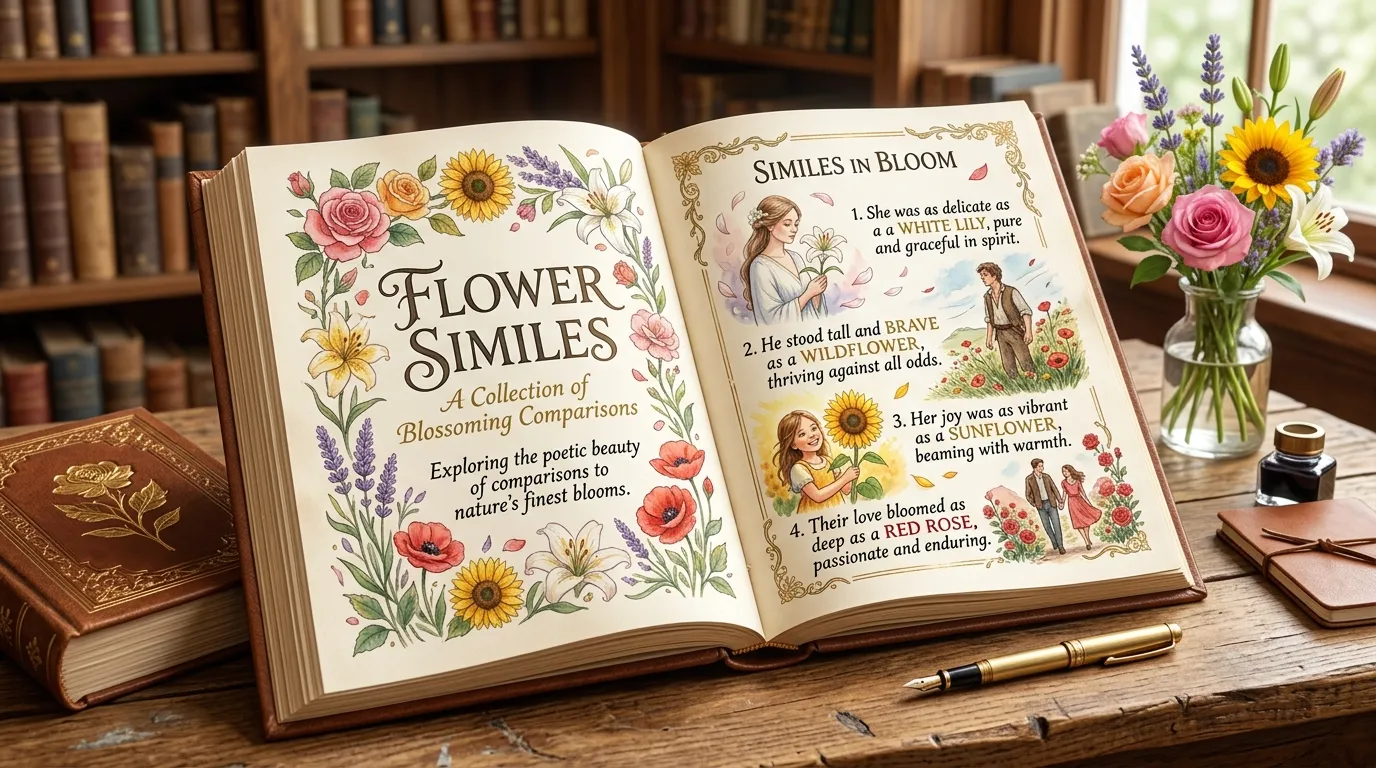
Flowers have symbolized beauty, love, hope, growth, and renewal for centuries. Their colors, fragrances, and delicate petals have inspired poets, authors, and artists across cultures. One of the most elegant ways to bring this beauty into your writing is by using flower similes. A simile compares two different things using the words “like” or “as,” helping readers visualize people, emotions, and experiences through vivid floral imagery. Whether you’re describing kindness, happiness, grace, innocence, or personal growth, flower similes make your writing more expressive, memorable, and emotionally engaging.
Whether you’re a student learning figurative language, a teacher preparing English lessons, a writer creating compelling stories, a poet crafting heartfelt verses, or a blogger publishing educational content, mastering flower similes can elevate your writing. These comparisons work beautifully in essays, speeches, poems, greeting cards, novels, and everyday conversations by adding elegance and natural beauty to your words.
In this comprehensive guide, you’ll discover some of the best flower similes, learn what a simile is, explore meaningful examples, understand when and where to use them, and find practical tips for incorporating flower similes into creative writing, literature, speeches, essays, and classroom activities.
What Is a Simile?
A simile is a figure of speech that compares two different things using the words “like” or “as.” Similes make descriptions more vivid by connecting unfamiliar ideas with familiar images.
Flower similes compare people, emotions, actions, or experiences to flowers and their qualities, such as beauty, softness, fragrance, growth, and resilience.
Simple Examples
- Her smile was as bright as a sunflower.
- His kindness spread like the fragrance of a rose.
These comparisons create beautiful mental images that make writing more engaging.
85 Flower Similes
1. As Beautiful as a Rose
Meaning: Exceptionally beautiful and charming.
Definition: Roses have long symbolized beauty, romance, and elegance.
Usage Insight: Perfect for poems, love letters, speeches, descriptive essays, and greeting cards. Suitable for both formal and creative writing.
Examples:
- She looked as beautiful as a rose on her wedding day.
- The garden was filled with colorful flowers.
2. Like a Sunflower Turning Toward the Sun
Meaning: Optimistic and hopeful.
Definition: Sunflowers naturally follow sunlight, symbolizing positivity and happiness.
Usage Insight: Excellent for motivational blogs, graduation speeches, and inspirational writing.
Examples:
- She faced every challenge like a sunflower turning toward the sun.
- His positive attitude inspired everyone.
3. As Gentle as a Lily
Meaning: Kind, peaceful, and graceful.
Definition: Lilies represent purity, gentleness, and serenity.
Usage Insight: Great for describing caring people and peaceful moments.
Examples:
- Her voice was as gentle as a lily.
- The nurse comforted every patient with compassion.
4. Like Wildflowers Blooming After the Rain
Meaning: Growing stronger after hardship.
Definition: Wildflowers symbolize resilience, freedom, and new beginnings.
Usage Insight: Ideal for motivational stories, essays, and personal growth content.
Examples:
- Her confidence grew like wildflowers blooming after the rain.
- Every setback made him stronger.
5. As Delicate as Cherry Blossoms
Meaning: Soft, graceful, and fragile.
Definition: Cherry blossoms symbolize beauty, renewal, and the fleeting nature of life.
Usage Insight: Perfect for poetry, romance, and reflective writing.
Examples:
- Her movements were as delicate as cherry blossoms.
- The peaceful afternoon felt magical.
6. Like a Daisy Opening in the Morning
Meaning: Cheerful and full of fresh energy.
Definition: Daisies represent innocence, joy, and new beginnings.
Usage Insight: Excellent for children’s stories, inspirational articles, and descriptive essays.
Examples:
- The little girl smiled like a daisy opening in the morning.
- Every new day brought fresh opportunities.
7. As Fragrant as Jasmine
Meaning: Pleasant, refreshing, and delightful.
Definition: Jasmine is admired for its sweet fragrance and calming presence.
Usage Insight: Great for descriptive writing and romantic poetry.
Examples:
- Her kindness was as fragrant as jasmine.
- The evening garden smelled wonderful.
8. Like a Lotus Rising Above the Water
Meaning: Overcoming difficulties with grace.
Definition: The lotus symbolizes purity, strength, and resilience despite challenging conditions.
Usage Insight: Ideal for inspirational speeches, biographies, and self-improvement articles.
Examples:
- She overcame adversity like a lotus rising above the water.
- His determination never faded.
9. As Colorful as a Field of Tulips
Meaning: Bright, lively, and full of joy.
Definition: Tulip fields symbolize happiness, celebration, and beauty.
Usage Insight: Perfect for travel writing, creative stories, and descriptive essays.
Examples:
- The festival was as colorful as a field of tulips.
- Their decorations amazed every guest.
10. Like Petals Dancing in the Breeze
Meaning: Graceful, light, and carefree.
Definition: Flower petals moving with the wind symbolize elegance and freedom.
Usage Insight: Excellent for poetry, storytelling, and nature writing.
Examples:
- The dancers moved like petals dancing in the breeze.
- Her laughter filled the room with happiness.
How to Use These Flower Similes Effectively
Flower similes are most effective when they match the mood, setting, or message of your writing.
Essays
Use floral comparisons to make descriptions more vivid while expressing emotions, beauty, and personal growth.
Stories
Flower similes help readers imagine characters, settings, and emotional moments with elegance and clarity.
Poems
Flowers provide rich symbolism, making them perfect for expressing love, hope, innocence, and renewal.
Speeches
Inspirational speeches become more memorable when flower similes reinforce themes of kindness, resilience, and optimism.
Content Writing
Whether you’re writing blogs, educational resources, greeting card messages, or creative stories, flower similes make your writing more engaging, expressive, and enjoyable to read.
Frequently Asked Questions
What are flower similes?
Flower similes are comparisons that use “like” or “as” to compare people, emotions, actions, or situations with flowers and their qualities.
Why are flower similes important?
They make writing more descriptive, create vivid imagery, and help readers connect emotionally with your words.
What’s the difference between a flower simile and a flower metaphor?
A flower simile uses “like” or “as,” while a flower metaphor directly compares something to a flower without using comparison words.
Can flower similes be used in formal writing?
Yes. They work well in speeches, descriptive essays, literary analysis, greeting messages, and creative writing assignments when used appropriately.
How can I create my own flower similes?
Think about a quality such as beauty, kindness, hope, or resilience, then compare it to a flower using “like” or “as.” Choose imagery that is meaningful, original, and easy for readers to understand.
Conclusion
Mastering flower similes is a wonderful way to make your writing more elegant, expressive, and memorable. These beautiful comparisons draw inspiration from roses, lilies, sunflowers, lotuses, daisies, tulips, jasmine, and other flowers to describe emotions, personalities, and experiences with vivid imagery. Whether you’re writing about love, hope, beauty, kindness, or personal growth, flower similes help transform ordinary language into meaningful expressions that captivate readers.
Whether you’re a student expanding your vocabulary, a teacher introducing figurative language, a poet writing heartfelt verses, a novelist creating unforgettable scenes, or a content creator publishing engaging articles, learning the best flower similes will strengthen your creativity and communication. Practice using these comparisons naturally, observe the beauty of flowers in everyday life, and experiment with creating your own original similes inspired by nature. With consistent practice, flower similes will become a valuable part of your writing style, helping you create content that inspires, informs, and leaves a lasting impression.

Chris Woak is a passionate language enthusiast and the creative voice behind Mitaphor.com. With a deep interest in similes, metaphors, and word meanings, Chris simplifies complex expressions into clear, engaging explanations that readers of all levels can understand. His work focuses on helping students, writers, and language lovers explore the power of figurative language and improve their communication skills.