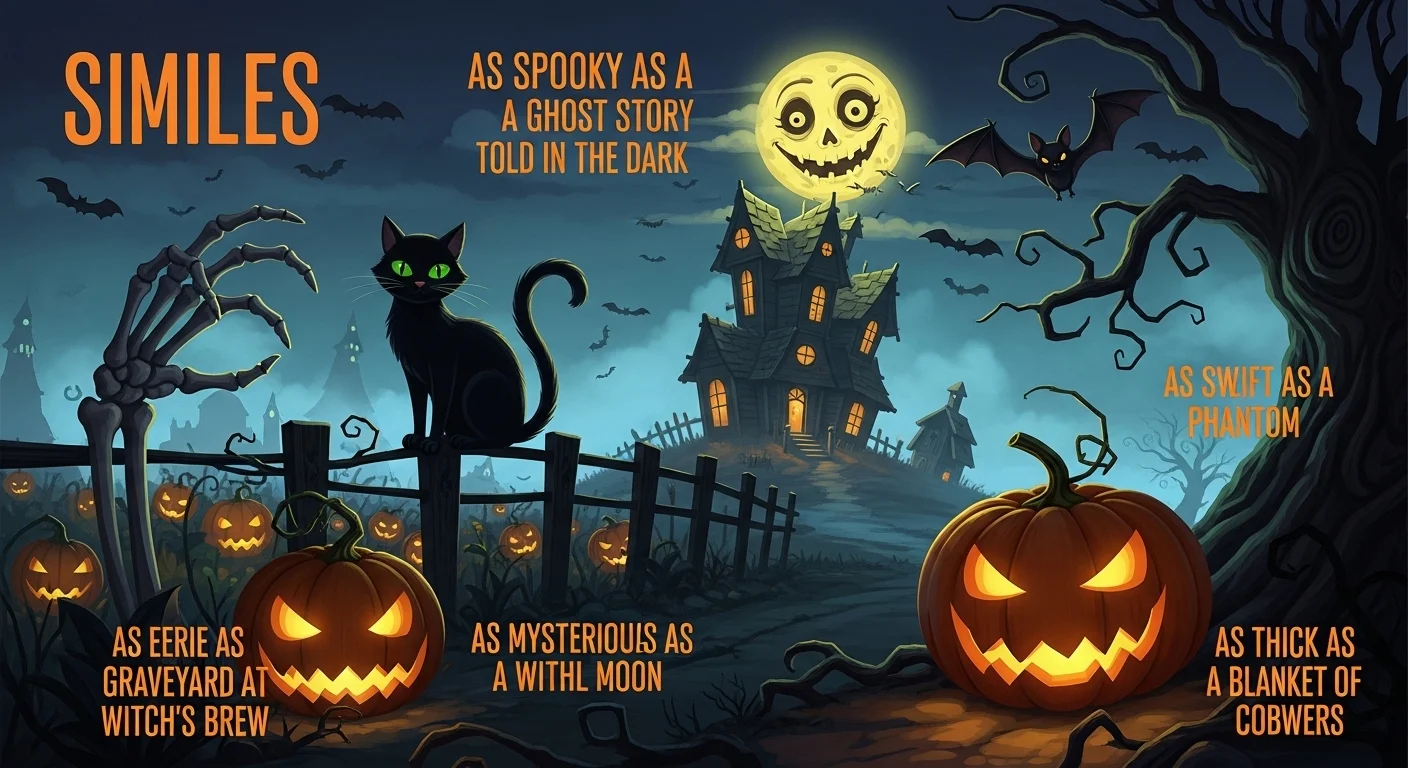
Halloween is all about mystery, fear, and imagination. Whether you’re writing a story, poem, or blog post, capturing that eerie atmosphere can make your content far more engaging. One of the best ways to do that is by using similes.
Similes compare one thing to another using “like” or “as,” helping readers feel the mood rather than just read it. When it comes to spooky themes, Halloween similes can turn simple descriptions into haunting, vivid imagery.
In this article, you’ll discover 9 spooky Halloween similes, each with clear meanings, deeper insights, usage tips, and natural examples to help you write with a chilling edge.
What Is a Simile? (Simple Definition + Examples)
A simile is a figure of speech that compares two different things using “like” or “as.”
Examples:
- As cold as ice → very cold or emotionless
- Like a shadow in the dark → mysterious or hidden
Similes are perfect for creating atmosphere—especially in spooky or Halloween-themed writing.
9 Spooky Halloween Similes
1. As silent as a grave
- Meaning: Extremely quiet
- Deeper Insight: Suggests eerie stillness and death-like silence
- Usage Insight: Perfect for horror stories and suspense scenes
- Examples:
- The house was as silent as a grave at midnight.
- Everything around them felt as silent as a grave.
2. Like a ghost in the night
- Meaning: Moving quietly and mysteriously
- Deeper Insight: Suggests invisibility and fear
- Usage Insight: Storytelling and spooky descriptions
- Examples:
- She moved like a ghost in the night.
- He disappeared like a ghost before anyone noticed.
3. As cold as a corpse
- Meaning: Extremely cold or lifeless
- Deeper Insight: Creates a chilling, unsettling image
- Usage Insight: Horror writing, dramatic tone
- Examples:
- His hands were as cold as a corpse.
- The air felt as cold as a corpse in that room.
4. Like a shadow creeping along the wall
- Meaning: Slow and eerie movement
- Deeper Insight: Suggests fear and suspense
- Usage Insight: Descriptive horror scenes
- Examples:
- The figure moved like a shadow creeping along the wall.
- Fear spread like a shadow across the room.
5. As dark as a haunted night
- Meaning: Extremely dark and frightening
- Deeper Insight: Combines darkness with supernatural fear
- Usage Insight: Halloween stories and poems
- Examples:
- The forest was as dark as a haunted night.
- His thoughts felt as dark as a haunted night.
6. Like a witch’s whisper
- Meaning: Soft but creepy sound
- Deeper Insight: Suggests secrecy and magic
- Usage Insight: Fantasy and spooky writing
- Examples:
- The wind sounded like a witch’s whisper.
- Her voice was like a witch’s whisper in the dark.
7. As eerie as a deserted graveyard
- Meaning: Very spooky and unsettling
- Deeper Insight: Creates a sense of isolation and fear
- Usage Insight: Descriptive passages
- Examples:
- The town felt as eerie as a deserted graveyard.
- The silence was as eerie as a graveyard at night.
8. Like bones rattling in the dark
- Meaning: Frightening sound
- Deeper Insight: Suggests death and horror
- Usage Insight: Horror storytelling
- Examples:
- The noise echoed like bones rattling in the dark.
- His laughter sounded like bones shaking.
9. As pale as a vampire
- Meaning: Extremely pale or frightened
- Deeper Insight: Connects fear with supernatural imagery
- Usage Insight: Halloween themes, character descriptions
- Examples:
- She turned as pale as a vampire when she saw it.
- His face was as pale as a vampire in the moonlight.
How to Use Halloween Similes Effectively
Using spooky Halloween similes can elevate your writing across different formats:
- Stories: Build tension and atmosphere
- Poetry: Create haunting and emotional imagery
- Essays: Add creativity to descriptive sections
- Content Writing: Engage readers with vivid language
Tip: Focus on mood—choose similes that match the level of fear, mystery, or suspense you want to create.
Frequently Asked Questions (FAQ)
1. What are Halloween similes?
They are similes used to create spooky, eerie, or mysterious descriptions.
2. Can I use these in kids’ stories?
Yes, just choose lighter, less scary similes.
3. Are similes important in horror writing?
Absolutely—they help build atmosphere and tension.
4. How can I make my own spooky similes?
Combine something scary with a familiar object using “like” or “as.”
5. Can these be used in social media content?
Yes, they make captions more engaging and creative.
Conclusion
Similes are a powerful way to bring your Halloween-themed writing to life. With these 9 spooky Halloween similes, you can create vivid, chilling imagery that captures your reader’s imagination.
Whether you’re crafting a horror story or a festive post, the right simile can turn simple words into something unforgettable. Start experimenting and let your creativity haunt every line you write.

Chris Woak is a passionate language enthusiast and the creative voice behind Mitaphor.com. With a deep interest in similes, metaphors, and word meanings, Chris simplifies complex expressions into clear, engaging explanations that readers of all levels can understand. His work focuses on helping students, writers, and language lovers explore the power of figurative language and improve their communication skills.