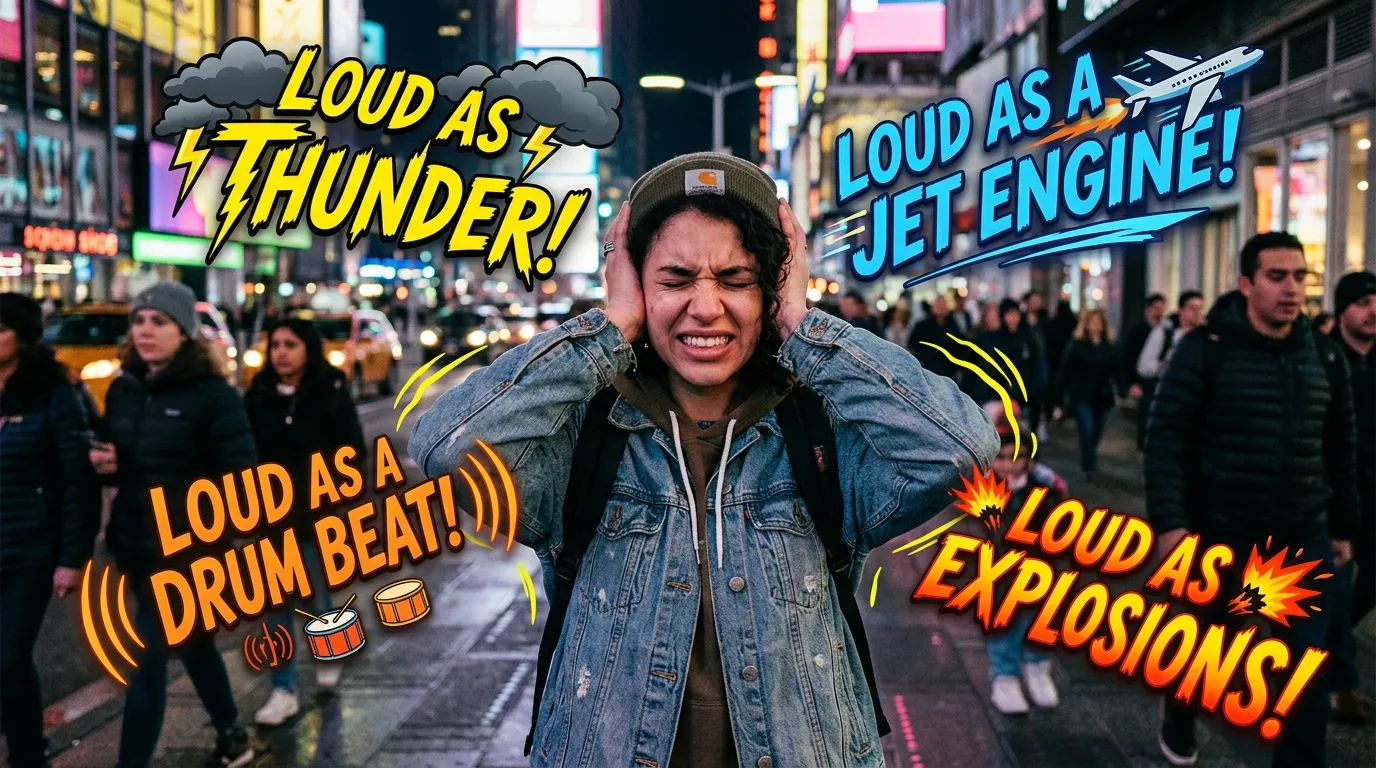
Loudness is often used to describe powerful sounds, energetic voices, bustling crowds, roaring engines, and dramatic natural events. Whether you’re writing about a thunderstorm, a cheering audience, a noisy classroom, or a booming speaker, “loud as” similes help create vivid and memorable descriptions. These comparisons use the “as…as” structure to compare something with people, animals, objects, or natural phenomena known for producing loud sounds. From “as loud as thunder” to “as loud as a lion’s roar,” these similes make your writing more expressive, engaging, and easy to visualize.
Whether you’re a student learning figurative language, a teacher preparing English lessons, a novelist writing action-packed scenes, a poet crafting expressive verses, or a blogger creating educational content, mastering loud as similes can greatly improve your writing. These comparisons are perfect for essays, speeches, stories, poems, and everyday conversations because they create strong imagery and emotional impact.
In this comprehensive guide, you’ll discover some of the best loud as similes, learn what a simile is, explore detailed meanings and examples, and find practical tips for using them effectively in different forms of writing.
What Is a Simile?
A simile is a figure of speech that compares two different things using the words “like” or “as.”
Loud as similes compare a person, voice, sound, object, or event to something widely recognized for its volume or intensity.
Simple Examples
- The thunder was as loud as a cannon.
- The crowd was as loud as a stadium on championship day.
These comparisons help readers instantly imagine the strength of the sound being described.
100 Loud As Similes
1. As Loud as Thunder
Meaning: Extremely loud and powerful.
Definition: Thunder is one of nature’s loudest and most recognizable sounds.
Usage Insight: Perfect for describing storms, voices, applause, and dramatic moments.
Examples:
- The explosion was as loud as thunder.
- The audience cheered with excitement.
2. As Loud as a Lion’s Roar
Meaning: Powerful and commanding.
Definition: A lion’s roar can be heard from a great distance and symbolizes strength.
Usage Insight: Great for describing bold voices, animals, and exciting events.
Examples:
- His voice was as loud as a lion’s roar.
- The coach encouraged the team.
3. As Loud as a Fire Alarm
Meaning: Piercing and impossible to ignore.
Definition: Fire alarms are designed to alert people with high-volume sounds.
Usage Insight: Excellent for schools, offices, and emergency situations.
Examples:
- The bell was as loud as a fire alarm.
- Everyone looked up immediately.
4. As Loud as a Jet Engine
Meaning: Extremely noisy.
Definition: Jet engines produce powerful sound during takeoff.
Usage Insight: Perfect for travel writing, technology articles, and action stories.
Examples:
- The machinery was as loud as a jet engine.
- We covered our ears.
5. As Loud as a Drum
Meaning: Strong, rhythmic, and attention-grabbing.
Definition: Drums create bold sounds that carry over long distances.
Usage Insight: Great for music writing and festival descriptions.
Examples:
- The heartbeat sounded as loud as a drum.
- The parade echoed through the streets.
6. As Loud as a Cannon
Meaning: Shockingly loud.
Definition: Cannons produce explosive sounds that symbolize great force.
Usage Insight: Excellent for historical writing, action scenes, and dramatic storytelling.
Examples:
- The fireworks exploded as loud as a cannon.
- The crowd jumped in surprise.
7. As Loud as a Rock Concert
Meaning: Full of energy and high volume.
Definition: Rock concerts are known for powerful music and cheering crowds.
Usage Insight: Perfect for entertainment writing and event descriptions.
Examples:
- The party was as loud as a rock concert.
- Everyone danced enthusiastically.
8. As Loud as a Train Horn
Meaning: Sharp and impossible to miss.
Definition: Train horns are designed to be heard over long distances.
Usage Insight: Great for transportation stories and descriptive essays.
Examples:
- The whistle was as loud as a train horn.
- People stepped aside quickly.
9. As Loud as a Roaring Waterfall
Meaning: Constant and overwhelming.
Definition: Large waterfalls create continuous, powerful noise.
Usage Insight: Ideal for travel writing, nature articles, and adventure stories.
Examples:
- The river sounded as loud as a roaring waterfall.
- We had to shout to hear each other.
10. As Loud as a Stadium Crowd
Meaning: Full of excitement and celebration.
Definition: Thousands of cheering fans create tremendous noise.
Usage Insight: Excellent for sports writing, celebrations, and public events.
Examples:
- The classroom became as loud as a stadium crowd.
- Everyone celebrated the victory.
How to Use Loud As Similes Effectively
Essays
Use loud similes to describe sounds, celebrations, machinery, weather, or exciting events with vivid imagery.
Stories
Loud similes help readers imagine dramatic action scenes, festivals, storms, and energetic characters.
Poems
They add rhythm, energy, and emotional intensity when describing nature or excitement.
Speeches
Loud comparisons emphasize enthusiasm, confidence, celebration, and powerful messages.
Everyday Conversation
Expressions like “as loud as thunder” and “as loud as a lion’s roar” make conversations more expressive and memorable.
Frequently Asked Questions
What are loud as similes?
Loud as similes compare a person, voice, object, or sound to something famous for its loudness using the “as…as” structure.
Why are loud similes useful?
They help readers visualize powerful sounds while making writing more descriptive and engaging.
What is the most common loud simile?
“As loud as thunder” is one of the most popular and widely recognized loud similes.
Can loud similes be used in formal writing?
Yes. They are suitable for essays, speeches, literature, educational materials, and creative writing when used appropriately.
How can I create my own loud similes?
Think of something well known for producing loud sounds—such as thunder, a lion’s roar, a fire alarm, a jet engine, or a waterfall—and compare it using the “as…as” structure.
Conclusion
Mastering loud as similes is an excellent way to make your writing more vivid, energetic, and memorable. Whether you’re describing booming thunderstorms, cheering crowds, roaring animals, noisy machinery, or exciting celebrations, these comparisons help readers instantly imagine powerful sounds. From “as loud as thunder” to “as loud as a stadium crowd,” each simile adds excitement, clarity, and creativity to your writing.
Whether you’re a student improving your figurative language skills, a teacher introducing literary devices, a poet crafting expressive verses, a novelist creating dramatic scenes, or a content creator publishing educational articles, learning the best loud as similes will strengthen your communication and creativity. Practice using these comparisons naturally, observe powerful sounds in everyday life, and create your own original similes to make your writing even more engaging and impactful.

James Williams is a dedicated language writer and contributor at Mitaphor.com, where he explores the art of similes, metaphors, and word meanings. With a passion for making language simple and engaging, James breaks down complex expressions into clear, easy-to-understand insights. His work is designed to help students, writers, and curious readers better understand figurative language and use it effectively in everyday communication.