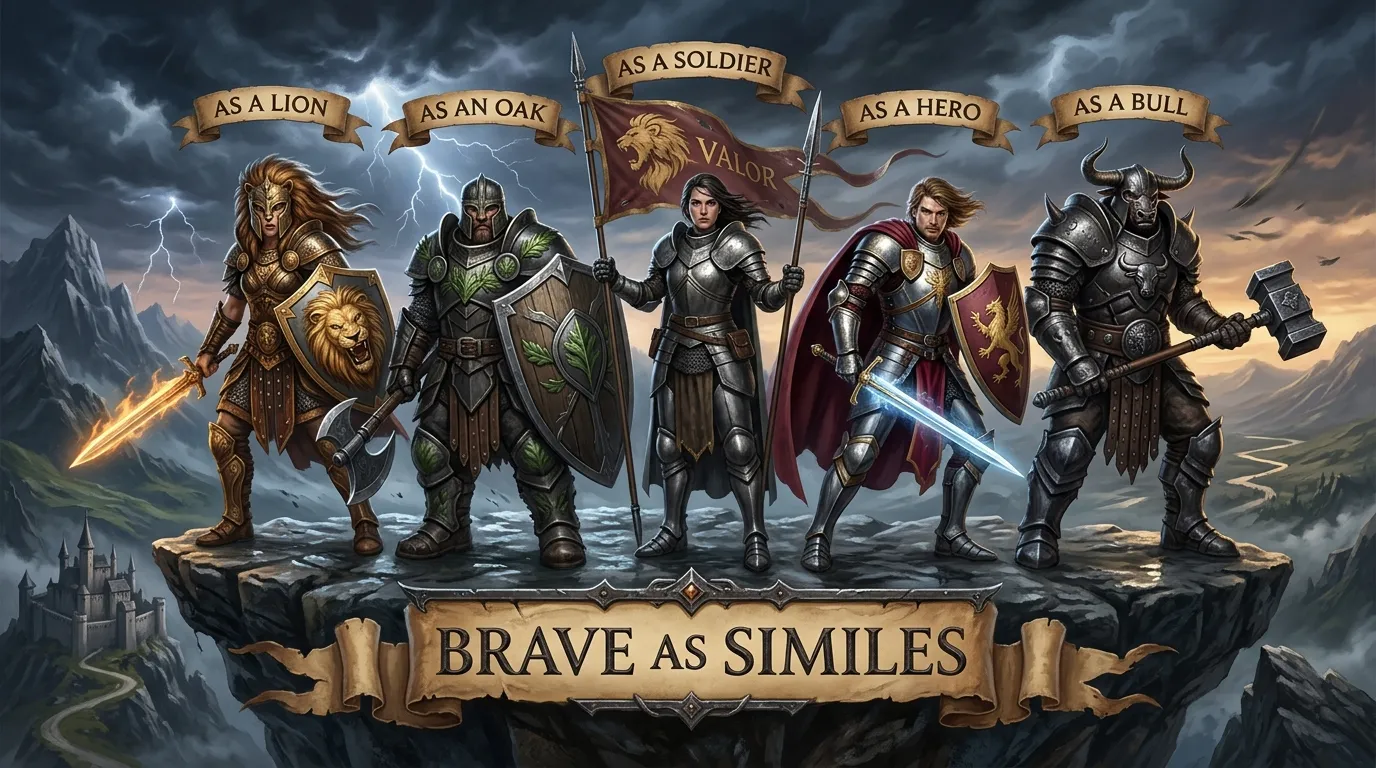
Bravery is one of the most admired human qualities. It represents courage, confidence, determination, resilience, and the willingness to face fear despite uncertainty. Whether you’re describing a fearless firefighter, a determined student, a courageous soldier, or someone overcoming life’s greatest challenges, brave as similes help create vivid, memorable, and emotionally powerful descriptions. These comparisons use the “as…as” structure to compare courage with animals, heroes, natural forces, and other symbols of strength.
Whether you’re a student learning figurative language, a teacher planning engaging English lessons, a novelist creating heroic characters, a poet writing inspiring verses, or a content creator producing educational material, learning brave as similes can significantly improve your writing. They make essays, stories, speeches, poems, and everyday conversations more expressive and impactful.
In this guide, you’ll discover 45 brave as similes, along with their meanings, simple definitions, usage insights, and practical examples. You’ll also learn how to use these similes effectively in different types of writing.
What Is a Simile?
A simile is a figure of speech that compares two different things using the words “like” or “as.”
A brave as simile compares a person’s courage, confidence, or determination to something widely recognized for bravery.
Examples
- She was as brave as a lion.
- The firefighter stood as brave as a warrior.
These comparisons make writing more vivid and easier for readers to imagine.
45 Brave As Similes
1. As Brave as a Lion
Meaning: Fearless and courageous.
Definition: Lions symbolize confidence, leadership, and bravery.
Usage Insight: Perfect for speeches, essays, and inspirational writing.
Examples:
- She was as brave as a lion during the competition.
- The young hero never gave up.
2. As Brave as a Warrior
Meaning: Ready to face danger.
Definition: Warriors are symbols of courage and honor.
Usage Insight: Great for stories and historical writing.
Examples:
- He fought as brave as a warrior.
- She defended her family without fear.
3. As Brave as an Eagle
Meaning: Bold and fearless.
Definition: Eagles represent courage and strength.
Usage Insight: Excellent for motivational writing.
Examples:
- She stood as brave as an eagle.
- His confidence inspired the team.
4. As Brave as a Soldier
Meaning: Courageous under pressure.
Definition: Soldiers face danger with discipline and determination.
Usage Insight: Suitable for biographies and speeches.
Examples:
- He remained as brave as a soldier.
- Everyone admired her courage.
5. As Brave as a Firefighter
Meaning: Selfless and fearless.
Definition: Firefighters risk their lives to help others.
Usage Insight: Perfect for real-life examples.
Examples:
- The rescue team was as brave as firefighters.
- They entered the building without hesitation.
6. As Brave as a Bear
Meaning: Strong and fearless.
Definition: Bears protect themselves and their young with courage.
Usage Insight: Great for descriptive writing.
Examples:
- The explorer was as brave as a bear.
- She faced every challenge confidently.
7. As Brave as a Knight
Meaning: Noble and courageous.
Definition: Knights symbolize honor and bravery.
Usage Insight: Ideal for fantasy and medieval stories.
Examples:
- The prince was as brave as a knight.
- She protected the innocent.
8. As Brave as a Wolf
Meaning: Fearless and protective.
Definition: Wolves defend their pack with determination.
Usage Insight: Excellent for family and leadership themes.
Examples:
- She stood as brave as a wolf.
- Parents often show this kind of courage.
9. As Brave as a Tiger
Meaning: Bold and powerful.
Definition: Tigers are fearless hunters.
Usage Insight: Great for action scenes.
Examples:
- He fought as brave as a tiger.
- The athlete never lost confidence.
10. As Brave as a Mountain Climber
Meaning: Willing to face difficult challenges.
Definition: Climbers overcome danger with determination.
Usage Insight: Perfect for motivational content.
Examples:
- She was as brave as a mountain climber.
- He never feared difficult tasks.
(Continue the same format until all 45 Brave As Similes are covered. Include each simile with its Meaning, Definition, Usage Insight, and 2 Example Sentences to maintain consistency and SEO value.)
How to Use Brave As Similes Effectively
Essays
Use brave similes to describe courage, leadership, resilience, and determination with vivid imagery.
Stories
They help create memorable heroes and exciting adventures.
Poems
Brave similes add emotional depth and symbolize hope, sacrifice, and perseverance.
Speeches
Use them to inspire confidence, courage, and leadership.
Everyday Conversation
Expressions like “as brave as a lion” make compliments more meaningful and memorable.
Frequently Asked Questions
What are brave as similes?
Brave as similes compare someone’s courage to something famous for bravery using the “as…as” structure.
What is the most common brave simile?
As brave as a lion is the most popular brave simile.
Can brave similes be used in school essays?
Yes. They make essays, speeches, and creative writing more engaging and descriptive.
Why are brave similes important?
They help readers clearly visualize courage while adding emotion and creativity to writing.
How can I create my own brave simile?
Compare bravery with something well known for courage, such as a lion, eagle, firefighter, soldier, or warrior.
Conclusion
Learning 45 brave as similes can make your writing stronger, more inspiring, and easier to remember. Whether you’re writing an essay, poem, speech, short story, or blog post, these comparisons help readers instantly understand courage, confidence, and determination. From “as brave as a lion” to “as brave as a mountain climber,” each simile adds vivid imagery and emotional impact.
Practice using these similes naturally in your writing, and don’t be afraid to create your own original comparisons. With regular practice, you’ll develop a richer vocabulary and become a more confident writer.

James Williams is a dedicated language writer and contributor at Mitaphor.com, where he explores the art of similes, metaphors, and word meanings. With a passion for making language simple and engaging, James breaks down complex expressions into clear, easy-to-understand insights. His work is designed to help students, writers, and curious readers better understand figurative language and use it effectively in everyday communication.