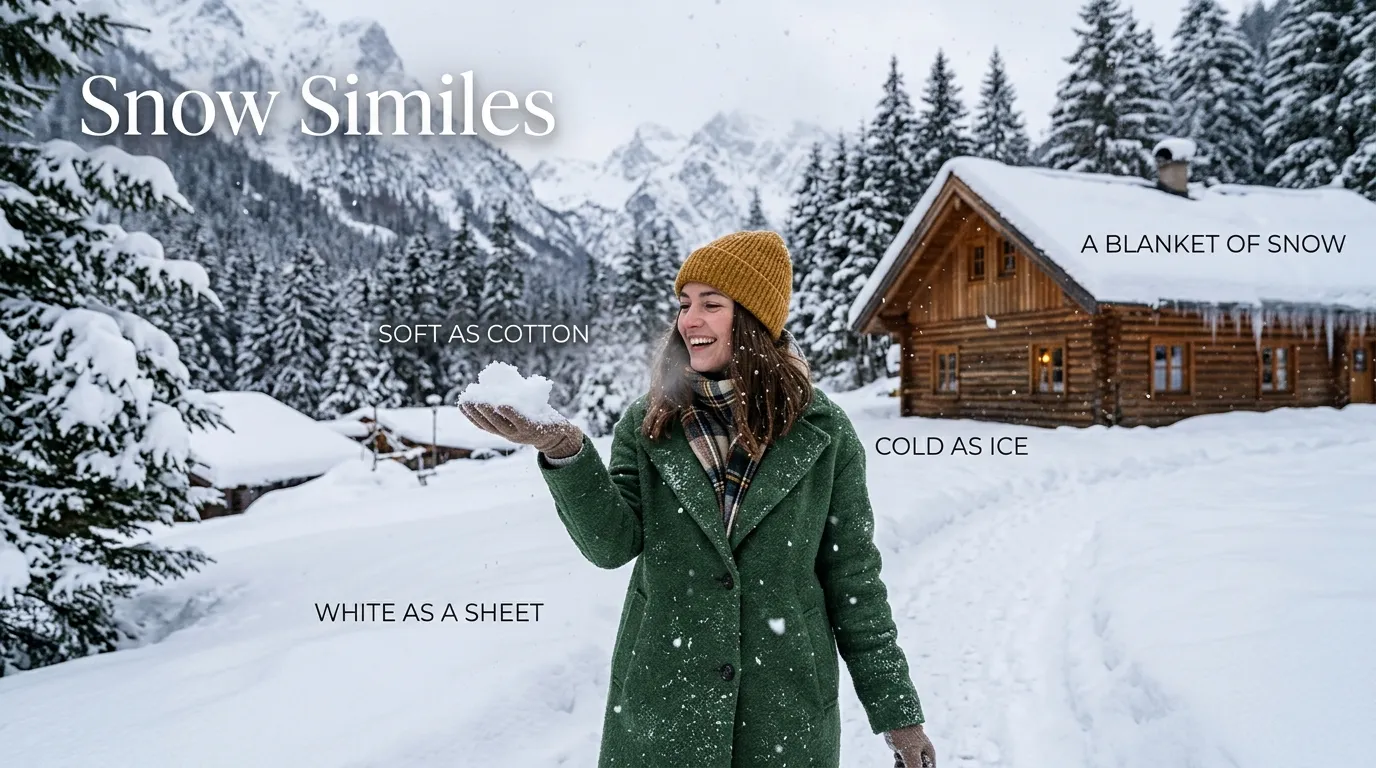
Snow has inspired writers, poets, and storytellers for centuries with its beauty, silence, purity, and magical charm. From gently falling snowflakes to snow-covered mountains and sparkling winter landscapes, snow creates vivid imagery that brings emotions and scenes to life. One of the most effective ways to capture this beauty is through snow similes. A simile compares two different things using the words “like” or “as,” helping readers visualize emotions, people, and experiences through memorable comparisons. Whether you’re describing peace, innocence, beauty, coldness, purity, or quietness, snow similes make your writing more expressive and engaging.
Whether you’re a student learning figurative language, a teacher planning English lessons, a novelist writing descriptive scenes, a poet creating emotional verses, or a blogger producing educational content, mastering snow similes can improve your writing. These comparisons are ideal for essays, speeches, poems, stories, greeting cards, and creative projects because they add elegance, emotion, and vivid imagery.
In this comprehensive guide, you’ll discover some of the best snow similes, learn what a simile is, explore meaningful examples, understand when and where to use them, and find practical tips for incorporating snow similes into creative writing, literature, speeches, essays, and everyday communication.
What Is a Simile?
A simile is a figure of speech that compares two different things using the words “like” or “as.” Similes help readers understand ideas more clearly by connecting them to familiar images.
Snow similes compare people, emotions, actions, or situations to snow, snowflakes, snowfall, frost, ice, and winter landscapes to create vivid and memorable descriptions.
Simple Examples
- Her heart was as pure as fresh snow.
- The feathers floated like falling snowflakes.
These comparisons help readers visualize scenes with greater clarity and emotion.
80 Snow Similes
1. As White as Fresh Snow
Meaning: Extremely clean, pure, or bright.
Definition: Freshly fallen snow symbolizes purity, innocence, and cleanliness.
Usage Insight: Perfect for descriptive essays, poetry, stories, and greeting cards. Suitable for both formal and creative writing.
Examples:
- Her dress was as white as fresh snow.
- The mountain peaks looked beautiful at sunrise.
2. Like Snowflakes Falling from the Sky
Meaning: Gentle, graceful, and peaceful.
Definition: Falling snowflakes represent softness and quiet beauty.
Usage Insight: Excellent for poetry, romance, and descriptive storytelling.
Examples:
- Her movements were like snowflakes falling from the sky.
- The dancers floated across the stage.
3. As Quiet as a Snowy Morning
Meaning: Completely peaceful and silent.
Definition: Snow-covered landscapes often create a calm and quiet atmosphere.
Usage Insight: Great for reflective essays, novels, and emotional writing.
Examples:
- The classroom became as quiet as a snowy morning.
- Everyone listened carefully to the speaker.
4. Like Frost Covering the Ground
Meaning: Gradually spreading or appearing.
Definition: Frost forms slowly and evenly, symbolizing gentle change.
Usage Insight: Ideal for descriptive writing and seasonal stories.
Examples:
- Happiness spread like frost covering the ground.
- Excitement reached every corner of the room.
5. As Pure as Newly Fallen Snow
Meaning: Completely innocent and sincere.
Definition: Untouched snow symbolizes honesty, goodness, and purity.
Usage Insight: Perfect for inspirational speeches, literature, and children’s stories.
Examples:
- Her intentions were as pure as newly fallen snow.
- The child’s smile warmed everyone’s heart.
6. Like Ice Melting in Spring
Meaning: Gradually becoming softer or kinder.
Definition: Melting ice symbolizes emotional healing and positive change.
Usage Insight: Excellent for personal growth stories and reflective essays.
Examples:
- His anger disappeared like ice melting in spring.
- Their friendship slowly grew stronger.
7. As Cold as Winter Snow
Meaning: Emotionally distant or physically freezing.
Definition: Winter snow often symbolizes coldness and emotional separation.
Usage Insight: Great for novels, dramatic writing, and descriptive essays.
Examples:
- His reply was as cold as winter snow.
- The icy wind made everyone shiver.
8. Like Snow Covering the Mountains
Meaning: Completely surrounding or protecting something.
Definition: Snow blankets the landscape, symbolizing peace and protection.
Usage Insight: Perfect for travel writing, storytelling, and poetry.
Examples:
- Hope spread like snow covering the mountains.
- The peaceful silence comforted everyone.
9. As Delicate as a Snowflake
Meaning: Fragile, graceful, and unique.
Definition: Every snowflake has a unique design, making it a symbol of individuality and beauty.
Usage Insight: Ideal for romance, poetry, and descriptive writing.
Examples:
- Her touch was as delicate as a snowflake.
- Every handmade ornament was unique.
10. Like a Blizzard Sweeping Across the Land
Meaning: Powerful, overwhelming, and unstoppable.
Definition: A blizzard symbolizes strength, intensity, and dramatic change.
Usage Insight: Excellent for action stories, motivational speeches, and dramatic writing.
Examples:
- The team’s determination spread like a blizzard sweeping across the land.
- Excitement filled the stadium within minutes.
How to Use These Snow Similes Effectively
Snow similes are most effective when they naturally match the mood and purpose of your writing.
Essays
Use snow-inspired comparisons to describe peace, purity, beauty, change, and emotional experiences with vivid imagery.
Stories
Snow similes help readers imagine winter landscapes, emotional moments, and memorable scenes.
Poems
Snow symbolizes purity, silence, hope, and reflection, making it an ideal theme for poetry.
Speeches
Inspirational speeches become more memorable when snow similes reinforce themes of renewal, resilience, and fresh beginnings.
Content Writing
Whether you’re writing blogs, educational resources, holiday messages, or creative stories, snow similes make your writing more engaging, elegant, and emotionally meaningful.
Frequently Asked Questions
What are snow similes?
Snow similes are comparisons that use “like” or “as” to compare people, emotions, actions, or situations with snow, snowflakes, frost, ice, or other winter elements.
Why are snow similes important?
They create vivid imagery, strengthen emotional expression, and make descriptive writing more memorable and engaging.
What’s the difference between a snow simile and a snow metaphor?
A snow simile uses “like” or “as,” while a snow metaphor directly compares something to snow without using comparison words.
Can snow similes be used in formal writing?
Yes. They work well in speeches, descriptive essays, literary analysis, and creative writing assignments when they support the topic naturally.
How can I create my own snow similes?
Think about qualities such as purity, calmness, beauty, coldness, or uniqueness, then compare them to snow or winter elements using “like” or “as.” Choose imagery that is clear, vivid, and meaningful.
Conclusion
Mastering snow similes is a wonderful way to make your writing more elegant, descriptive, and emotionally engaging. These winter-inspired comparisons use the beauty of snowflakes, frost, icy landscapes, and peaceful snowfall to express emotions, personalities, and experiences with vivid imagery. Whether you’re writing about purity, hope, peace, resilience, or transformation, snow similes help turn ordinary descriptions into memorable expressions that capture readers’ imaginations.
Whether you’re a student improving your figurative language skills, a teacher introducing literary devices, a poet writing expressive verses, a novelist creating unforgettable winter scenes, or a content creator publishing educational articles, learning the best snow similes will strengthen your creativity and communication. Practice using these comparisons naturally, observe the beauty and symbolism of winter, and create your own original similes inspired by snow-covered landscapes. With regular practice, snow similes will become a valuable part of your writing toolkit, helping you create content that inspires, informs, and captivates readers.

Chris Woak is a passionate language enthusiast and the creative voice behind Mitaphor.com. With a deep interest in similes, metaphors, and word meanings, Chris simplifies complex expressions into clear, engaging explanations that readers of all levels can understand. His work focuses on helping students, writers, and language lovers explore the power of figurative language and improve their communication skills.