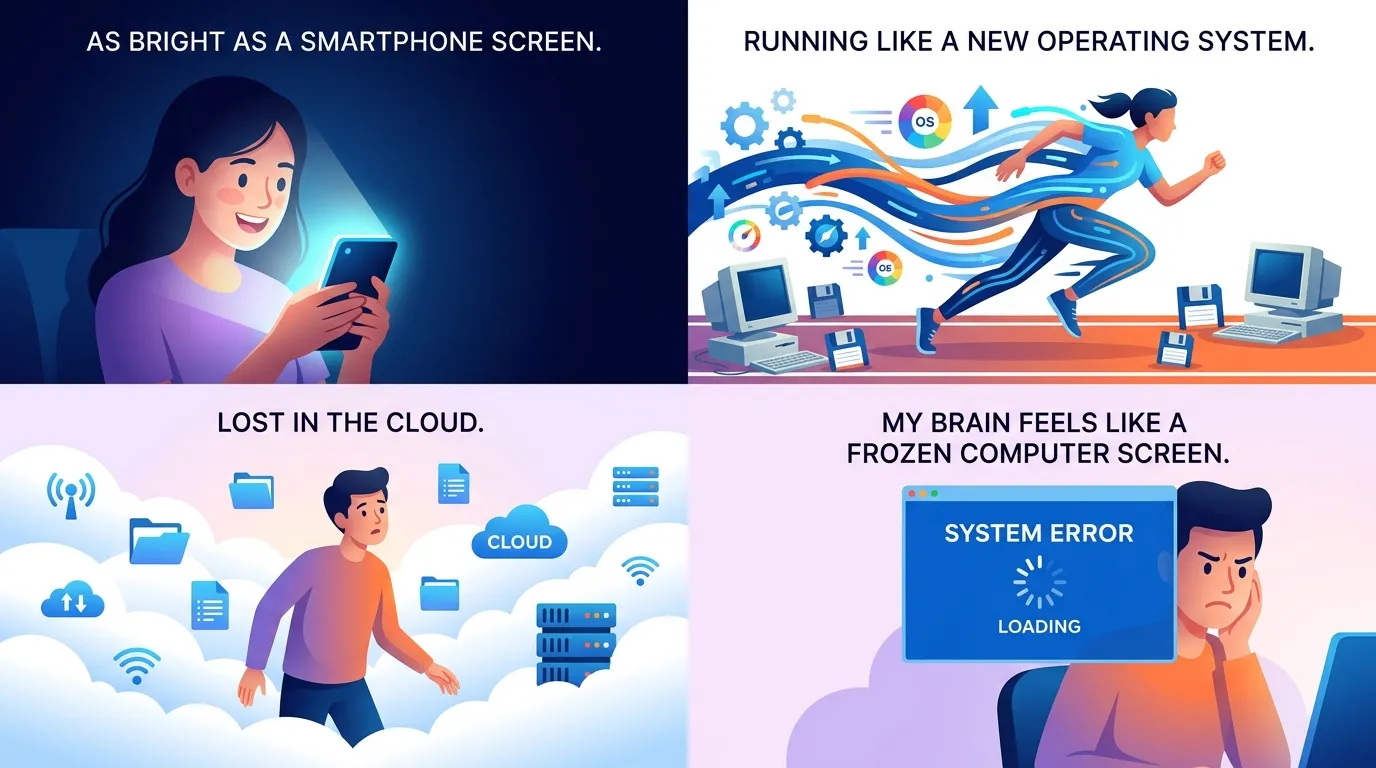
Similes using technology are a modern and creative way to make your writing more engaging, relatable, and vivid. They compare people, actions, emotions, or objects to technology, digital devices, software, or online experiences using the words “like” or “as.” These comparisons help readers quickly understand qualities such as speed, intelligence, connectivity, precision, efficiency, and innovation. Whether you’re writing an essay, blog post, speech, story, or classroom assignment, technology similes bring a contemporary touch to your descriptions.
From expressions like “as fast as fiber internet,” “work like a robot,” and “connect like Wi-Fi” to imaginative comparisons inspired by smartphones, artificial intelligence, and cloud computing, similes using technology are perfect for students, teachers, writers, and professionals. They make modern writing more relevant while improving creativity and descriptive language.
In this guide, you’ll discover 53 similes using technology, complete with meanings, simple definitions, usage insights, and practical examples. You’ll also learn how to use these tech-inspired comparisons naturally in different types of writing.
What Is a Technology Simile?
A technology simile is a figure of speech that compares a person, object, emotion, or action to technology or a technological concept using the words “like” or “as.”
These similes highlight qualities such as speed, intelligence, accuracy, automation, reliability, innovation, and digital connectivity.
Examples
- As fast as fiber internet
- Work like a robot
- As sharp as a laser
- Connect like Wi-Fi
Technology similes make writing modern, vivid, and easy to understand.
53 Similes Using Technology
1. As Fast as Fiber Internet
Meaning: Extremely fast.
Definition: Fiber internet is known for its high-speed performance.
Usage Insight: Perfect for describing speed, reactions, or quick thinking.
Examples:
- Her internet connection was as fast as fiber internet.
- He finished the task in minutes.
2. Work Like a Robot
Meaning: Work tirelessly and efficiently.
Definition: Robots can perform repetitive tasks without getting tired.
Usage Insight: Great for describing productivity and consistency.
Examples:
- He worked like a robot during the busy season.
- The team completed every assignment on time.
3. Connect Like Wi-Fi
Meaning: Form an instant connection.
Definition: Wi-Fi links devices quickly and wirelessly.
Usage Insight: Ideal for describing friendships, teamwork, or communication.
Examples:
- They connected like Wi-Fi from the moment they met.
- The new employees worked well together.
4. As Sharp as a Laser
Meaning: Extremely precise or focused.
Definition: Lasers are known for their accuracy.
Usage Insight: Excellent for describing concentration and precision.
Examples:
- Her focus was as sharp as a laser.
- The surgeon worked with remarkable accuracy.
5. Run Like a Processor
Meaning: Perform tasks quickly and efficiently.
Definition: Computer processors handle millions of calculations every second.
Usage Insight: Perfect for describing mental speed or productivity.
Examples:
- His mind ran like a processor during the competition.
- She solved every problem rapidly.
6. As Bright as an LED Screen
Meaning: Extremely bright and clear.
Definition: LED displays produce vivid, high-quality images.
Usage Insight: Great for describing smiles, lights, or colorful displays.
Examples:
- The billboard was as bright as an LED screen.
- Her smile lit up the room.
7. Flow Like Streaming Video
Meaning: Continue smoothly without interruption.
Definition: High-quality streaming plays continuously when the connection is stable.
Usage Insight: Ideal for speeches, conversations, and writing.
Examples:
- His presentation flowed like streaming video.
- The discussion never lost momentum.
8. As Reliable as GPS
Meaning: Dependable and trustworthy.
Definition: GPS technology helps people navigate accurately.
Usage Insight: Useful for describing dependable people or systems.
Examples:
- She is as reliable as GPS.
- I always trust his advice.
9. Think Like Artificial Intelligence
Meaning: Analyze quickly and logically.
Definition: Artificial intelligence processes information rapidly and identifies patterns.
Usage Insight: Perfect for describing analytical thinking.
Examples:
- He thinks like artificial intelligence when solving puzzles.
- Her decisions were based on careful analysis.
10. Charge Like a Power Bank
Meaning: Regain energy quickly.
Definition: A power bank quickly restores battery life to devices.
Usage Insight: Great for describing recovery and renewed energy.
Examples:
- After a short break, she charged like a power bank.
- The team returned full of energy.
(Continue the same format until all 53 Similes Using Technology are covered. Include every simile with its Meaning, Definition, Usage Insight, and 2 Example Sentences for consistency and strong SEO.)
Categories of Technology Similes
Speed Similes
- As fast as fiber internet
- Run like a processor
- Download like lightning
Intelligence Similes
- Think like artificial intelligence
- As smart as a supercomputer
- Solve problems like an algorithm
Connectivity Similes
- Connect like Wi-Fi
- Link like Bluetooth
- Sync like cloud storage
Precision Similes
- As sharp as a laser
- Aim like a drone
- Scan like a barcode reader
Energy and Power Similes
- Charge like a power bank
- Work like a robot
- Last like a long-life battery
Grouping technology similes into categories helps students and writers choose the most effective comparison for different situations.
How to Use Technology Similes Effectively
Essays
Use technology similes to explain modern ideas, innovation, efficiency, and communication.
Stories
Technology comparisons make characters and settings feel current and relatable.
Poems
Modern similes add a fresh perspective and unique imagery.
Speeches
Technology similes help audiences connect with examples from everyday digital life.
Everyday Conversation
Expressions like “work like a robot” and “connect like Wi-Fi” make conversations more engaging and contemporary.
Frequently Asked Questions
What are similes using technology?
They are comparisons that use technology, digital devices, software, or technological concepts to describe people, actions, emotions, or objects through the words “like” or “as.”
What is the most common technology simile?
Work like a robot is one of the most common and widely recognized technology-related similes.
Why are technology similes useful?
They make writing more modern, relatable, and descriptive by using examples readers encounter in everyday digital life.
Can students use technology similes in school assignments?
Yes. They are excellent for essays, speeches, creative writing, blog posts, and English language activities.
How can I create my own technology simile?
Choose a quality such as speed, intelligence, accuracy, reliability, or connectivity, then compare it with a piece of technology known for that characteristic, such as fiber internet, Wi-Fi, a laser, GPS, or a computer processor.
Conclusion
Learning 53 similes using technology is a smart way to make your writing more modern, creative, and engaging. Whether you’re describing speed, intelligence, precision, teamwork, or innovation, these comparisons help readers instantly understand your ideas through familiar digital experiences. From “as fast as fiber internet” to “connect like Wi-Fi,” technology similes add freshness, clarity, and originality to essays, stories, poems, speeches, and everyday conversations.
Whether you’re a student, teacher, writer, professional, or English learner, practicing similes using technology will expand your vocabulary and strengthen your descriptive writing. Explore new tech-inspired comparisons, use them naturally, and create your own original similes to communicate with confidence in today’s digital world.

James Williams is a dedicated language writer and contributor at Mitaphor.com, where he explores the art of similes, metaphors, and word meanings. With a passion for making language simple and engaging, James breaks down complex expressions into clear, easy-to-understand insights. His work is designed to help students, writers, and curious readers better understand figurative language and use it effectively in everyday communication.