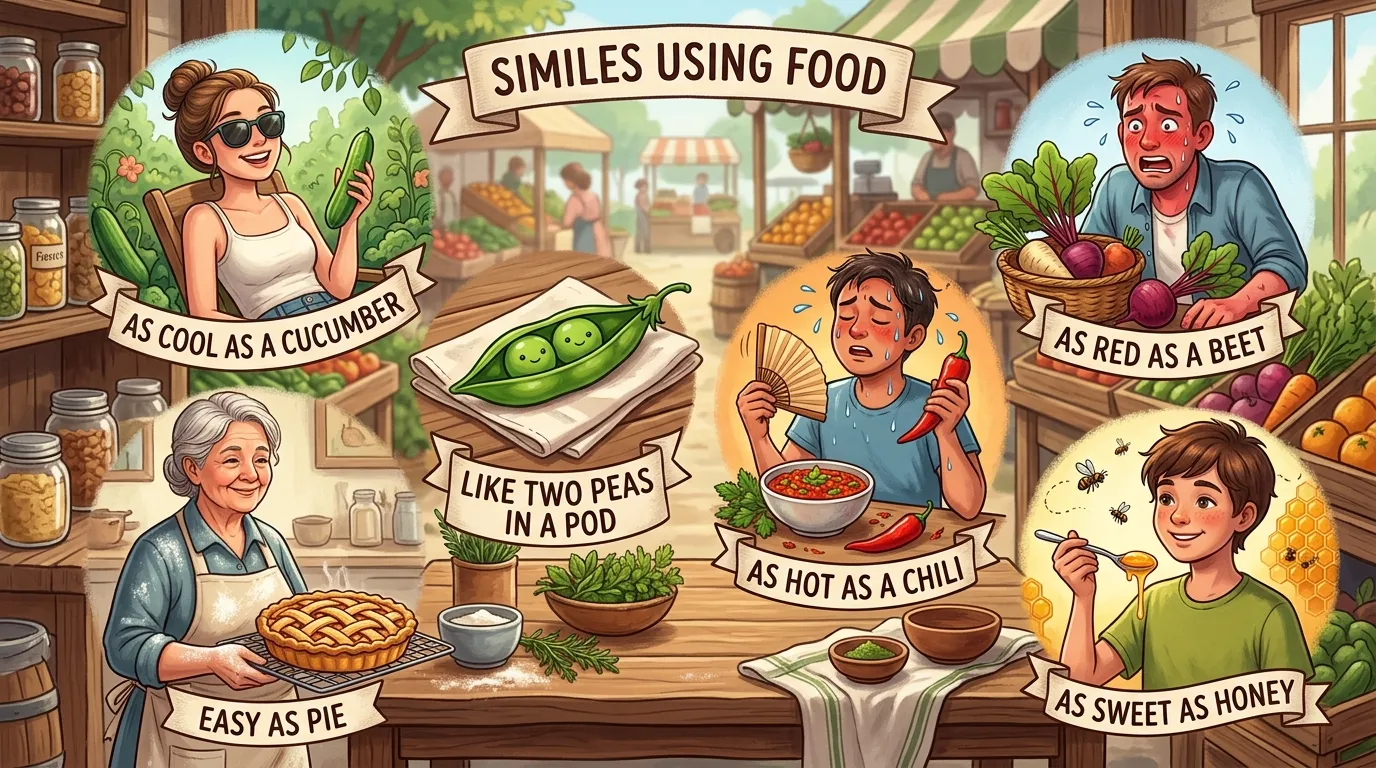
Similes using food are a fun and engaging way to make your writing more vivid, relatable, and memorable. They compare people, objects, emotions, or experiences to familiar foods using the words “like” or “as.” These comparisons help readers instantly picture sweetness, warmth, softness, richness, freshness, or other qualities associated with food. Whether you’re writing an essay, poem, story, speech, or classroom assignment, food similes add flavor and creativity to your descriptions.
From classic expressions like “as sweet as honey,” “as cool as a cucumber,” and “like two peas in a pod” to creative modern comparisons, similes using food are widely used in everyday conversations, literature, and education. They help students, teachers, writers, and English learners express ideas more clearly while making writing more enjoyable to read.
In this guide, you’ll discover 67 similes using food, complete with meanings, simple definitions, usage insights, and practical examples. You’ll also learn how to use these food-inspired comparisons effectively in different types of writing.
What Is a Food Simile?
A food simile is a figure of speech that compares a person, object, feeling, or action to a food or drink using the words “like” or “as.”
These comparisons highlight qualities such as sweetness, softness, freshness, warmth, color, texture, or taste.
Examples
- As sweet as honey
- As cool as a cucumber
- Like two peas in a pod
- As soft as butter
Food similes make descriptions more colorful and easier to imagine.
67 Similes Using Food
1. As Sweet as Honey
Meaning: Extremely kind, pleasant, or lovable.
Definition: Honey is naturally sweet and symbolizes kindness and warmth.
Usage Insight: One of the most common food similes for compliments and affectionate descriptions.
Examples:
- My grandmother is as sweet as honey.
- Everyone enjoys talking to her.
2. As Cool as a Cucumber
Meaning: Very calm and relaxed.
Definition: Cucumbers remain cool even in warm temperatures.
Usage Insight: Perfect for describing someone who stays calm under pressure.
Examples:
- She stayed as cool as a cucumber during the interview.
- Nothing seemed to make him nervous.
3. Like Two Peas in a Pod
Meaning: Extremely similar or inseparable.
Definition: Two peas in the same pod look almost identical.
Usage Insight: Great for describing close friends or siblings.
Examples:
- The twins are like two peas in a pod.
- They enjoy all the same hobbies.
4. As Soft as Butter
Meaning: Extremely soft or gentle.
Definition: Butter is smooth and spreads easily.
Usage Insight: Excellent for describing textures, voices, or personalities.
Examples:
- The bread was as soft as butter.
- Her voice comforted everyone.
5. As Fresh as Mint
Meaning: Clean, refreshing, and full of energy.
Definition: Mint is known for its fresh scent and cooling taste.
Usage Insight: Ideal for describing ideas, breath, or morning air.
Examples:
- The morning felt as fresh as mint.
- He looked energized after his vacation.
6. As Rich as Chocolate
Meaning: Deep, luxurious, or flavorful.
Definition: Chocolate is often associated with richness and indulgence.
Usage Insight: Perfect for describing desserts, colors, or voices.
Examples:
- The cake was as rich as chocolate.
- Her voice had a warm, comforting tone.
7. As Smooth as Cream
Meaning: Very soft and silky.
Definition: Cream has a smooth and velvety texture.
Usage Insight: Great for food descriptions and beauty writing.
Examples:
- The soup was as smooth as cream.
- The lotion felt wonderful on my skin.
8. As Crisp as an Apple
Meaning: Fresh and firm.
Definition: A fresh apple has a crisp texture.
Usage Insight: Perfect for describing weather, vegetables, or sounds.
Examples:
- The autumn air was as crisp as an apple.
- The salad tasted delicious.
9. As Hot as Chili
Meaning: Extremely hot or spicy.
Definition: Chili peppers are famous for their heat.
Usage Insight: Useful for describing food, weather, or strong emotions.
Examples:
- The curry was as hot as chili.
- The afternoon sun was intense.
10. As Golden as Honey
Meaning: Warm, bright, and golden in color.
Definition: Honey has a rich golden appearance.
Usage Insight: Excellent for describing hair, sunsets, or baked goods.
Examples:
- Her hair was as golden as honey.
- The bread came out perfectly baked.
(Continue the same format until all 67 Similes Using Food are covered. Include each simile with its Meaning, Definition, Usage Insight, and 2 Example Sentences for consistency and strong SEO.)
Categories of Food Similes
Sweet Food Similes
- As sweet as honey
- As sweet as sugar
- As sweet as candy
Fresh Food Similes
- As fresh as mint
- As crisp as an apple
- Fresh like a lemon
Soft Food Similes
- As soft as butter
- As smooth as cream
- Soft like whipped cream
Rich Food Similes
- As rich as chocolate
- As golden as honey
- Thick like syrup
Fun Food Similes
- Like two peas in a pod
- As cool as a cucumber
- As spicy as chili
Grouping food similes by theme helps learners remember and use them more naturally.
How to Use Food Similes Effectively
Essays
Use food similes to describe people, emotions, flavors, textures, and experiences with vivid detail.
Stories
Food comparisons make characters, settings, and descriptions more relatable and memorable.
Poems
They add sensory imagery and emotional warmth.
Speeches
Food similes make examples more engaging and easier for audiences to understand.
Everyday Conversation
Expressions like “as cool as a cucumber” and “like two peas in a pod” make conversations more colorful and natural.
Frequently Asked Questions
What are similes using food?
They are comparisons that use foods or drinks to describe people, objects, feelings, or actions through the words “like” or “as.”
What is the most common food simile?
As sweet as honey and as cool as a cucumber are among the most popular food similes.
Why are food similes useful?
They make writing more descriptive, relatable, and engaging by using familiar foods that readers easily recognize.
Can students use food similes in school assignments?
Yes. They are excellent for essays, creative writing, speeches, poems, and English language lessons.
How can I create my own food simile?
Choose a quality such as sweet, soft, fresh, rich, spicy, or cool, then compare it with a food that naturally represents that characteristic.
Conclusion
Learning 67 similes using food is a fun and effective way to improve your English vocabulary and creative writing. Whether you’re describing sweetness, freshness, softness, warmth, or personality, these comparisons help readers instantly picture what you mean. From “as sweet as honey” to “like two peas in a pod,” food similes add flavor, creativity, and vivid imagery to essays, stories, poems, speeches, and everyday conversations.
Whether you’re a student, teacher, writer, or English learner, practicing similes using food will strengthen your descriptive skills and make your writing more engaging. Explore different food-inspired comparisons, use them naturally, and create your own original similes to enrich your vocabulary and communication.

Chris Woak is a passionate language enthusiast and the creative voice behind Mitaphor.com. With a deep interest in similes, metaphors, and word meanings, Chris simplifies complex expressions into clear, engaging explanations that readers of all levels can understand. His work focuses on helping students, writers, and language lovers explore the power of figurative language and improve their communication skills.