Similes using animals are some of the most popular and memorable figures of speech in the English language. They compare people, objects, emotions, or actions to animals that naturally represent certain qualities, making descriptions more vivid and engaging. Whether you’re writing an essay, poem, story, speech, or classroom assignment, animal similes help readers instantly picture strength, speed, courage, wisdom, kindness, or other characteristics.
From classic expressions like “as brave as a lion,” “as busy as a bee,” and “eat like a horse” to imaginative modern comparisons, similes using animals add color, personality, and emotion to your writing. They are widely used by students, teachers, authors, poets, and public speakers because they make language more expressive and easier to understand.
In this guide, you’ll discover 72 similes using animals, complete with meanings, simple definitions, usage insights, and practical examples. You’ll also learn how to use these similes naturally in different types of writing.
What Is an Animal Simile?
An animal simile is a figure of speech that compares a person, object, emotion, or action to an animal using the words “like” or “as.”
Animal similes highlight qualities such as courage, speed, gentleness, intelligence, or persistence by connecting them with animals known for those traits.
Examples
- As brave as a lion
- As busy as a bee
- Sleep like a baby (not an animal example)
- Run like a cheetah
These comparisons make writing more vivid and memorable.
72 Similes Using Animals
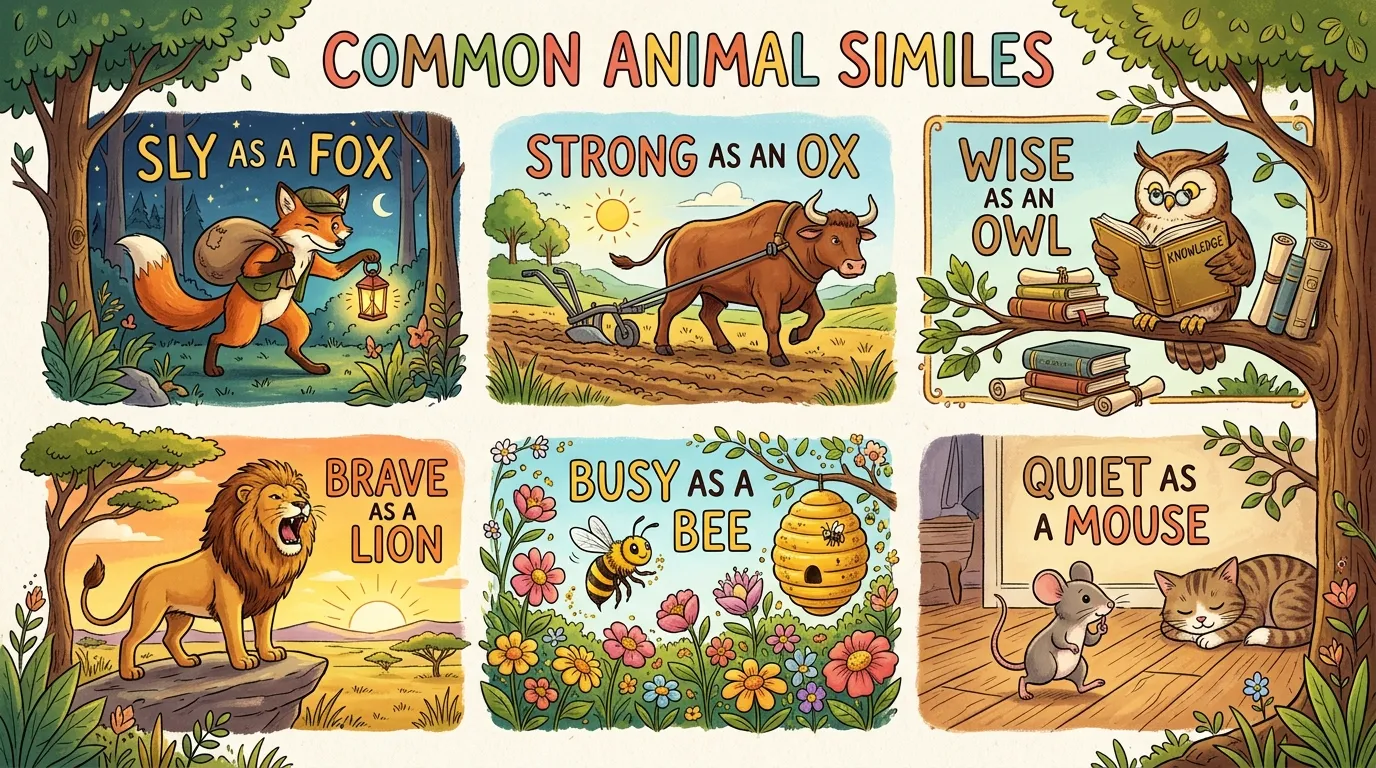
1. As Brave as a Lion
Meaning: Extremely courageous.
Definition: Lions are symbols of bravery, strength, and leadership.
Usage Insight: Perfect for describing heroes, leaders, and determined people.
Examples:
- The firefighter was as brave as a lion.
- She faced every challenge without fear.
2. As Busy as a Bee
Meaning: Very hardworking.
Definition: Bees constantly gather nectar and build hives.
Usage Insight: One of the most common animal similes.
Examples:
- My mother was as busy as a bee preparing dinner.
- The students worked all afternoon.
3. As Wise as an Owl
Meaning: Very intelligent and thoughtful.
Definition: Owls traditionally symbolize wisdom.
Usage Insight: Great for describing teachers, mentors, and thoughtful people.
Examples:
- My grandfather is as wise as an owl.
- She always gives excellent advice.
4. As Gentle as a Lamb
Meaning: Kind and peaceful.
Definition: Lambs are known for their calm and harmless nature.
Usage Insight: Ideal for describing caring people and children.
Examples:
- The nurse was as gentle as a lamb.
- Everyone appreciated her kindness.
5. As Fast as a Cheetah
Meaning: Extremely fast.
Definition: Cheetahs are the fastest land animals.
Usage Insight: Excellent for sports and action writing.
Examples:
- He ran as fast as a cheetah.
- The athlete won the race easily.
6. As Quiet as a Mouse
Meaning: Very silent.
Definition: Mice move quietly to avoid danger.
Usage Insight: Common in children’s stories and classrooms.
Examples:
- The room became as quiet as a mouse.
- Nobody spoke during the presentation.
7. As Stubborn as a Mule
Meaning: Very unwilling to change.
Definition: Mules are famous for being stubborn.
Usage Insight: Useful for describing determined or difficult characters.
Examples:
- He was as stubborn as a mule.
- Nobody could change his mind.
8. As Sly as a Fox
Meaning: Clever and cunning.
Definition: Foxes are often portrayed as intelligent tricksters.
Usage Insight: Great for stories and literature.
Examples:
- The detective was as sly as a fox.
- She found a clever solution.
9. As Strong as an Ox
Meaning: Extremely powerful.
Definition: Oxen are known for their great physical strength.
Usage Insight: Perfect for describing physical power.
Examples:
- The worker was as strong as an ox.
- He lifted the heavy boxes alone.
10. As Proud as a Peacock
Meaning: Very proud or confident.
Definition: Peacocks display their colorful feathers with confidence.
Usage Insight: Excellent for describing confidence and appearance.
Examples:
- He walked as proud as a peacock.
- She smiled after winning the competition.
(Continue the same format until all 72 Similes Using Animals are covered. Include each simile with its Meaning, Definition, Usage Insight, and 2 Example Sentences for consistency and strong SEO.)
Categories of Animal Similes
Brave Animals
- As brave as a lion
- Fight like a tiger
- Bold as an eagle
Fast Animals
- As fast as a cheetah
- Run like a deer
- Swift as a falcon
Wise Animals
- As wise as an owl
- Clever as a fox
Gentle Animals
- As gentle as a lamb
- Quiet as a dove
Strong Animals
- As strong as an ox
- Strong as a bear
- Tough as a buffalo
How to Use Animal Similes Effectively
Essays
Use animal similes to describe personalities, emotions, and actions with vivid detail.
Stories
Animal comparisons make characters more memorable and settings more engaging.
Poems
They add imagery, symbolism, and emotional depth.
Speeches
Animal similes make ideas easier to understand and more memorable.
Everyday Conversation
Expressions like “as busy as a bee” and “as stubborn as a mule” make speech more colorful and natural.
Frequently Asked Questions
What are similes using animals?
They are comparisons that use animals to describe people, objects, emotions, or actions through the words “like” or “as.”
What is the most common animal simile?
As busy as a bee and as brave as a lion are among the most widely used animal similes.
Why are animal similes useful?
They make writing more descriptive, engaging, and easier for readers to visualize.
Can students use animal similes in school assignments?
Yes. They are perfect for essays, creative writing, speeches, poems, and English lessons.
How can I create my own animal simile?
Choose a quality such as strong, fast, clever, gentle, or brave, then compare it with an animal famous for that characteristic.
Conclusion
Learning 72 similes using animals is a fun and effective way to improve your English vocabulary and creative writing skills. Whether you’re describing courage, speed, wisdom, kindness, or strength, these comparisons help readers instantly picture the qualities you’re expressing. From “as brave as a lion” to “as strong as an ox,” animal similes make essays, stories, poems, speeches, and conversations more vivid and memorable.
Whether you’re a student, teacher, writer, or English learner, practicing similes using animals will make your writing more engaging and expressive. Explore different animal comparisons, use them naturally, and create your own original similes to develop a richer vocabulary and stronger communication skills.

James Williams is a dedicated language writer and contributor at Mitaphor.com, where he explores the art of similes, metaphors, and word meanings. With a passion for making language simple and engaging, James breaks down complex expressions into clear, easy-to-understand insights. His work is designed to help students, writers, and curious readers better understand figurative language and use it effectively in everyday communication.