Sometimes, the shortest expressions make the strongest impact. Short similes are simple comparisons that use the words “like” or “as” to describe people, emotions, objects, or situations in a clear and memorable way. Even though they contain only a few words, these comparisons create vivid mental images that make writing and conversations more engaging. From classic expressions like “as light as a feather” to modern comparisons used in everyday speech, short similes are easy to understand, remember, and use in almost any type of writing.
Whether you’re a student learning figurative language, a teacher preparing English lessons, a writer looking for concise descriptions, or a blogger creating educational content, mastering short similes can improve your communication skills. Their simplicity makes them perfect for essays, stories, poems, speeches, captions, and everyday conversations without making your writing feel complicated or repetitive.
In this comprehensive guide, you’ll discover some of the best short similes, learn what a simile is, explore meaningful examples, understand when and where to use them, and find practical tips for incorporating short similes into different forms of writing.
What Is a Simile?
A simile is a figure of speech that compares two different things using the words “like” or “as.” Similes help readers and listeners understand ideas more clearly by connecting them to familiar images or experiences.
Short similes follow the same rule but use fewer words, making them quick, memorable, and effective.
Simple Examples
- As bright as gold.
- Like falling rain.
These brief comparisons still create strong mental images despite their simplicity.
58 Short Similes
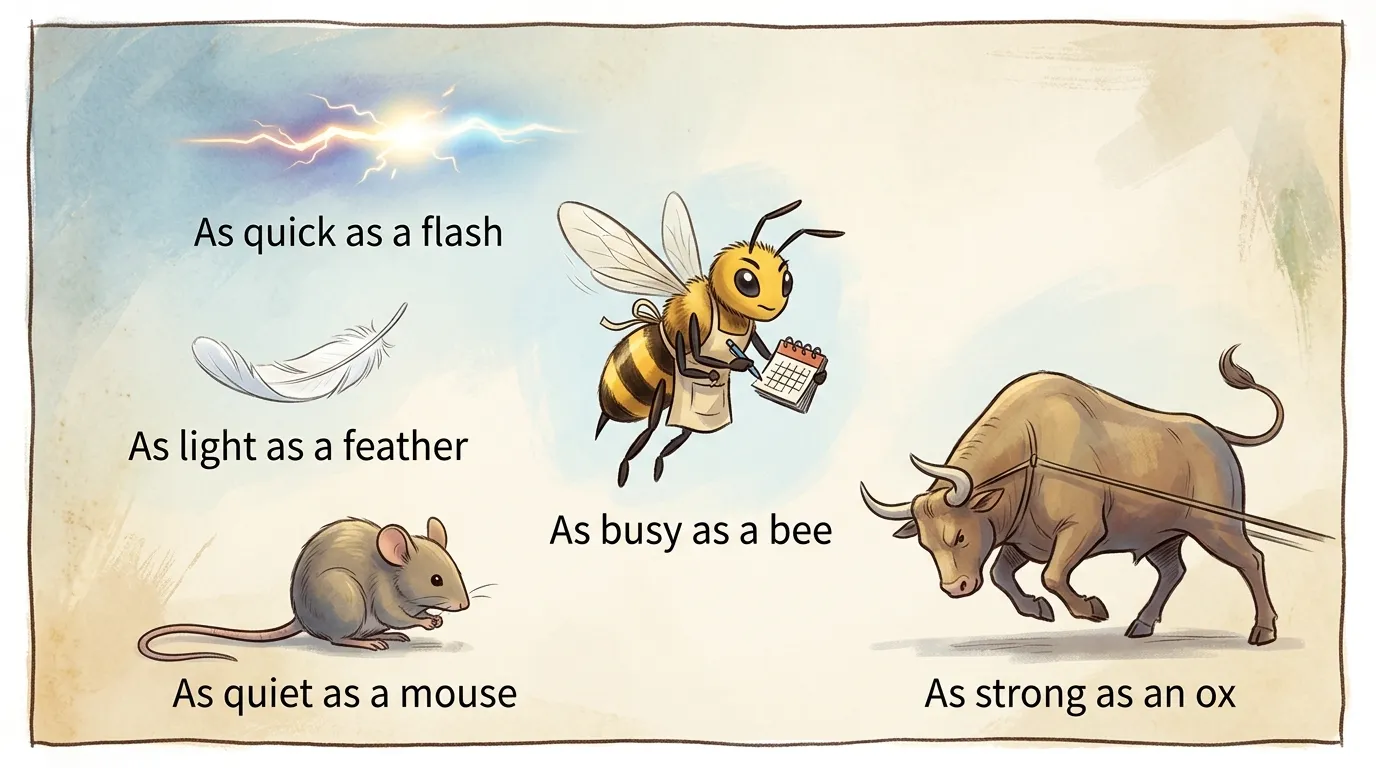
1. As Light as a Feather
Meaning: Extremely light.
Definition: Feathers weigh very little, making this one of the most familiar short similes.
Usage Insight: Perfect for essays, conversations, product descriptions, and creative writing. Suitable for both formal and casual communication.
Examples:
- The scarf was as light as a feather.
- The balloon floated gently into the sky.
2. As Busy as a Bee
Meaning: Very hardworking.
Definition: Bees constantly work gathering nectar and maintaining their hive.
Usage Insight: Great for conversations, school writing, and storytelling.
Examples:
- Mom was as busy as a bee preparing dinner.
- Everyone worked hard before the event.
3. As Quiet as a Mouse
Meaning: Extremely silent.
Definition: Mice move quietly, making this comparison easy to understand.
Usage Insight: Ideal for classrooms, stories, and daily conversations.
Examples:
- The room became as quiet as a mouse.
- Nobody made a sound during the movie.
4. As Fast as Lightning
Meaning: Extremely fast.
Definition: Lightning travels at incredible speed.
Usage Insight: Excellent for sports writing and action scenes.
Examples:
- The runner was as fast as lightning.
- She finished the task in minutes.
5. As Sweet as Honey
Meaning: Very kind or pleasant.
Definition: Honey symbolizes sweetness and warmth.
Usage Insight: Perfect for compliments, poems, and friendly conversations.
Examples:
- She is as sweet as honey.
- His thoughtful words made everyone smile.
6. As Strong as an Ox
Meaning: Extremely powerful.
Definition: Oxen are famous for their physical strength.
Usage Insight: Great for descriptive writing and everyday speech.
Examples:
- My grandfather is as strong as an ox.
- The worker carried the heavy boxes alone.
7. Like a Dream
Meaning: Beautiful or unreal.
Definition: Dreams often represent something wonderful or unforgettable.
Usage Insight: Excellent for romance, travel writing, and storytelling.
Examples:
- The vacation felt like a dream.
- Their wedding was unforgettable.
8. Like a Rock
Meaning: Dependable and steady.
Definition: Rocks symbolize stability and strength.
Usage Insight: Perfect for describing trustworthy people.
Examples:
- She has been like a rock during difficult times.
- His support never changed.
9. As Bright as the Sun
Meaning: Very bright or cheerful.
Definition: The sun represents warmth, happiness, and light.
Usage Insight: Great for describing smiles, personalities, and weather.
Examples:
- Her smile was as bright as the sun.
- The classroom felt cheerful and welcoming.
10. Like Glass
Meaning: Clear, smooth, or fragile.
Definition: Glass is often used to describe clarity or delicacy.
Usage Insight: Suitable for descriptive writing and poetry.
Examples:
- The lake was like glass at sunrise.
- His voice remained calm throughout the conversation.
How to Use These Short Similes Effectively
Short similes are easy to remember and can strengthen almost any type of writing when used naturally.
Essays
Use short similes to support descriptions without making academic writing overly wordy.
Stories
Simple comparisons help readers visualize scenes, characters, and emotions quickly.
Poems
Short similes fit naturally into poetry because they create imagery without interrupting rhythm.
Content Writing
Whether you’re writing blogs, social media posts, product descriptions, or newsletters, short similes make content more engaging and easier to read.
Everyday Conversations
Using short similes naturally can make your speech more expressive while keeping it clear and concise.
Frequently Asked Questions
What are short similes?
Short similes are brief comparisons that use “like” or “as” to describe something in a simple and memorable way.
Why are short similes useful?
They make communication more vivid, improve descriptive writing, and are easy for readers and listeners to understand.
What’s the difference between a short simile and a long simile?
A short simile uses only a few words, while a long simile expands the comparison with additional details and imagery.
Can short similes be used in formal writing?
Yes. When chosen carefully, short similes can strengthen essays, speeches, and professional writing without sounding overly informal.
How can I create my own short similes?
Think of a clear quality such as speed, beauty, strength, or kindness, then compare it to a familiar object or experience using “like” or “as.”
Conclusion
Learning short similes is an excellent way to make your language more vivid without using unnecessary words. These concise comparisons help readers and listeners quickly understand your message while adding creativity, personality, and emotion to your writing. Whether you’re describing someone’s strength, speed, beauty, or kindness, a well-chosen short simile can leave a lasting impression with just a few words.
Whether you’re a student building your English skills, a teacher introducing figurative language, a writer refining your style, or a content creator producing engaging articles, exploring the best short similes will help you communicate more effectively. Practice using these brief comparisons naturally in essays, stories, poems, speeches, and everyday conversations, and experiment with creating your own original similes to match different situations. With regular practice, you’ll discover that even the shortest similes can add remarkable clarity, creativity, and impact to your communication.

Chris Woak is a passionate language enthusiast and the creative voice behind Mitaphor.com. With a deep interest in similes, metaphors, and word meanings, Chris simplifies complex expressions into clear, engaging explanations that readers of all levels can understand. His work focuses on helping students, writers, and language lovers explore the power of figurative language and improve their communication skills.