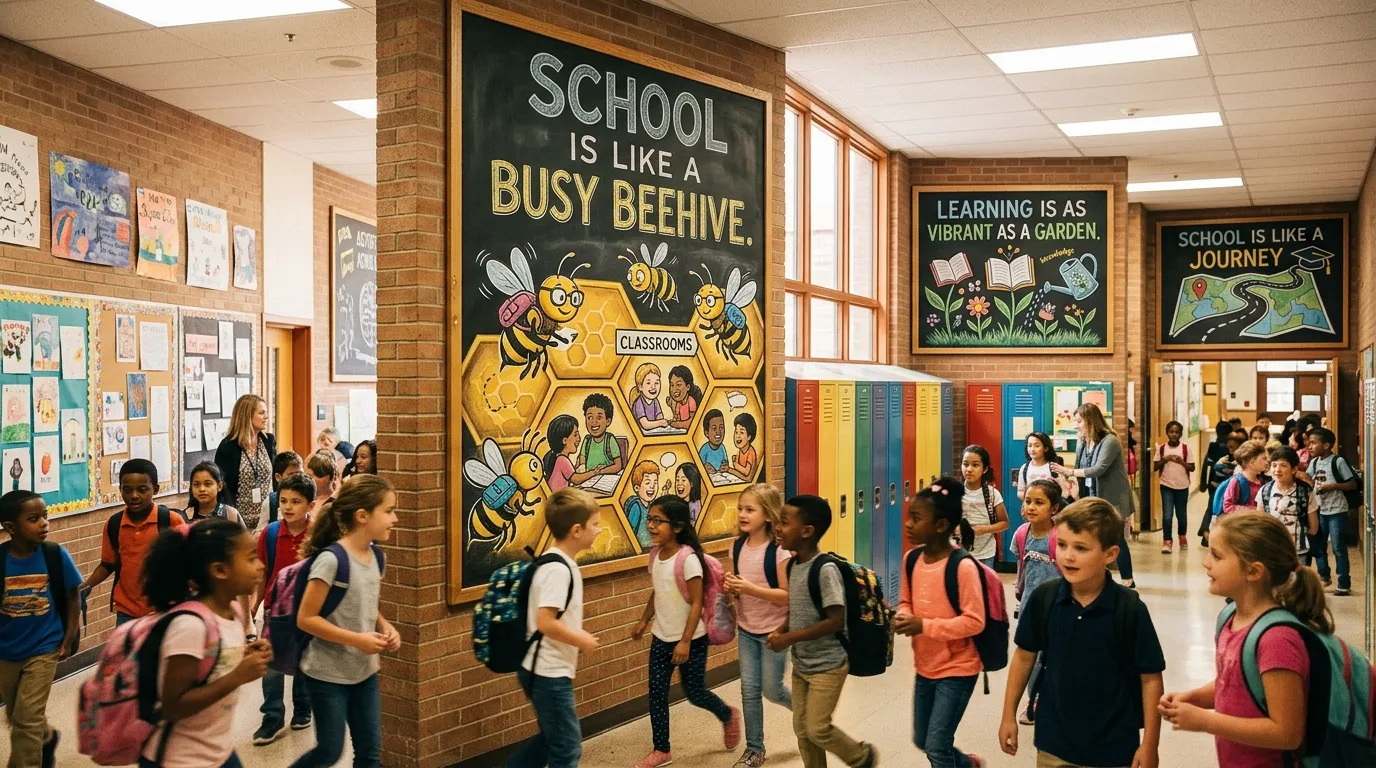
School is much more than a place where students learn academic subjects. It is where friendships are formed, skills are developed, creativity is encouraged, and lifelong memories are made. Every classroom, lesson, and activity contributes to personal growth, helping students build confidence, discipline, and knowledge for the future. Because school experiences are so varied, describing them in an engaging way can sometimes be difficult. That’s where similes become an excellent writing tool. By comparing school to familiar objects, places, animals, and everyday experiences, similes create vivid imagery that makes writing more interesting, relatable, and memorable.
Whether you’re a student writing an essay, a teacher preparing learning materials, a blogger creating educational content, or a storyteller developing school-themed characters, learning similes for school can greatly improve your writing. These creative comparisons help explain learning, friendships, classrooms, teachers, and school life in a way that captures readers’ attention and brings descriptions to life.
In this comprehensive guide, you’ll discover some of the best similes for school, complete with simple meanings, detailed definitions, practical usage insights, and realistic examples. You’ll also learn how to use these similes effectively in essays, stories, poems, speeches, and content writing.
What Is a Simile?
A simile is a figure of speech that compares two different things using the words “like” or “as.” Rather than describing something directly, a simile creates a vivid comparison that helps readers imagine ideas more clearly.
Similes make writing more engaging because they transform simple descriptions into memorable and meaningful imagery.
Simple Examples
- He was as brave as a lion.
- Her smile was like sunshine after the rain.
These comparisons make writing more expressive and enjoyable to read.
64 Powerful Similes for School
1. As busy as a beehive
Meaning: Full of activity and energy.
Definition: A beehive is constantly active, making this one of the most popular similes for school because schools are filled with students learning, talking, and participating in different activities.
Usage Insight: Perfect for essays, speeches, educational blogs, and classroom writing. Suitable for formal and casual contexts.
Examples:
- The school hallway was as busy as a beehive before the first class.
- Students rushed from one classroom to another with excitement.
2. Like a garden full of growing flowers
Meaning: A place where students grow and develop.
Definition: Flowers bloom with proper care, just as students grow through education.
Usage Insight: Excellent for graduation speeches and educational articles.
Examples:
- A good school is like a garden full of growing flowers.
- Every teacher helped students reach their potential.
3. As bright as the morning sun
Meaning: Full of hope and opportunity.
Definition: The morning sun symbolizes fresh beginnings and learning.
Usage Insight: Great for motivational essays and school speeches.
Examples:
- Every school day began as bright as the morning sun.
- Students looked forward to learning something new.
4. Like a treasure chest filled with knowledge
Meaning: A place full of valuable learning.
Definition: Treasure chests contain precious items, just as schools contain valuable knowledge.
Usage Insight: Ideal for educational blogs and essays.
Examples:
- The library was like a treasure chest filled with knowledge.
- Every book opened a new world of learning.
5. As welcoming as an open door
Meaning: Friendly and inclusive.
Definition: An open door symbolizes opportunity and belonging.
Usage Insight: Perfect for school newsletters and speeches.
Examples:
- The classroom was as welcoming as an open door.
- New students quickly felt at home.
6. Like a bridge to the future
Meaning: Preparing students for success.
Definition: Bridges connect places, just as education connects students to future opportunities.
Usage Insight: Excellent for graduation essays and inspirational writing.
Examples:
- School is like a bridge to the future.
- Every lesson prepared students for life beyond the classroom.
7. As organized as a library shelf
Meaning: Neat and well-structured.
Definition: Library shelves are carefully arranged, symbolizing order and discipline.
Usage Insight: Great for descriptive essays and educational content.
Examples:
- The classroom was as organized as a library shelf.
- Students appreciated the well-planned lessons.
8. Like a team working toward victory
Meaning: Everyone contributing together.
Definition: Successful teams rely on cooperation, much like schools depend on students, teachers, and staff.
Usage Insight: Perfect for teamwork discussions and motivational speeches.
Examples:
- Our class worked like a team aiming for victory.
- Everyone supported one another during the project.
9. As lively as a playground at recess
Meaning: Full of fun and excitement.
Definition: Playgrounds represent friendship, movement, and joyful learning experiences.
Usage Insight: Excellent for storytelling and children’s writing.
Examples:
- The school grounds were as lively as a playground at recess.
- Laughter echoed across the campus.
10. Like a compass guiding travelers
Meaning: Providing direction in life.
Definition: A compass helps people find the right path, just as schools guide students toward success.
Usage Insight: Suitable for graduation speeches and reflective essays.
Examples:
- School is like a compass guiding young minds.
- The teachers encouraged students to follow their dreams.
How to Use These Similes Effectively
Learning similes for school is only the beginning. Using them naturally can make your writing more engaging, descriptive, and memorable.
Essays
Use similes to describe classrooms, teachers, friendships, learning experiences, and school life instead of repeating ordinary descriptions. This creates stronger imagery and keeps readers interested.
Stories
School-themed stories become more realistic when classrooms, students, and teachers are described through vivid comparisons rather than simple statements.
Poems
Poetry often celebrates learning, childhood, and personal growth. Similes help create emotional and memorable imagery that resonates with readers.
Content Writing
Whether you’re writing educational blogs, parenting articles, student resources, teaching guides, or motivational content, examples of similes for school improve readability while naturally strengthening SEO and audience engagement.
Speeches and Personal Messages
Graduation speeches, welcome addresses, teacher appreciation messages, school newsletters, and farewell speeches become more inspiring when meaningful similes describe the value of education.
Frequently Asked Questions
What are similes for school?
Similes for school compare classrooms, learning, teachers, or student experiences to familiar things using words like “like” or “as.” They make writing more vivid and engaging.
Why should writers use similes for school?
They create stronger imagery, improve descriptions, and help readers better understand school experiences through relatable comparisons.
Can students use these similes in school assignments?
Yes. These common similes for school are ideal for essays, speeches, creative writing, classroom presentations, and educational projects.
What’s the difference between a simile and a metaphor?
A simile compares two things using “like” or “as,” while a metaphor makes a direct comparison without using those words.
Are similes for school useful for bloggers?
Absolutely. Bloggers often use creative similes for school in education, parenting, teaching, student success, and learning resources to make articles more engaging and informative.
Conclusion
School is much more than a building where lessons are taught—it’s a place where knowledge grows, friendships develop, talents are discovered, and lifelong memories are created. Describing these experiences through carefully chosen similes for school helps writers create vivid imagery that readers can easily understand and enjoy. Instead of using plain descriptions, similes add creativity, emotion, and depth, making every piece of writing more memorable and engaging.
Whether you’re writing an essay, a graduation speech, an educational blog, a poem, or a story, the best similes for school can help you communicate ideas with greater clarity and imagination. Select comparisons that naturally fit your message, vary your language to maintain reader interest, and don’t hesitate to create original similes inspired by your own classroom experiences. With regular practice, you’ll develop a richer writing style that celebrates the value of education while leaving a lasting impression on every reader.

Chris Woak is a passionate language enthusiast and the creative voice behind Mitaphor.com. With a deep interest in similes, metaphors, and word meanings, Chris simplifies complex expressions into clear, engaging explanations that readers of all levels can understand. His work focuses on helping students, writers, and language lovers explore the power of figurative language and improve their communication skills.