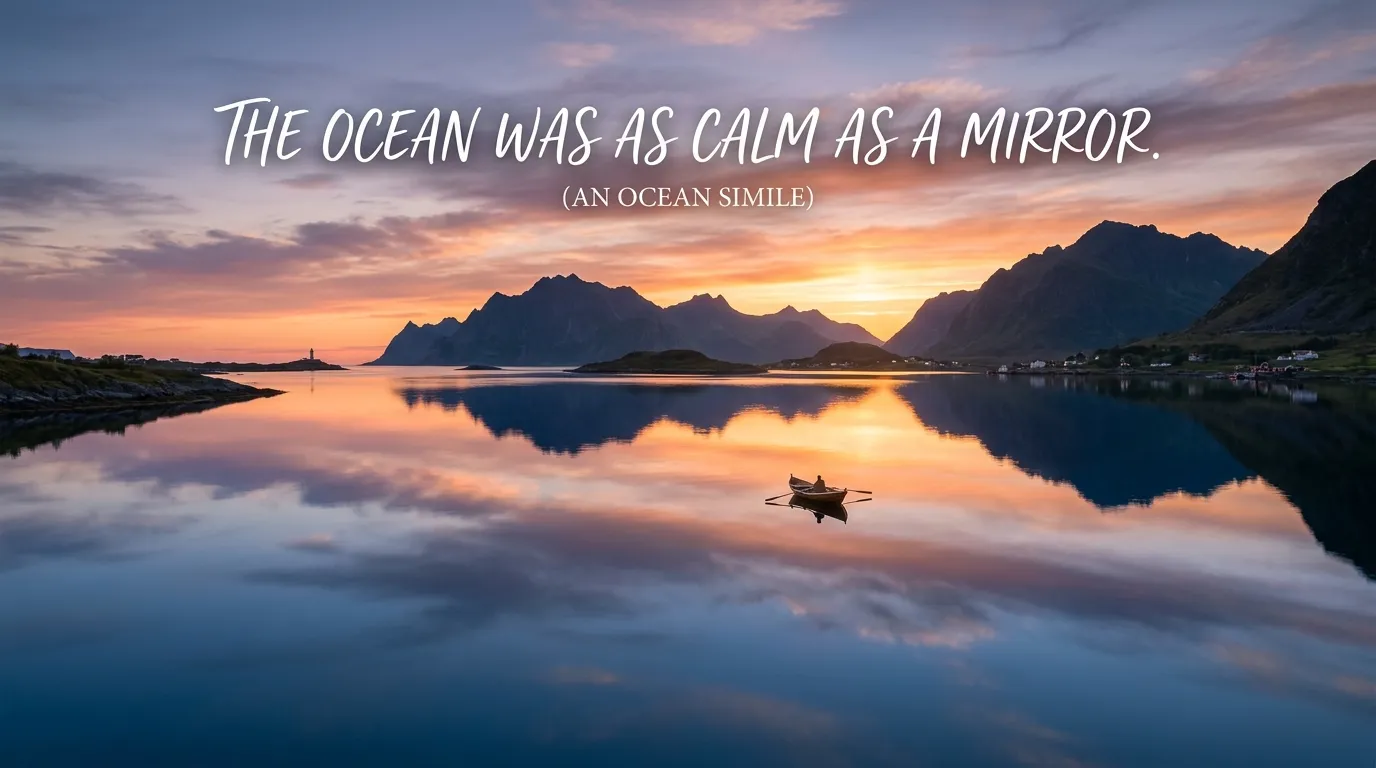
The ocean has long inspired poets, authors, and storytellers with its beauty, mystery, power, and endless horizons. One of the most expressive ways to capture these qualities in writing is through ocean similes. A simile compares two different things using the words “like” or “as,” helping readers visualize emotions, people, actions, and experiences through familiar images. Whether you’re describing calmness, strength, freedom, uncertainty, love, or adventure, ocean similes add vivid imagery and emotional depth to your writing.
Whether you’re a student learning figurative language, a teacher planning English lessons, a novelist creating immersive scenes, a poet crafting meaningful verses, or a blogger writing creative content, mastering ocean similes can elevate your writing. These comparisons make essays, speeches, poems, stories, and articles more engaging by connecting readers to the timeless beauty and power of the sea.
In this comprehensive guide, you’ll discover some of the best ocean similes, learn what a simile is, explore meaningful examples, understand when and where to use them, and find practical tips for incorporating ocean similes into creative writing, literature, speeches, essays, and everyday communication.
What Is a Simile?
A simile is a figure of speech that compares two different things using the words “like” or “as.” Similes help readers better understand an idea by relating it to something familiar.
Ocean similes compare people, emotions, actions, or situations to the sea, waves, tides, beaches, and other ocean elements to create vivid and memorable descriptions.
Simple Examples
- Her patience was as deep as the ocean.
- His thoughts rolled in like waves.
These comparisons make emotions and experiences easier to imagine.
79 Ocean Similes
1. As Deep as the Ocean
Meaning: Full of profound emotion, wisdom, or knowledge.
Definition: The ocean’s immense depth symbolizes mystery, understanding, and emotional richness.
Usage Insight: Perfect for poetry, reflective essays, inspirational speeches, and storytelling. Suitable for both formal and creative writing.
Examples:
- Her compassion was as deep as the ocean.
- His understanding of history impressed everyone.
2. Like Waves Crashing Against the Shore
Meaning: Powerful, continuous, or overwhelming.
Definition: Ocean waves represent strong emotions, persistence, and unstoppable movement.
Usage Insight: Excellent for emotional writing, novels, and motivational content.
Examples:
- Memories returned like waves crashing against the shore.
- The applause came in powerful bursts.
3. As Calm as a Quiet Sea
Meaning: Peaceful and emotionally balanced.
Definition: A calm sea symbolizes serenity, patience, and inner peace.
Usage Insight: Great for descriptive essays, meditation writing, and reflective stories.
Examples:
- Her mind became as calm as a quiet sea.
- He remained relaxed under pressure.
4. Like a Tide That Never Stops
Meaning: Constant and unstoppable.
Definition: Ocean tides move with dependable rhythm, representing persistence and change.
Usage Insight: Ideal for motivational blogs, biographies, and speeches.
Examples:
- Progress came like a tide that never stops.
- His determination carried him through every challenge.
5. As Endless as the Horizon
Meaning: Limitless and full of possibilities.
Definition: The meeting point of the sea and sky symbolizes infinite opportunity and imagination.
Usage Insight: Perfect for travel writing, inspirational articles, and philosophical essays.
Examples:
- Her dreams were as endless as the horizon.
- The future seemed full of possibilities.
6. Like a Lighthouse in the Storm
Meaning: A source of hope and guidance.
Definition: A lighthouse helps sailors find safety, symbolizing leadership and reassurance.
Usage Insight: Excellent for speeches, biographies, and personal development writing.
Examples:
- My teacher was like a lighthouse in the storm.
- Her advice guided us through difficult times.
7. As Restless as the Sea in Winter
Meaning: Unable to relax or settle.
Definition: A stormy winter sea reflects anxiety, excitement, or uncertainty.
Usage Insight: Great for novels, emotional stories, and poetry.
Examples:
- His thoughts were as restless as the sea in winter.
- She struggled to sleep before the competition.
8. Like Shells Scattered Along the Shore
Meaning: Beautiful, unique, and varied.
Definition: Seashells symbolize individuality and hidden treasures.
Usage Insight: Perfect for descriptive writing, children’s stories, and creative essays.
Examples:
- Their ideas were like shells scattered along the shore.
- Every student contributed something unique.
9. As Refreshing as an Ocean Breeze
Meaning: Energizing and comforting.
Definition: A cool sea breeze symbolizes renewal, peace, and relaxation.
Usage Insight: Ideal for travel writing, lifestyle blogs, and descriptive passages.
Examples:
- Her laughter was as refreshing as an ocean breeze.
- The vacation helped everyone relax.
10. Like the Moon Pulling the Tides
Meaning: Quietly influential.
Definition: The moon affects the ocean without force, symbolizing gentle yet powerful influence.
Usage Insight: Excellent for leadership articles, poetry, and reflective writing.
Examples:
- His encouragement worked like the moon pulling the tides.
- Small acts of kindness created lasting change.
How to Use These Ocean Similes Effectively
Ocean similes are most effective when they match the mood, setting, or message of your writing.
Essays
Use ocean-inspired comparisons to explain emotions, personal growth, or life’s challenges with vivid imagery.
Stories
Ocean similes help readers imagine characters, settings, and emotional scenes while creating a strong atmosphere.
Poems
The sea offers endless inspiration for expressing love, freedom, hope, loss, and reflection through symbolic comparisons.
Speeches
Motivational speeches become more memorable when ocean similes reinforce ideas of resilience, determination, and possibility.
Content Writing
Whether you’re writing blogs, travel articles, educational resources, or creative stories, ocean similes make your writing more engaging, descriptive, and emotionally impactful.
Frequently Asked Questions
What are ocean similes?
Ocean similes are comparisons that use “like” or “as” to compare people, emotions, actions, or situations with elements of the ocean, such as waves, tides, the horizon, or sea breezes.
Why are ocean similes important?
They create vivid imagery, strengthen emotional expression, and make writing more memorable by drawing on the familiar beauty and power of the sea.
What’s the difference between an ocean simile and an ocean metaphor?
An ocean simile uses “like” or “as,” while an ocean metaphor directly compares something to the ocean without using comparison words.
Can ocean similes be used in formal writing?
Yes. They are effective in descriptive essays, speeches, literary analysis, and creative writing assignments when they fit the context.
How can I create my own ocean similes?
Think about a quality you want to describe—such as calmness, strength, freedom, or mystery—then compare it to an ocean element using “like” or “as.” Choose imagery that is clear, vivid, and meaningful.
Conclusion
Mastering ocean similes is a wonderful way to bring beauty, movement, and emotion into your writing. These sea-inspired comparisons help readers visualize ideas through the timeless imagery of waves, tides, horizons, breezes, and the vast open ocean. Whether you’re describing peace, courage, hope, change, or adventure, ocean similes transform ordinary language into memorable and meaningful expressions.
Whether you’re a student improving your figurative language skills, a teacher introducing literary devices, a poet exploring symbolic imagery, a novelist building unforgettable scenes, or a content creator publishing engaging articles, learning the best ocean similes will strengthen your creativity and communication. Practice using these comparisons naturally, observe the many moods of the sea, and create your own original similes inspired by the ocean’s beauty and power. With regular practice, ocean similes will become a valuable part of your writing toolkit, helping you create content that captivates readers and leaves a lasting impression.

Chris Woak is a passionate language enthusiast and the creative voice behind Mitaphor.com. With a deep interest in similes, metaphors, and word meanings, Chris simplifies complex expressions into clear, engaging explanations that readers of all levels can understand. His work focuses on helping students, writers, and language lovers explore the power of figurative language and improve their communication skills.