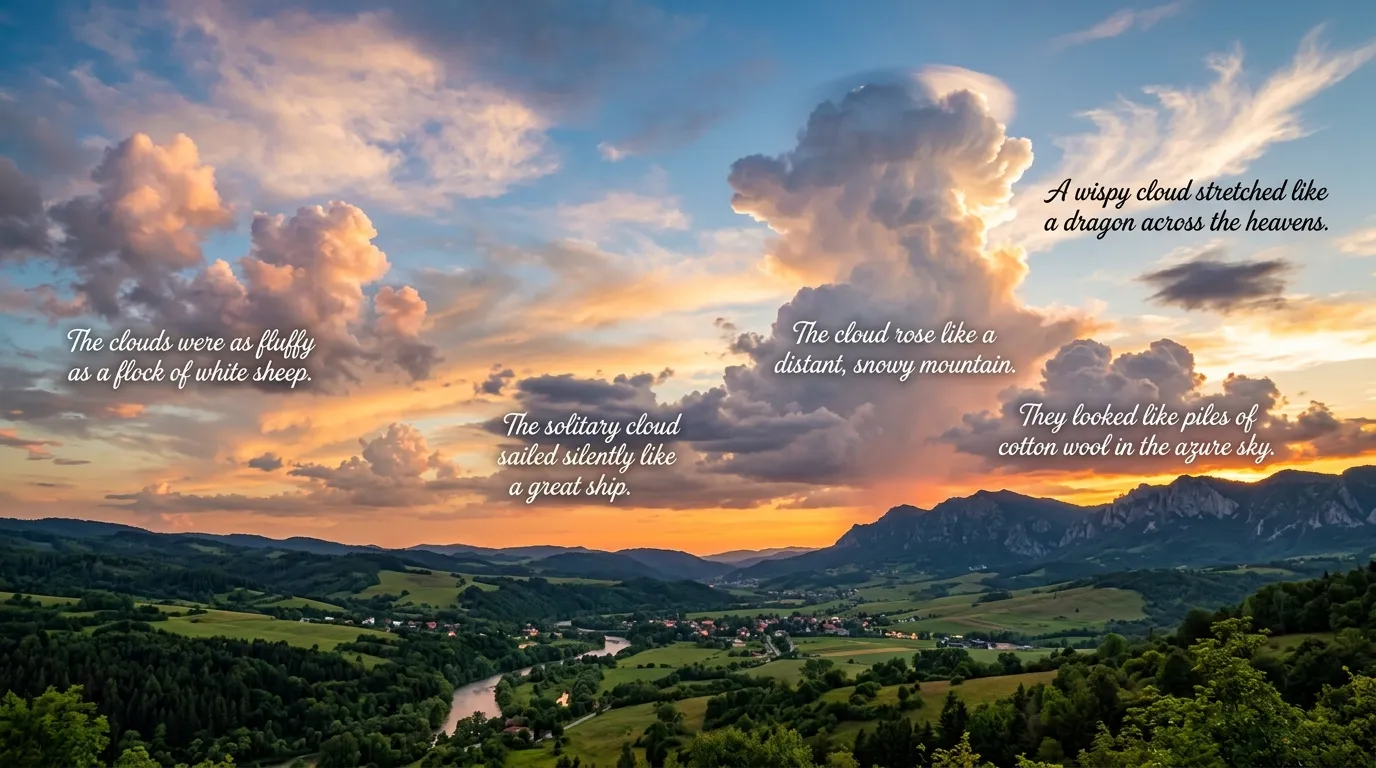
Clouds have inspired writers, poets, and storytellers for centuries with their ever-changing shapes, gentle movement, and symbolic meanings. They can represent peace, imagination, mystery, hope, freedom, dreams, or even emotional change. From fluffy white clouds floating across a blue sky to dramatic storm clouds gathering before the rain, clouds create vivid imagery that makes writing more expressive. One of the best ways to capture their beauty is through cloud similes. A simile compares two different things using the words “like” or “as,” helping readers visualize emotions, people, actions, and experiences through memorable comparisons. Whether you’re describing softness, calmness, uncertainty, creativity, or freedom, cloud similes add elegance and depth to your writing.
Whether you’re a student learning figurative language, a teacher preparing engaging English lessons, a novelist crafting descriptive scenes, a poet writing meaningful verses, or a blogger creating educational content, mastering cloud similes can improve your writing. These comparisons are perfect for essays, speeches, poems, stories, travel writing, and everyday communication because they create rich imagery and emotional impact.
In this comprehensive guide, you’ll discover some of the best cloud similes, learn what a simile is, explore meaningful examples, understand when and where to use them, and find practical tips for incorporating cloud similes into creative writing, literature, speeches, essays, and daily conversations.
What Is a Simile?
A simile is a figure of speech that compares two different things using the words “like” or “as.” Similes make writing more vivid by connecting ideas with familiar images.
Cloud similes compare people, emotions, actions, or situations to clouds, mist, fog, or other sky-related elements to create expressive and memorable descriptions.
Simple Examples
- Her thoughts drifted like clouds across the sky.
- His pillow was as soft as a cloud.
These comparisons help readers imagine scenes and emotions more clearly.
83 Cloud Similes
1. As Soft as a Cloud
Meaning: Extremely soft, gentle, and comfortable.
Definition: Fluffy clouds symbolize softness, comfort, and peace.
Usage Insight: Perfect for descriptive essays, product descriptions, children’s stories, and poetry. Suitable for both formal and creative writing.
Examples:
- Her blanket was as soft as a cloud.
- The baby slept peacefully all night.
2. Like Clouds Floating Across the Sky
Meaning: Calm, peaceful, and effortless.
Definition: Floating clouds symbolize freedom, relaxation, and natural movement.
Usage Insight: Excellent for reflective essays, meditation writing, and storytelling.
Examples:
- His thoughts drifted like clouds floating across the sky.
- The afternoon passed quietly.
3. As Light as a Cloud
Meaning: Weightless and graceful.
Definition: Clouds appear light and airy, symbolizing elegance and ease.
Usage Insight: Great for describing dancers, athletes, or joyful emotions.
Examples:
- She danced as light as a cloud.
- The feather floated gently through the air.
4. Like a Cloud Covering the Sun
Meaning: Temporarily blocking happiness or hope.
Definition: Clouds can briefly hide sunlight, symbolizing passing sadness or uncertainty.
Usage Insight: Ideal for emotional stories, reflective essays, and inspirational writing.
Examples:
- Worry settled over him like a cloud covering the sun.
- The disappointment didn’t last long.
5. As White as Summer Clouds
Meaning: Bright, clean, and pure.
Definition: White clouds symbolize innocence, freshness, and beauty.
Usage Insight: Perfect for descriptive writing, poetry, and greeting cards.
Examples:
- Her dress was as white as summer clouds.
- The snowy mountains sparkled in the sunlight.
6. Like Clouds Before the Rain
Meaning: Signaling that change is coming.
Definition: Gathering clouds often represent anticipation, transition, or important events.
Usage Insight: Excellent for storytelling, motivational speeches, and dramatic writing.
Examples:
- Excitement built like clouds before the rain.
- Everyone sensed that something important was about to happen.
7. As Peaceful as Clouds at Sunset
Meaning: Calm, quiet, and relaxing.
Definition: Clouds glowing during sunset symbolize serenity and reflection.
Usage Insight: Great for meditation articles, travel blogs, and descriptive essays.
Examples:
- Her heart was as peaceful as clouds at sunset.
- The evening brought everyone a sense of calm.
8. Like Misty Clouds on the Horizon
Meaning: Mysterious and difficult to understand.
Definition: Distant clouds often create a sense of wonder and curiosity.
Usage Insight: Ideal for mystery novels, fantasy stories, and creative writing.
Examples:
- His past seemed like misty clouds on the horizon.
- The old castle held many secrets.
9. As Free as Clouds in the Sky
Meaning: Independent and unrestricted.
Definition: Clouds move freely across the sky, symbolizing freedom and possibility.
Usage Insight: Perfect for motivational speeches, travel writing, and inspirational blogs.
Examples:
- She felt as free as clouds in the sky.
- The children ran through the open field.
10. Like Clouds Changing Shape
Meaning: Constantly changing or adapting.
Definition: Clouds continuously transform, symbolizing flexibility and growth.
Usage Insight: Excellent for personal development writing, leadership articles, and educational content.
Examples:
- His ideas changed like clouds changing shape.
- Life constantly presents new opportunities.
How to Use These Cloud Similes Effectively
Cloud similes are most effective when they naturally support the tone and purpose of your writing.
Essays
Use cloud-inspired comparisons to describe emotions, imagination, freedom, uncertainty, and personal growth with vivid imagery.
Stories
Cloud similes help readers visualize settings, emotional scenes, and changing moods while creating atmosphere.
Poems
Clouds symbolize dreams, hope, peace, mystery, and transformation, making them an ideal theme for expressive poetry.
Speeches
Inspirational speeches become more memorable when cloud similes reinforce themes of resilience, change, optimism, and perseverance.
Content Writing
Whether you’re writing blogs, educational resources, travel articles, or creative stories, cloud similes make your writing more engaging, descriptive, and emotionally meaningful.
Frequently Asked Questions
What are cloud similes?
Cloud similes are comparisons that use “like” or “as” to compare people, emotions, actions, or situations with clouds, mist, fog, or other sky-related imagery.
Why are cloud similes important?
They create vivid imagery, strengthen emotional expression, and make writing more creative and memorable.
What’s the difference between a cloud simile and a cloud metaphor?
A cloud simile uses “like” or “as,” while a cloud metaphor directly compares something to a cloud without using comparison words.
Can cloud similes be used in formal writing?
Yes. They are suitable for speeches, descriptive essays, literary analysis, and creative writing assignments when used naturally.
How can I create my own cloud similes?
Think about qualities such as softness, freedom, peace, mystery, or change, then compare them to clouds using “like” or “as.” Choose imagery that is vivid, meaningful, and easy to understand.
Conclusion
Mastering cloud similes is a wonderful way to make your writing more vivid, imaginative, and emotionally engaging. These comparisons use the beauty of drifting clouds, colorful sunsets, soft mist, and changing skies to express peace, hope, freedom, mystery, and transformation. Whether you’re writing about dreams, emotions, personal growth, or nature, cloud similes help turn simple descriptions into memorable and meaningful imagery.
Whether you’re a student improving your figurative language skills, a teacher introducing literary devices, a poet crafting expressive verses, a novelist creating breathtaking scenes, or a content creator publishing educational articles, learning the best cloud similes will strengthen your creativity and communication. Practice using these comparisons naturally, observe the beauty and movement of clouds, and create your own original similes inspired by the sky. With regular practice, cloud similes will become an essential part of your writing toolkit, helping you create content that informs, inspires, and captivates readers.

James Williams is a dedicated language writer and contributor at Mitaphor.com, where he explores the art of similes, metaphors, and word meanings. With a passion for making language simple and engaging, James breaks down complex expressions into clear, easy-to-understand insights. His work is designed to help students, writers, and curious readers better understand figurative language and use it effectively in everyday communication.