Similes are a creative way to make your writing more expressive and engaging. By comparing one thing to another using “like” or “as,” similes help bring ideas to life in a vivid and memorable way.
When describing someone as “dumb,” it’s important to be careful with tone. Direct words can sound harsh, but similes for “dumb” allow you to express lack of understanding, confusion, or silliness in a more creative—and sometimes softer or humorous—way. These similes are especially useful for students, writers, and bloggers who want to add personality to their writing without sounding too blunt.
What Is a Simile?
A simile is a figure of speech that compares two different things using “like” or “as.”
Simple Examples:
- He is as quick as lightning.
- She sings like a bird.
Similes make descriptions clearer and more interesting.
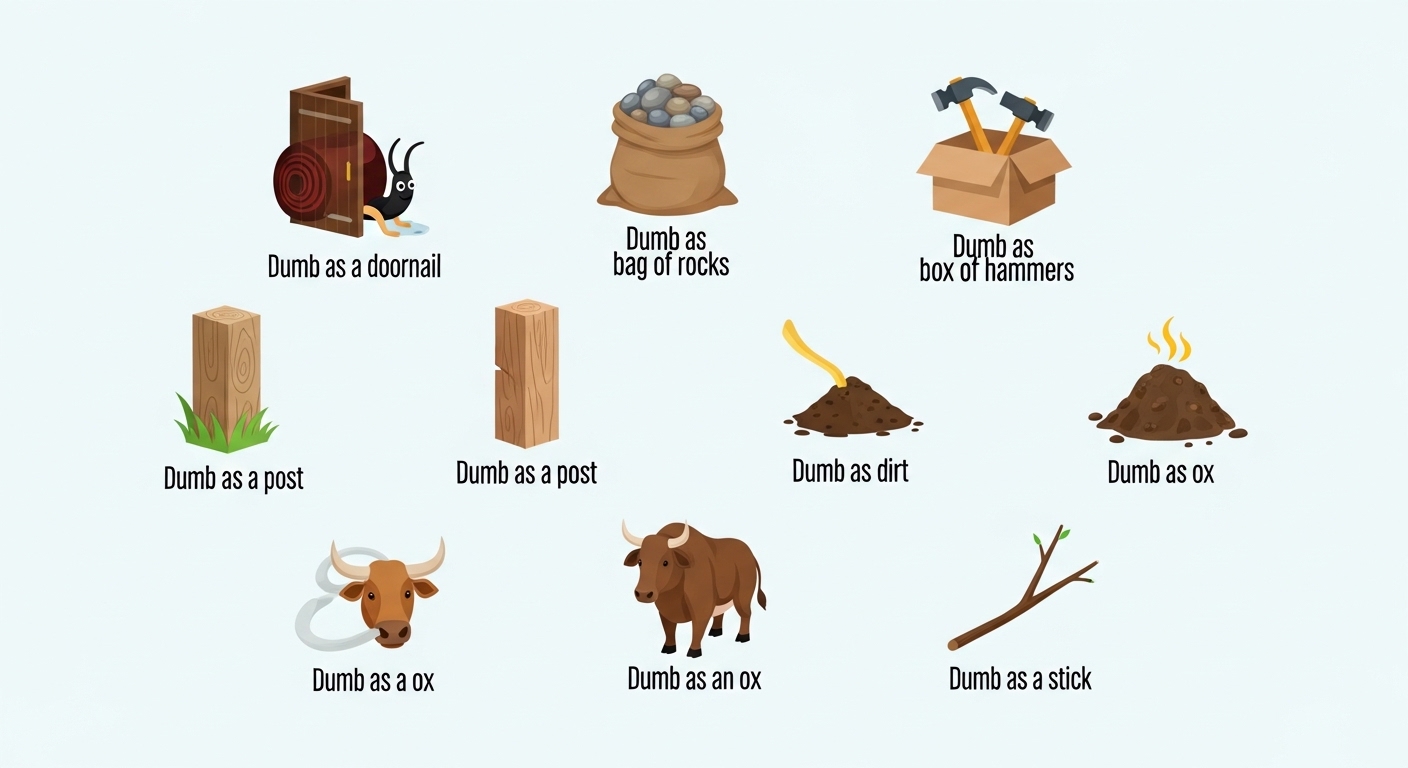
25 Best Similes for “Dumb”
1. As dumb as a rock
- Meaning: Very unintelligent
- Deeper Definition: Suggests complete lack of understanding
- Usage Insight: Casual or humorous tone; avoid in formal or sensitive situations
- Examples:
- He acted as dumb as a rock during the quiz.
- Don’t be as dumb as a rock—think before you answer.
2. As dumb as a brick
- Meaning: Lacking basic intelligence
- Deeper Definition: Emphasizes inability to think or respond logically
- Usage Insight: Informal and joking contexts
- Examples:
- He looked as dumb as a brick when asked the question.
- That mistake made me feel as dumb as a brick.
3. Like a deer in headlights
- Meaning: Confused and frozen
- Deeper Definition: Describes someone unable to react due to confusion
- Usage Insight: Stories and everyday conversation
- Examples:
- He stood there like a deer in headlights.
- I felt like a deer in headlights during the interview.
4. As clueless as a newborn
- Meaning: Completely unaware
- Deeper Definition: Lacks basic knowledge or experience
- Usage Insight: Mild and less offensive
- Examples:
- I was as clueless as a newborn on my first day.
- She seemed clueless about the topic.
5. Like a fish out of water
- Meaning: Out of place and confused
- Deeper Definition: Struggling due to unfamiliar surroundings
- Usage Insight: Safe for formal and informal use
- Examples:
- He felt like a fish out of water in class.
- I was like a fish out of water at the meeting.
6. As slow as a snail (to understand)
- Meaning: Takes long to understand
- Deeper Definition: Describes slow thinking
- Usage Insight: Light humor
- Examples:
- He’s as slow as a snail when solving problems.
- Don’t be slow like a snail—focus!
7. Like a blank page
- Meaning: No idea at all
- Deeper Definition: Mind completely empty
- Usage Insight: Neutral and safe
- Examples:
- My mind went like a blank page during the test.
- He looked at me like a blank page.
8. As empty as an empty box
- Meaning: No thoughts or ideas
- Deeper Definition: Emphasizes lack of mental response
- Usage Insight: Casual tone
- Examples:
- His answer was as empty as an empty box.
- I felt as empty as a box during the exam.
9. Like a lost puppy
- Meaning: Confused and unsure
- Deeper Definition: Lacks direction or understanding
- Usage Insight: Soft and non-offensive
- Examples:
- He looked like a lost puppy in class.
- I felt like a lost puppy on the first day.
10. As confused as a maze runner
- Meaning: Very confused
- Deeper Definition: Unable to find direction or clarity
- Usage Insight: Creative writing
- Examples:
- She was as confused as a maze runner.
- I felt lost like someone in a maze.
11. Like a computer with no data
- Meaning: No knowledge
- Deeper Definition: Lacks information to function
- Usage Insight: Modern writing
- Examples:
- He was like a computer with no data.
- I felt empty like a system with no input.
12. As dull as a blunt knife
- Meaning: Not sharp mentally
- Deeper Definition: Slow thinking or lack of intelligence
- Usage Insight: Slightly critical tone
- Examples:
- His response was as dull as a blunt knife.
- Don’t be dull—try to think clearly.
13. Like a statue
- Meaning: No reaction or thinking
- Deeper Definition: Frozen due to confusion
- Usage Insight: Storytelling
- Examples:
- He stood like a statue when asked.
- I froze like a statue during the test.
14. As clueless as a tourist without a map
- Meaning: Completely lost
- Deeper Definition: No understanding of surroundings
- Usage Insight: Safe and descriptive
- Examples:
- He was as clueless as a tourist without a map.
- I felt lost in class.
15. Like a phone with no signal
- Meaning: Unable to respond
- Deeper Definition: Disconnected from understanding
- Usage Insight: Modern and relatable
- Examples:
- My brain was like a phone with no signal.
- He just stared blankly.
16. As blank as a whiteboard
- Meaning: No thoughts
- Deeper Definition: Completely empty mind
- Usage Insight: Neutral tone
- Examples:
- My mind was as blank as a whiteboard.
- He looked blank during the test.
17. Like a child learning for the first time
- Meaning: No experience
- Deeper Definition: Lacks knowledge due to inexperience
- Usage Insight: Polite and respectful
- Examples:
- I felt like a child learning for the first time.
- He approached the task like a beginner.
18. As lost as a needle in a haystack
- Meaning: Completely lost
- Deeper Definition: Hard to find direction
- Usage Insight: Common idiom
- Examples:
- I felt as lost as a needle in a haystack.
- He couldn’t understand anything.
19. Like a book with missing pages
- Meaning: Incomplete understanding
- Deeper Definition: Lacking important information
- Usage Insight: Creative tone
- Examples:
- His knowledge was like a book with missing pages.
- I felt incomplete during the lesson.
20. As unaware as someone asleep
- Meaning: Not paying attention
- Deeper Definition: Mentally disconnected
- Usage Insight: Mild tone
- Examples:
- He was as unaware as someone asleep.
- She didn’t notice anything.
21. Like a puzzle missing pieces
- Meaning: Incomplete thinking
- Deeper Definition: Unable to fully understand
- Usage Insight: Neutral and creative
- Examples:
- His answer was like a puzzle missing pieces.
- I couldn’t figure it out completely.
22. As slow as a turtle (to think)
- Meaning: Very slow thinking
- Deeper Definition: Takes time to process ideas
- Usage Insight: Light humor
- Examples:
- He’s as slow as a turtle in math.
- Don’t rush—take your time.
23. Like a light that won’t turn on
- Meaning: Unable to understand
- Deeper Definition: No mental response
- Usage Insight: Casual tone
- Examples:
- His mind was like a light that wouldn’t turn on.
- I couldn’t understand anything.
24. As empty as silence
- Meaning: No response
- Deeper Definition: Reflects total absence of thought
- Usage Insight: Poetic tone
- Examples:
- His answer was as empty as silence.
- I had nothing to say.
25. Like a road with no signs
- Meaning: No direction
- Deeper Definition: Lacks guidance or understanding
- Usage Insight: Descriptive writing
- Examples:
- He felt like a road with no signs.
- I didn’t know what to do.
How to Use These Similes Effectively
- In Essays: Use softer, neutral similes like “like a blank page”
- In Stories: Use expressive ones to show confusion or misunderstanding
- In Humor: Use stronger similes carefully for fun
- In Content Writing: Keep tone respectful and relatable
FAQ
1. Are similes for “dumb” offensive?
Some can be, so choose softer or neutral ones depending on context.
2. Can I use these in school essays?
Yes, but avoid harsh or insulting similes.
3. What is a polite simile for “dumb”?
“Like a blank page” or “as clueless as a beginner.”
4. Why use similes instead of direct words?
They make writing more creative and less harsh.
5. Can similes be funny?
Yes, many similes add humor when used correctly.
Conclusion
Using similes for “dumb” allows you to describe confusion or lack of understanding in a more creative and engaging way. Whether you want a humorous, soft, or descriptive tone, these similes help you communicate ideas without sounding too direct or harsh.
Choose wisely based on your audience, and your writing will feel more natural, expressive, and impactful.

Chris Woak is a passionate language enthusiast and the creative voice behind Mitaphor.com. With a deep interest in similes, metaphors, and word meanings, Chris simplifies complex expressions into clear, engaging explanations that readers of all levels can understand. His work focuses on helping students, writers, and language lovers explore the power of figurative language and improve their communication skills.