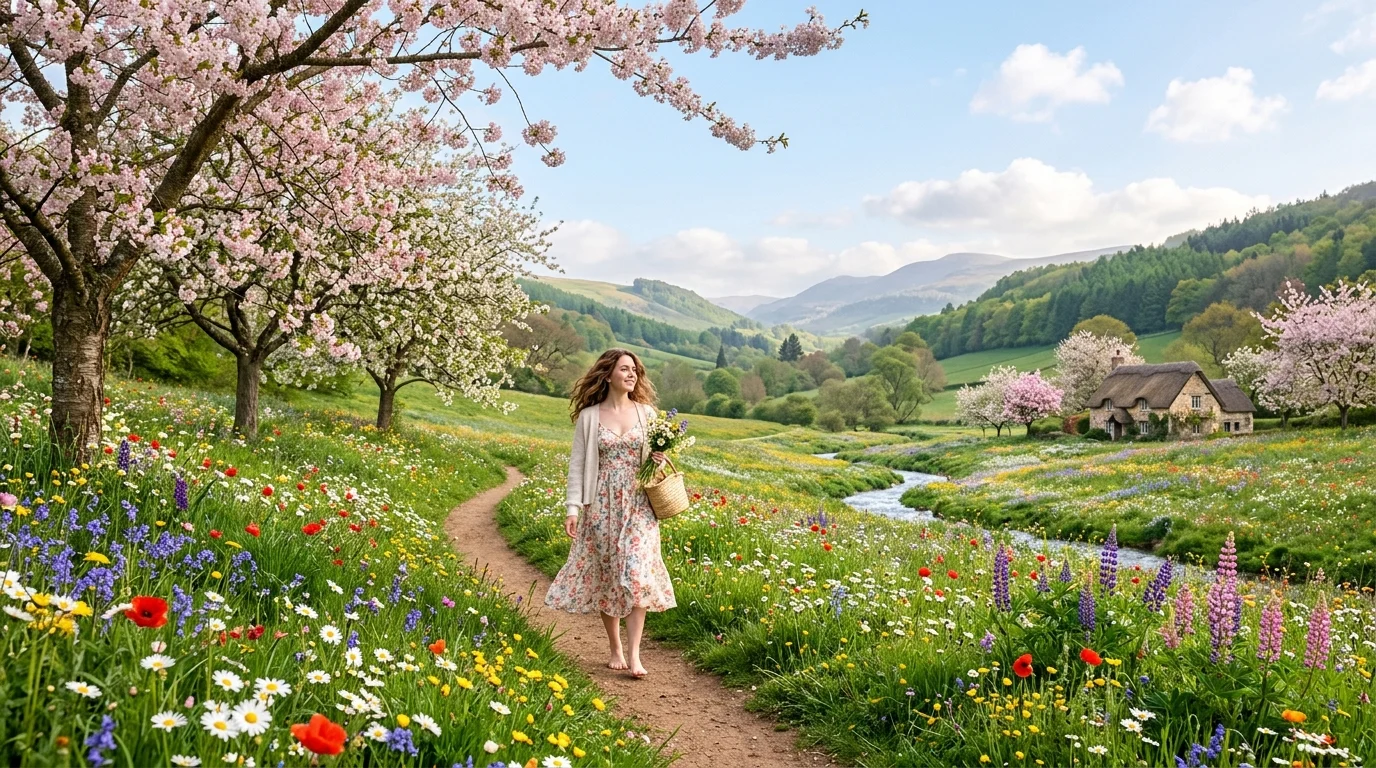
Spring is a season of renewal, growth, color, and fresh beginnings. After the cold and quiet months of winter, spring arrives with blooming flowers, singing birds, warmer sunshine, and vibrant landscapes. For writers, poets, students, bloggers, and storytellers, spring offers endless inspiration. One of the best ways to capture its beauty is through similes.
Similes compare one thing to another using the words “like” or “as,” helping readers visualize scenes and emotions more vividly. Whether you’re describing a blooming garden, a gentle spring breeze, or the feeling of new beginnings, the right simile can transform ordinary writing into something memorable and expressive.
In this comprehensive guide, you’ll discover 65 beautiful similes for the spring season, complete with meanings, definitions, usage insights, and examples to enrich your writing.
What Is a Simile?
A simile is a figure of speech that compares two different things using the words “like” or “as.”
Examples of Similes
- As bright as the sun.
- Like a bird soaring through the sky.
- As fresh as morning dew.
- Like a rainbow after the rain.
Similes help readers create mental pictures and emotional connections, making descriptions more engaging and vivid.
Why Use Similes for Spring?
Spring is filled with sights, sounds, scents, and emotions that are perfect for descriptive writing. Similes can help you:
- Create vivid imagery.
- Enhance poetry and storytelling.
- Make essays more engaging.
- Express feelings of hope, growth, and renewal.
- Add beauty and creativity to your writing.
65 Beautiful Similes for Spring Season
1. As fresh as morning dew
Meaning: Extremely fresh and renewed.
Definition: Describes something clean, vibrant, and full of life.
Usage Insight: Perfect for describing spring mornings and new beginnings.
Example Sentences:
- The garden looked as fresh as morning dew.
- Her ideas felt as fresh as morning dew in spring.
2. Like a flower opening to the sun
Meaning: Gradually becoming happier or more confident.
Definition: Symbolizes growth and blossoming.
Example Sentences:
- She smiled like a flower opening to the sun.
- The town awakened like flowers greeting the daylight.
3. As bright as a spring morning
Meaning: Cheerful and full of energy.
Example Sentences:
- His mood was as bright as a spring morning.
- The park looked as bright as a spring morning.
4. Like a butterfly dancing in the breeze
Meaning: Graceful and carefree.
Example Sentences:
- She moved like a butterfly dancing in the breeze.
- The petals floated like butterflies in the wind.
5. As colorful as a spring garden
Meaning: Full of beauty and variety.
Example Sentences:
- The festival was as colorful as a spring garden.
- Her artwork appeared as colorful as spring flowers.
6. Like sunshine after a rainy day
Meaning: Bringing happiness and relief.
Examples:
- Your visit was like sunshine after a rainy day.
- The good news arrived like sunshine breaking through clouds.
7. As gentle as a spring breeze
Meaning: Soft, calm, and soothing.
Examples:
- Her voice was as gentle as a spring breeze.
- The wind felt as gentle as a spring breeze.
8. Like birds singing at dawn
Meaning: Joyful and uplifting.
9. As lively as a meadow in bloom
Meaning: Full of activity and life.
10. Like rain nourishing thirsty flowers
Meaning: Providing growth and renewal.
11. As cheerful as a robin in spring
12. Like blossoms scattered across the earth
13. As vibrant as tulips in full bloom
14. Like a rainbow stretching across the sky
15. As sweet as the scent of spring flowers
16. Like cherry blossoms floating on the wind
17. As radiant as sunshine on fresh petals
18. Like a stream awakened by melting snow
19. As light as petals drifting through the air
20. Like green leaves unfurling on branches
21. As refreshing as spring rain
22. Like a garden bursting into bloom
23. As hopeful as the first flower of spring
24. Like a meadow painted with wildflowers
25. As bright as daffodils in sunshine
26. Like bees buzzing among blossoms
27. As uplifting as birds returning home
28. Like sunlight sparkling on fresh grass
29. As joyful as children playing outdoors
30. Like nature waking from a long sleep
31. As delicate as a blossom petal
32. Like a river flowing with new life
33. As welcoming as warm spring sunshine
34. Like buds preparing to bloom
35. As fragrant as a blooming rose garden
36. Like fresh grass after rain
37. As peaceful as a spring afternoon
38. Like clouds drifting across a blue sky
39. As beautiful as a field of wildflowers
40. Like a song carried on the spring wind
41. As bright as blooming sunflowers
42. Like morning light through young leaves
43. As refreshing as cool rain on blossoms
44. Like butterflies gathering around flowers
45. As graceful as willow branches swaying
46. Like petals floating on a pond
47. As lively as birds in a blossoming tree
48. Like a painting filled with spring colors
49. As warm as sunshine after winter
50. Like fresh buds reaching for the sky
51. As beautiful as a cherry blossom tree
52. Like new leaves shimmering in sunlight
53. As pure as spring rainwater
54. Like a garden kissed by morning light
55. As bright as a sky after rainfall
56. Like wildflowers dancing in the breeze
57. As hopeful as the return of spring
58. Like a blossom opening after winter
59. As charming as a blooming orchard
60. Like sunlight filtering through flowers
61. As joyful as spring after a long winter
62. Like fresh blossoms decorating the earth
63. As enchanting as a spring sunset
64. Like nature painting the world anew
65. As magical as the first day of spring
How to Use These Similes Effectively
In Poetry
Spring similes create vivid imagery and emotional beauty.
Example:
Her laughter floated like butterflies dancing in the breeze.
In Storytelling
Use spring similes to set scenes and establish mood.
Example:
The village awoke like a garden bursting into bloom.
In School Essays
Spring similes make descriptions more engaging and memorable.
Example:
The park looked as colorful as a spring garden after the rain.
In Blog Writing
Similes help readers connect emotionally with seasonal content.
Example:
Spring arrives like nature’s grand celebration after winter’s silence.
Tips for Writing Original Spring Similes
Observe Nature Closely
Pay attention to flowers, birds, sunshine, rain, and greenery.
Use Sensory Details
Include sights, sounds, smells, and textures.
Connect Emotions with Nature
Spring often symbolizes:
- Hope
- Renewal
- Happiness
- Growth
- Beauty
Keep Comparisons Simple
The strongest similes are often the easiest to understand.
Frequently Asked Questions
What are spring similes?
Spring similes are comparisons that use “like” or “as” to describe spring-related scenes, emotions, weather, flowers, and growth.
Why are similes useful in spring writing?
They create vivid imagery and help readers visualize the beauty and energy of the season.
Can spring similes be used in poetry?
Yes. Spring is one of the most popular themes in poetry, and similes enhance imagery and emotion.
What is a beautiful simile for spring?
“As fresh as morning dew” and “Like a flower opening to the sun” are among the most beautiful spring similes.
What emotions do spring similes convey?
They often convey hope, joy, renewal, growth, optimism, and beauty.
Conclusion
Spring is a season filled with life, color, and possibility. Through similes, writers can capture the freshness of blooming flowers, the warmth of sunshine, and the sense of renewal that makes spring so special. Whether you’re crafting poetry, stories, essays, or blog posts, these 65 beautiful similes for spring season can help you paint vivid pictures and create deeper emotional connections with your readers.
From being as fresh as morning dew to like nature painting the world anew, these comparisons celebrate everything that makes spring one of the most beloved seasons of the year.

Chris Woak is a passionate language enthusiast and the creative voice behind Mitaphor.com. With a deep interest in similes, metaphors, and word meanings, Chris simplifies complex expressions into clear, engaging explanations that readers of all levels can understand. His work focuses on helping students, writers, and language lovers explore the power of figurative language and improve their communication skills.